


Text: David Katz
This article was first published in June 2023 (RIDDIM 03/2023).
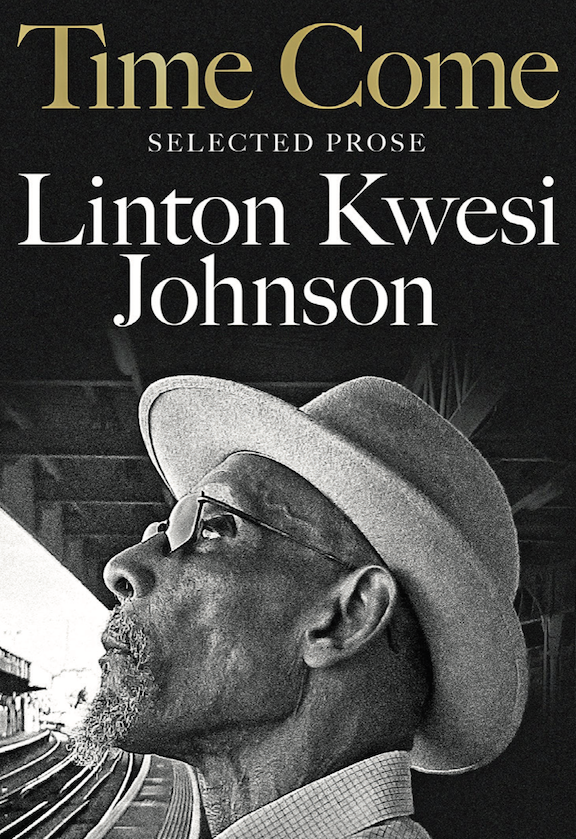
During a long and multifaceted career, Linton Kwesi Johnson has given us much food for thought. He became one of Britain’s most distinctive voices as a poet who delivered his verse in the nation language patois of his native Jamaica, even as he addressed the harsh realities of black life in Britain, and as a recording artist carved a niche that is equally distinctive, making a new kind of reggae that became known as dub poetry, even though he devised the term to describe the verbal artistry of toasters such as I Roy and Big Youth. No less important is Linton’s work as a journalist and cultural commentator, aspects of his oeuvre that are gathered in ”Time Come.”
Following a contextual introduction by Paul Gilroy, we leap headlong into reggae territory with articles Linton wrote for publications such as the NME, Melody Maker, Race and Class and Race Today. The pieces are insightful, with references to the historical context of Jamaica’s entrenched inequalities, shadism, class prejudice and political mismanagement that gave rise to the music. Linton ponders the future of the three Wailers once Tosh and Bunny went solo and dissects Virgin and Island’s appropriation of the music, for better or worse. He give a witty analysis of Marley’s confusing ”Smile Jamaica” single, thoroughly dissects ”Exodus” and notes the strengths and weaknesses of Prince Jazzbo before relaying a detailed profile of his long-term collaborator, Dennis Bovell. We get the sense that Linton is as fascinated by Jamaican music as the reader is, and that he holds a deep love for it too. At the same time, he does not mince his words, so points out the flaws as well as the glories, and is keen to highlight the failures of both of Jamaica’s two main political parties, unlike much foreign analysis which tended to lay the blame on one side.
In the literature section, Linton explores the work of Ngugi, Caryl Phillips, Colin Grant and even his own work, the politics section tackling the Brixton riots and Stephanie Black’s ”Life And Debt.” Then, he recounts his connections with Amsterdam, South Africa, and the University of the West Indies before exploring the work of Mutabaruka, Michael Smith, Jean ”Binta” Breeze and Miss Lou.
These well-written essays are over all too soon and in the reading of them, we learn much about the social struggles that resulted in such moving black artistry in Jamaica and Britain, and we learn plenty about Linton himself too. Highly recommended.
(314pp, Picador books 2023)