
The Lost In Time Festival took place for the third time this year—expanded for the first time to two days, on February 28 and March 1, in Kingston’s Hope Gardens. Anticipation ran especially high for Chronixx’s first performance in his homeland in seven years. Ellen Köhlings was there and shares her personal impressions.
Text: Ellen Köhlings /// Photos: El Puru, Destinee Condison, Junya ”Thirdeye” S‑Steady
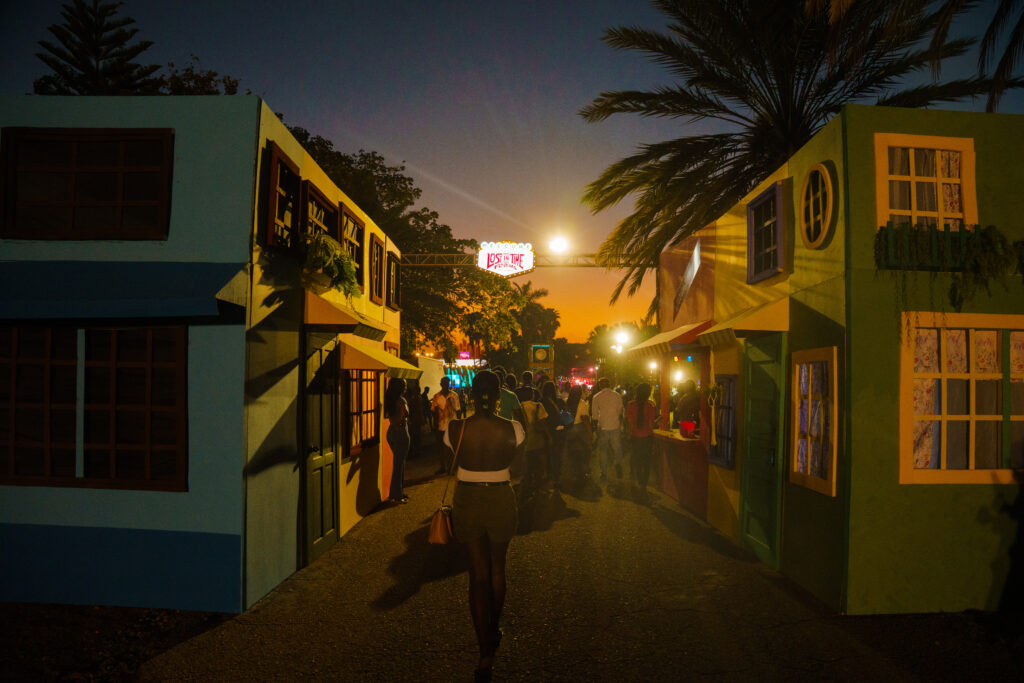
Tall palms compete for attention amid the lush greenery of Hope Gardens. The entrance to the festival is flanked on both sides by a row of brightly illuminated houses. The path leads straight toward a grandfather clock set inside an open bamboo frame. It invites visitors to step inside and take photos—much like the many scenic backdrops scattered across the grounds. The clock reads ten past ten. This weekend, time stands still. Enter Lost In Time.



It’s my first Lost In Time. And it is one of the most beautiful—if not the most beautiful—festival I have ever attended. At the end of October I hear that Chronixx might perform. By then, ”Exile” has already become my constant companion. So my trip to Jamaica absolutely has to be planned around LIT. Where else would one be able to see the Young Sage, as Protoje affectionately calls him? I had already missed the SAULT show in London because of Rototom.
Protoje has long nurtured the vision of having his brother in spirit close the festival in a fitting way. Now that moment seems close. Years ago, he spoke of establishing a festival in Jamaica modeled after European and American events—a kind of blend of Coachella, Summerjam, Rototom, and Reggae Jam. Today I’m reminded of these festivals. Protoje seems to have taken the best elements from all these worlds.
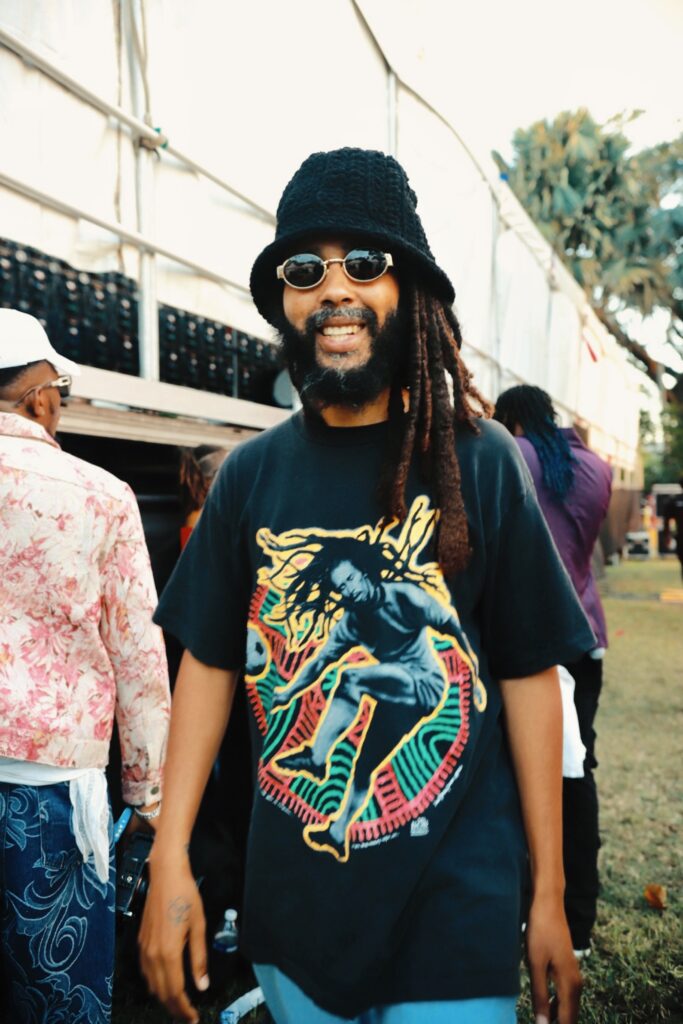
Yet it takes until the end of January before Lost In Time can finally be announced. The dreamlike location in Kingston’s Hope Gardens is surrounded by a neighborhood whose residents do not all necessarily sway to a reggae groove. In the end, King Digg is able to convince with his concept. The festival’s third edition is even extended by an additional day.
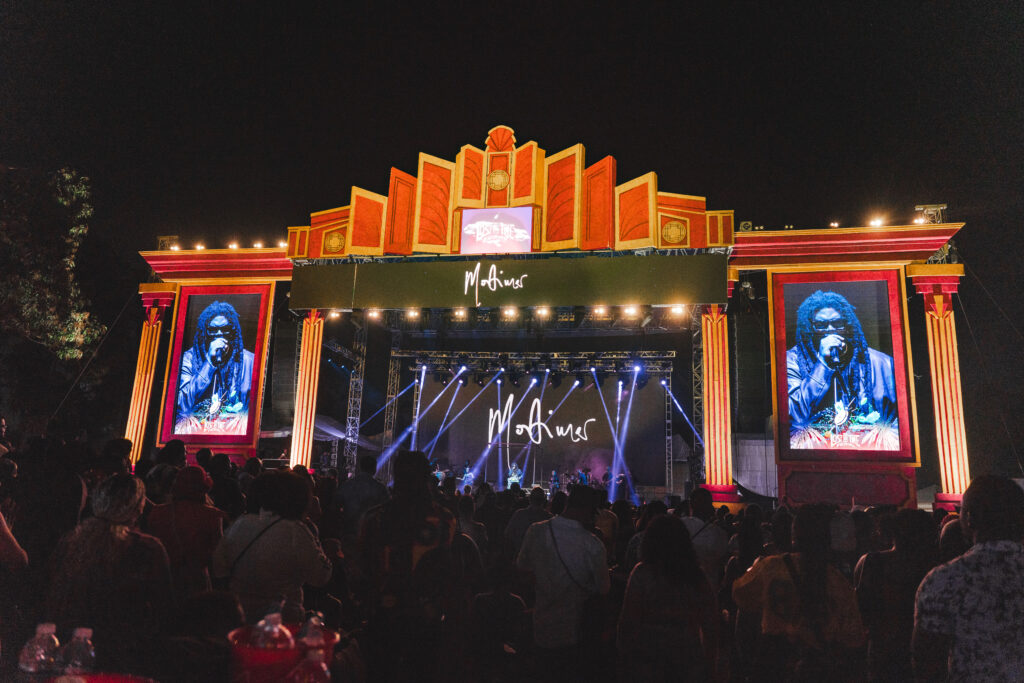
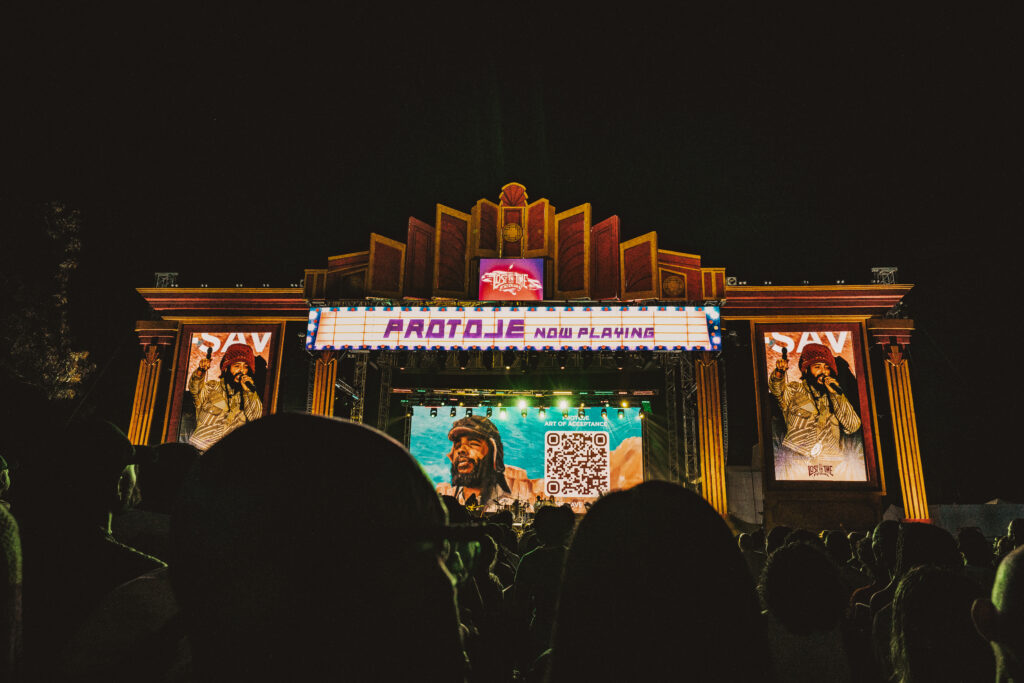
All the more astonishing, then, what the two founders—Protoje and his sister LeAnn Ollivierre—together with the Lost In Time team manage to accomplish in just a few weeks. Production runs smoothly and on schedule—apart from one mishap I’ll mention later. Airy, open stages: the larger one presented like a cinema in charming old-school flair, the smaller framed by green bamboo as part of the surrounding landscape.
The Food Village offers a diverse culinary spread—from Thai dishes to Zen bowls to local delicacies. In between, art replaces reggae kitsch, and of course there is I‑Nation Books & Necessities, whose important role as a disseminator of knowledge has been celebrated in several songs of the reggae revival. Scattered across the grounds like splashes of color are seating areas for picnicking and relaxing. Everything is embedded in breathtaking tropical surroundings.
We’re strolling toward the main stage when Protoje calls out to us from afar, asking if we have everything we need. Within moments he secures backstage passes and welcomes us warmly. Rarely have I seen a promoter so relaxed yet so assured—someone who seems approachable for everyone at any time. Everything here feels fluid; people carry out their responsibilities calmly and attentively, without seeming stressed. All in the name of reggae music, which is to be brought back to the forefront. Only the Wi-Fi reception at the bar proves unreliable.
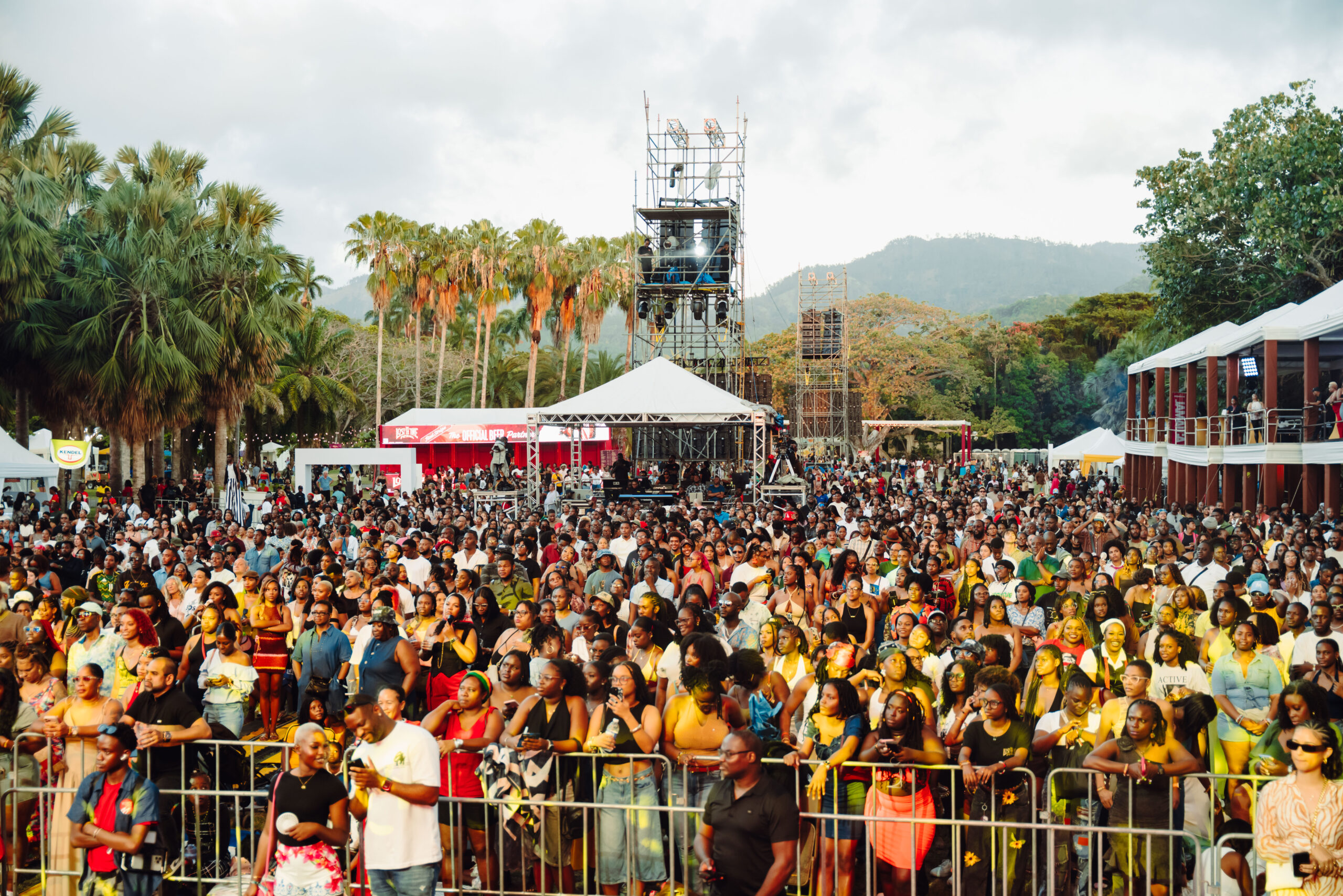
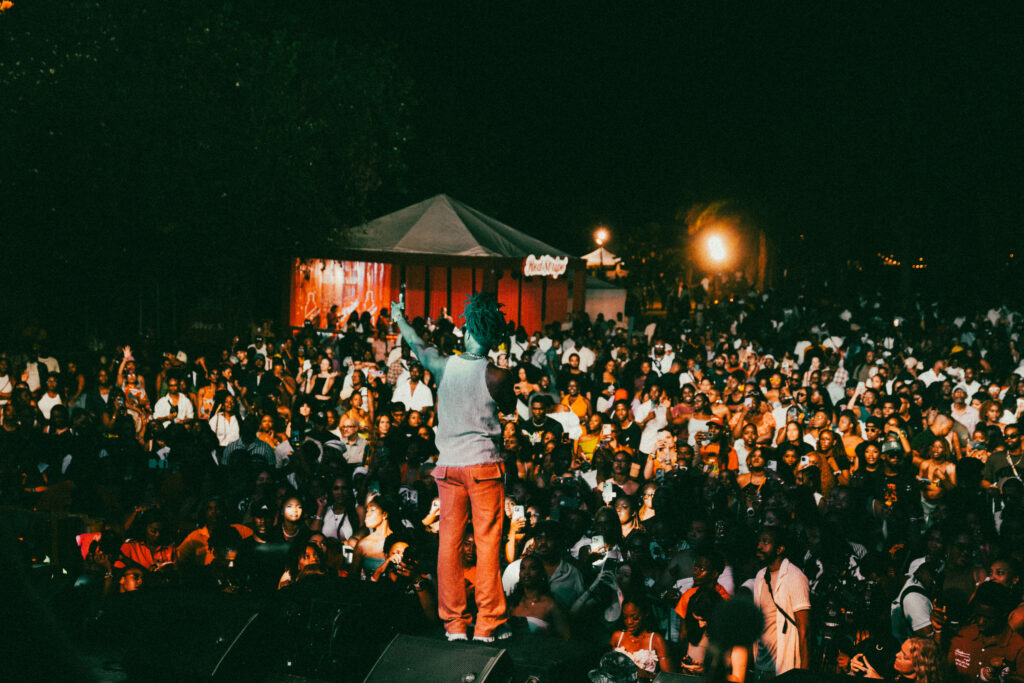
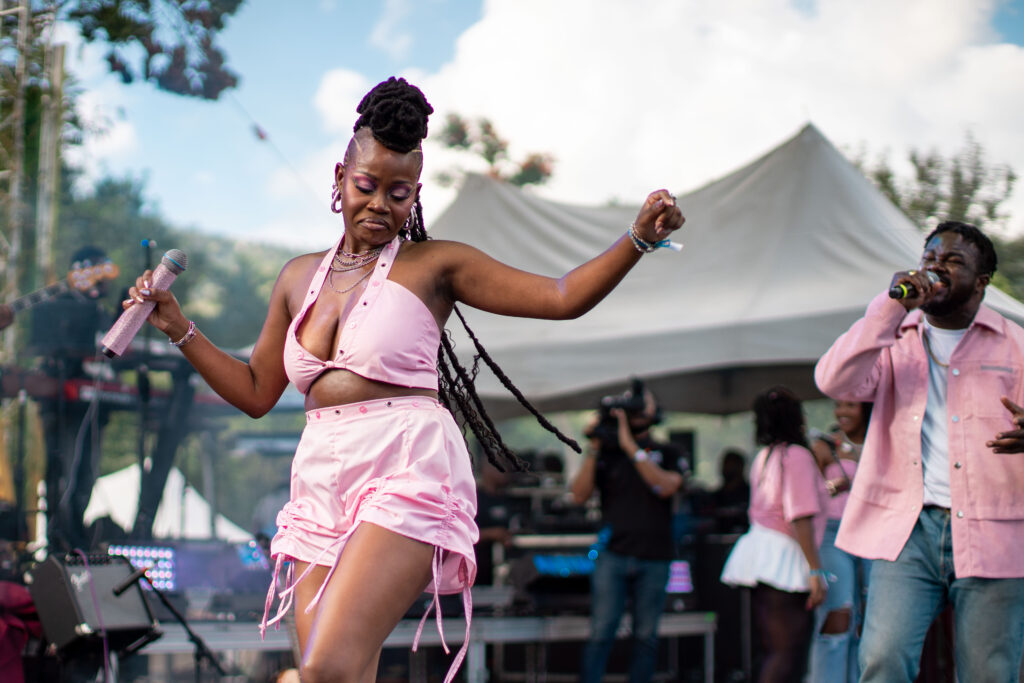
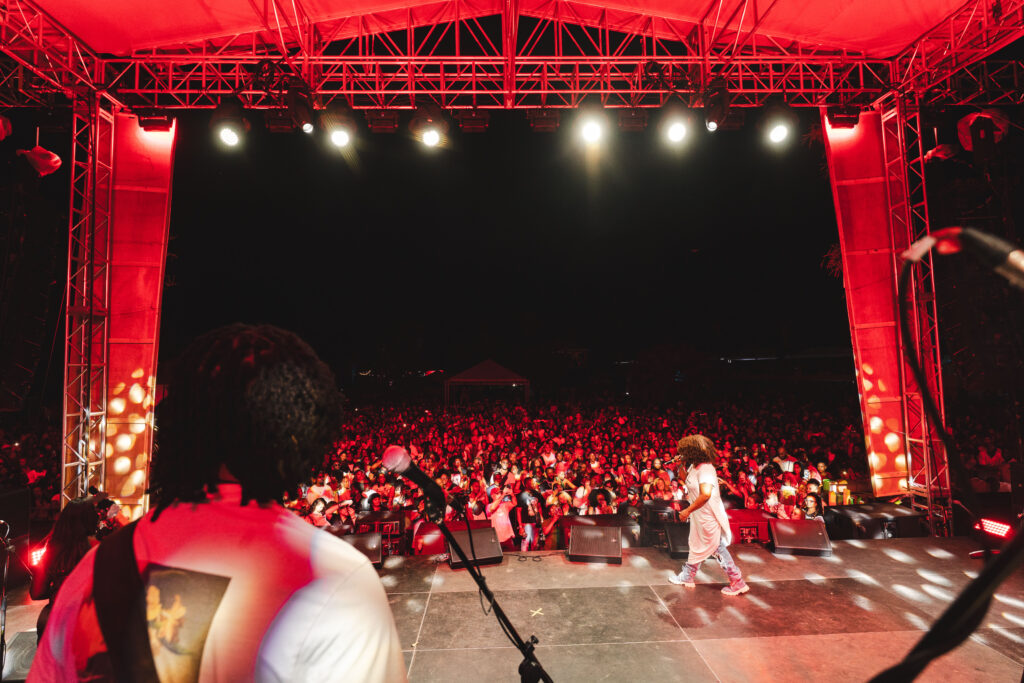
Even though the grounds are well filled, we can move fairly smoothly from one stage to the other (8,100 visitors attended on Saturday, 8,500 on Sunday). The Sky Lounges framing the area in front of the main stage are also well received. Fittingly, the staff there are dressed as stewards and stewardesses. Speaking of clothing: rarely have I seen so much cool styling in one place—bold, individual, striking. Everywhere you look there’s something eye-catching. That goes even more for the artists. At LIT, culture, art, cuisine, fashion, and community come together in the best musical mix of entertainment and edutainment with conscious music.
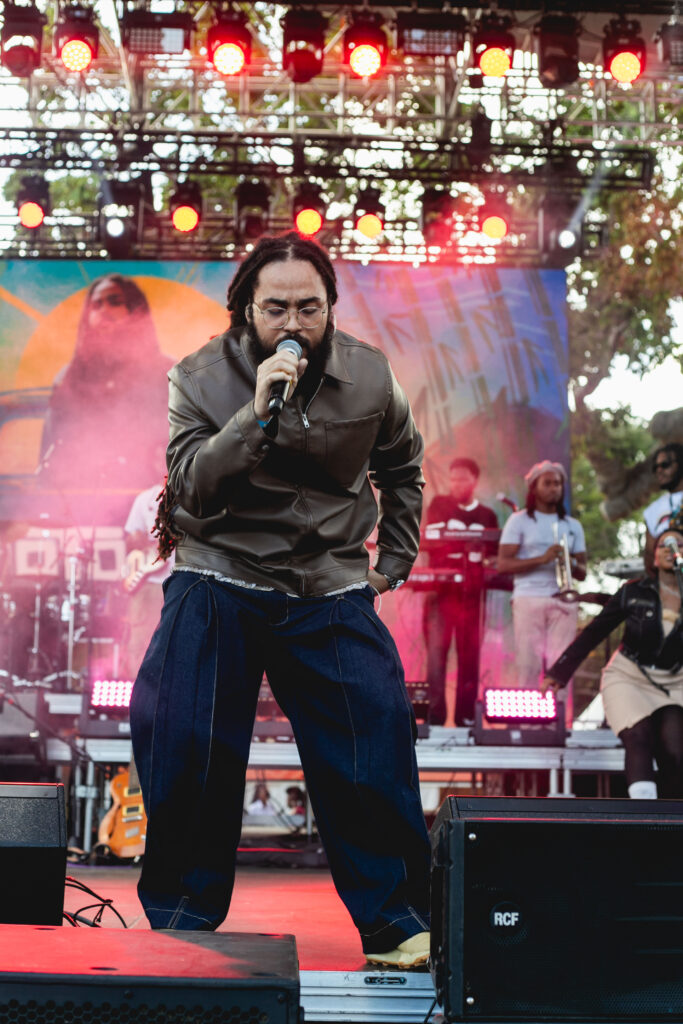
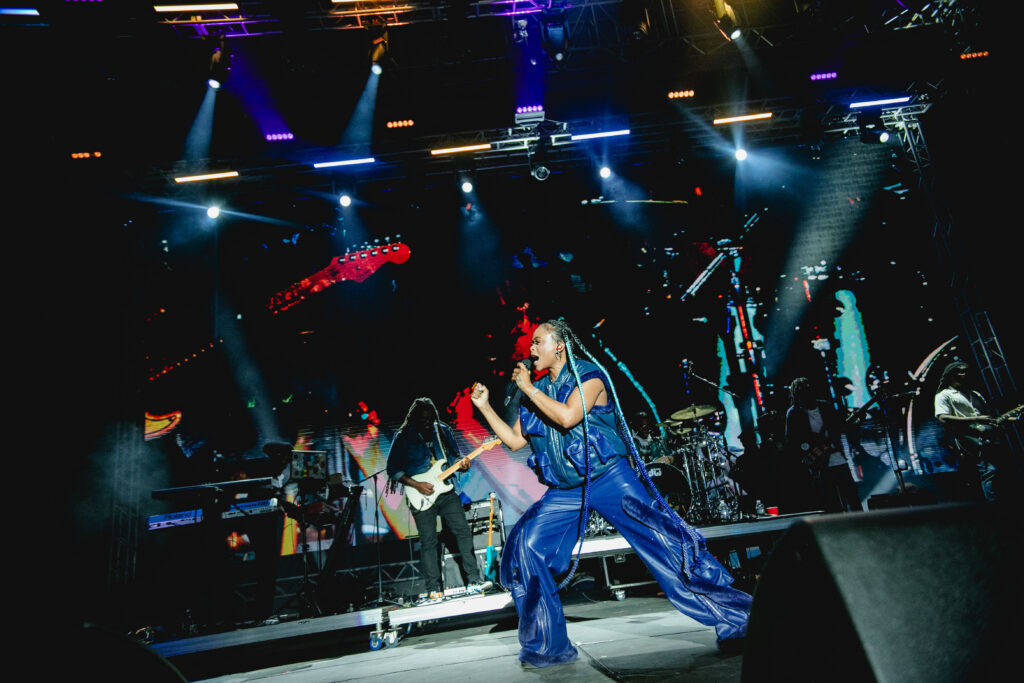
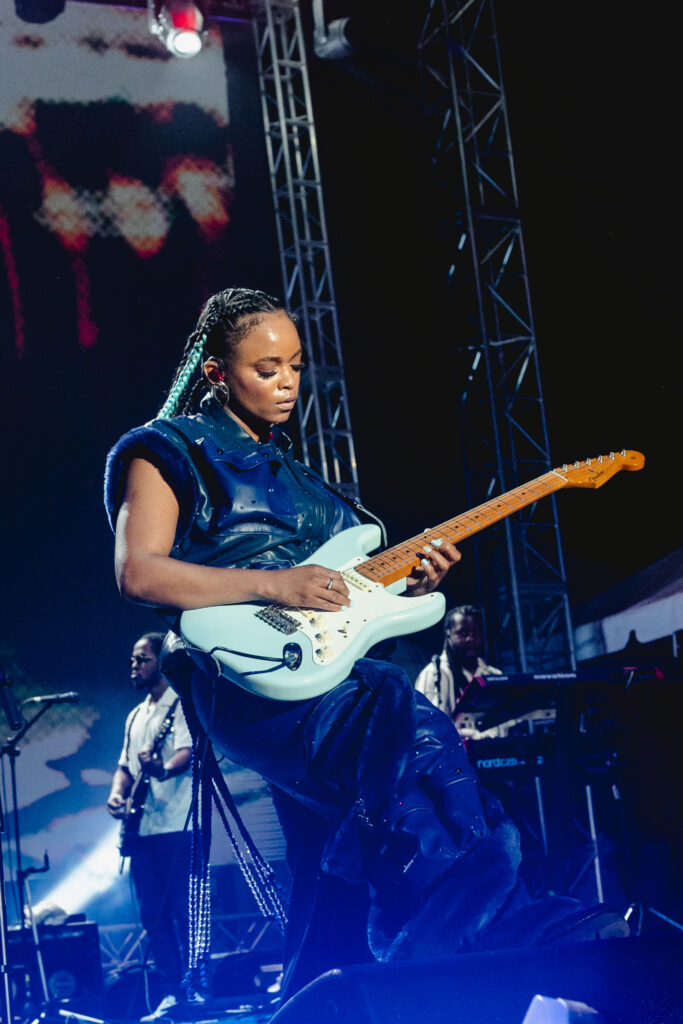
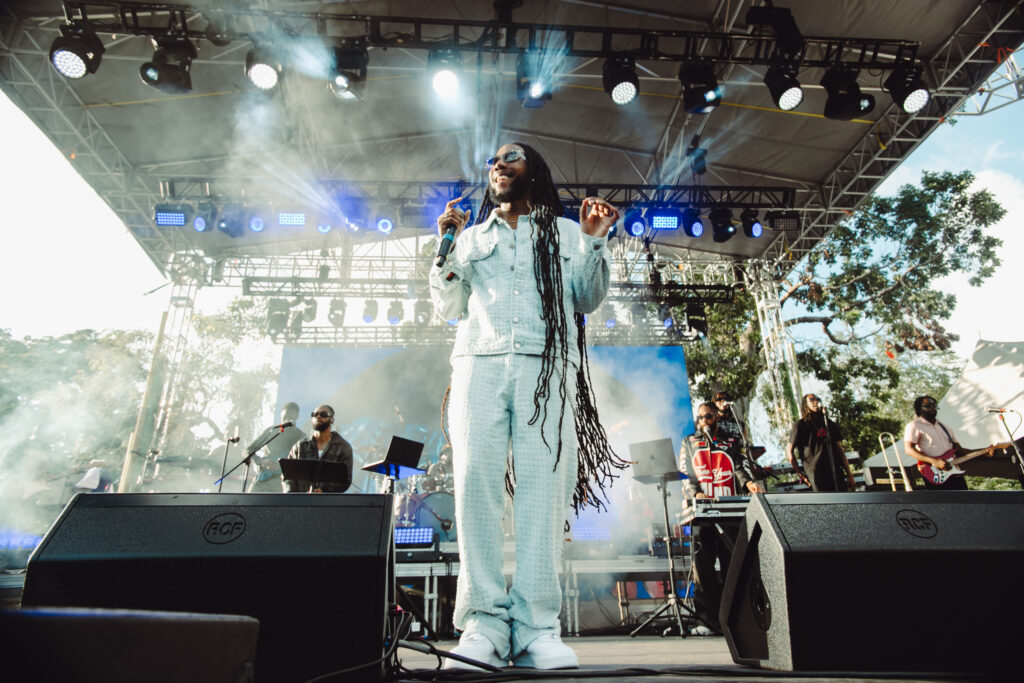
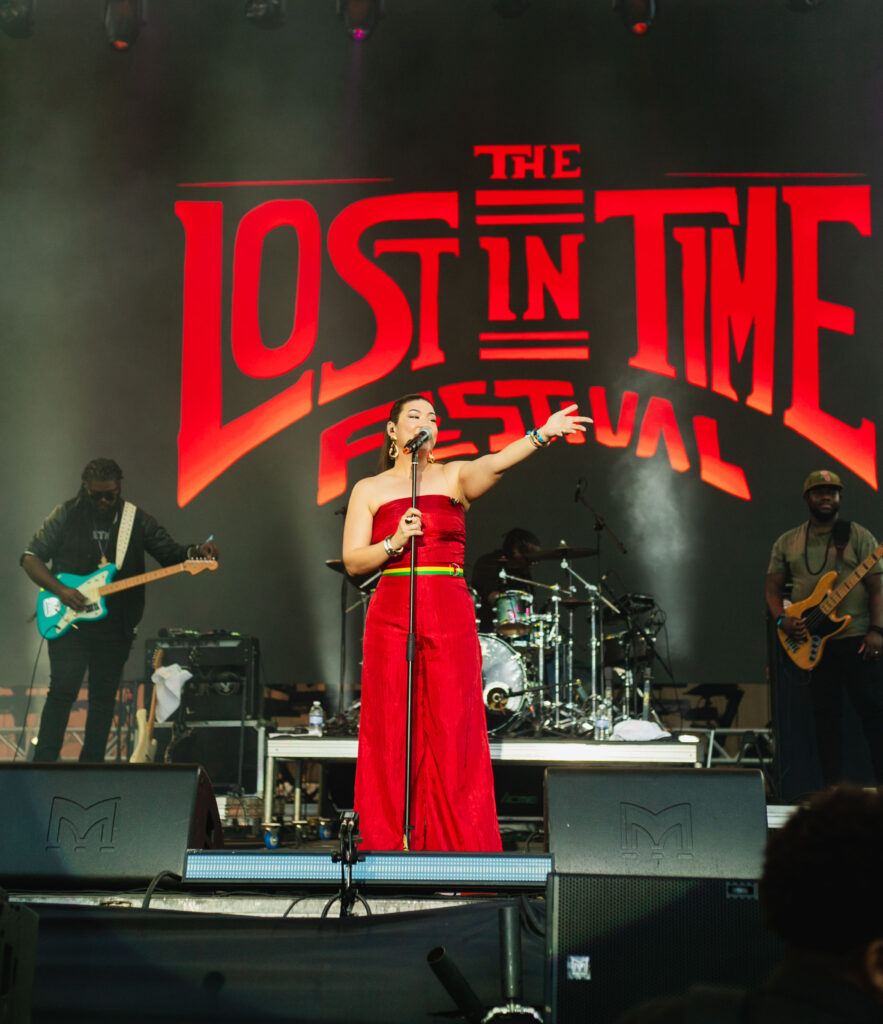
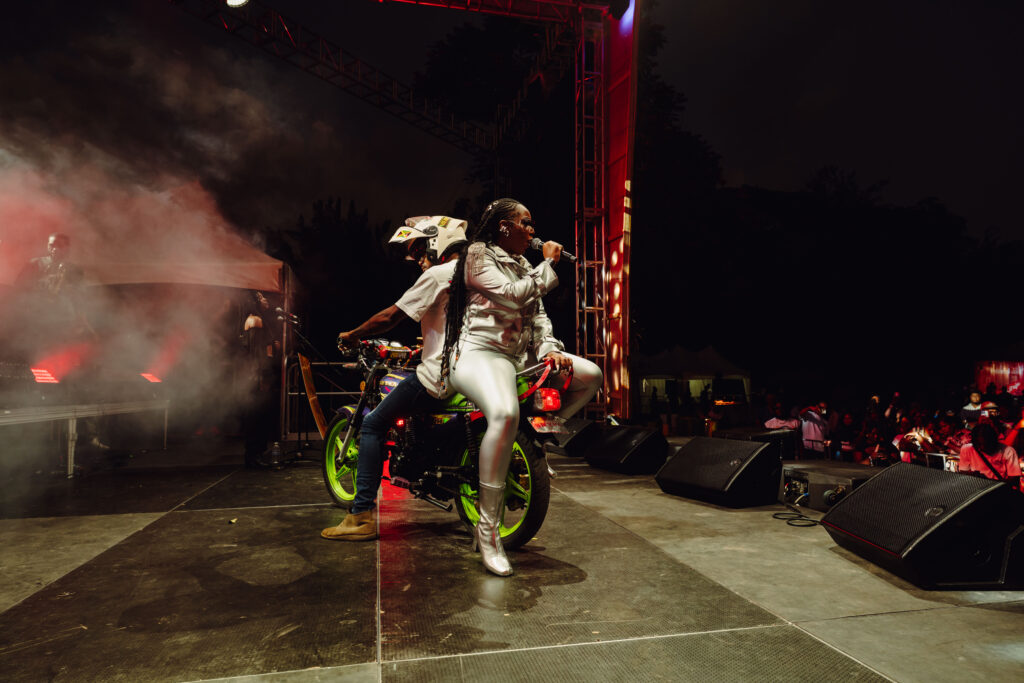
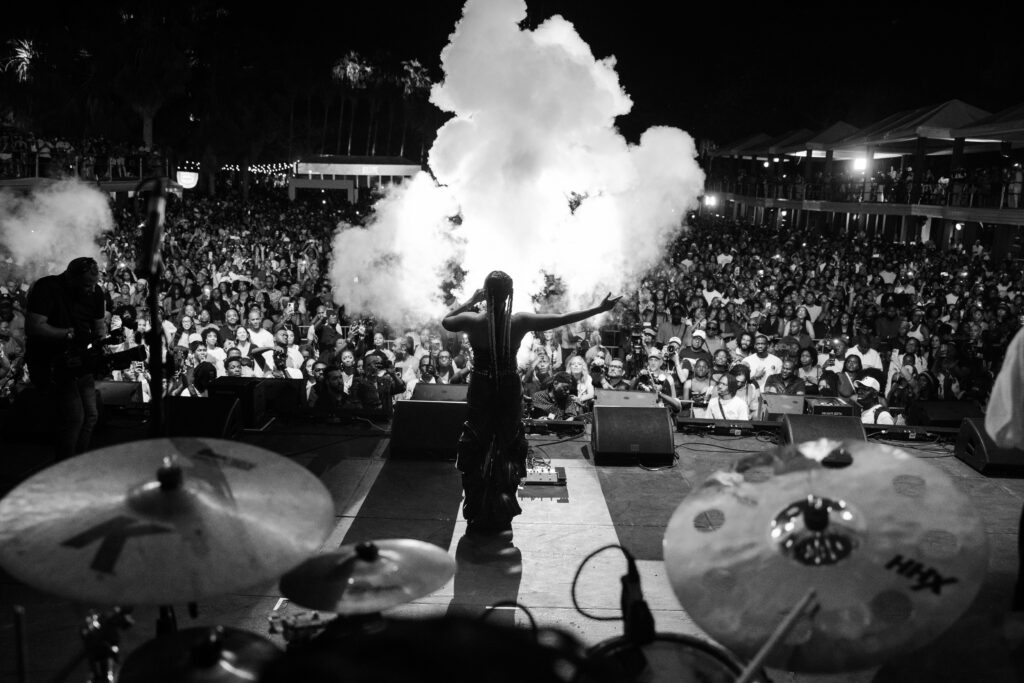
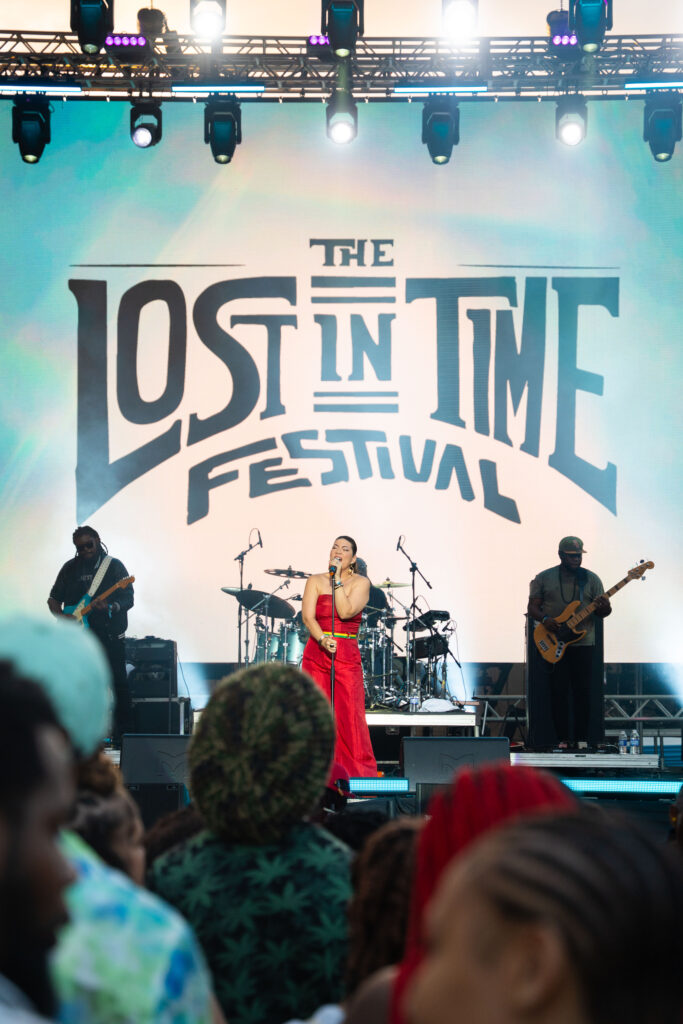
On the stages, gourmet fare is served. Every artist gives their all and more. Together they create a concert experience that is truly second to none. Notably, seven women take the stage on the first day: Joby Jay opens the festival with a whole heap of soul; the powerful-voiced Tessanne Chin; Yeza, who bridges reggae and dancehall, joined briefly by Patra; the fearless and rebellious Tanya Stephens; the storming Koffee; the melodious Alaine; and the overwhelming Lila Iké, delivering a superstar performance full of heart. Gratefully, she tells the audience that she has overcome a difficult period and is doing better again.



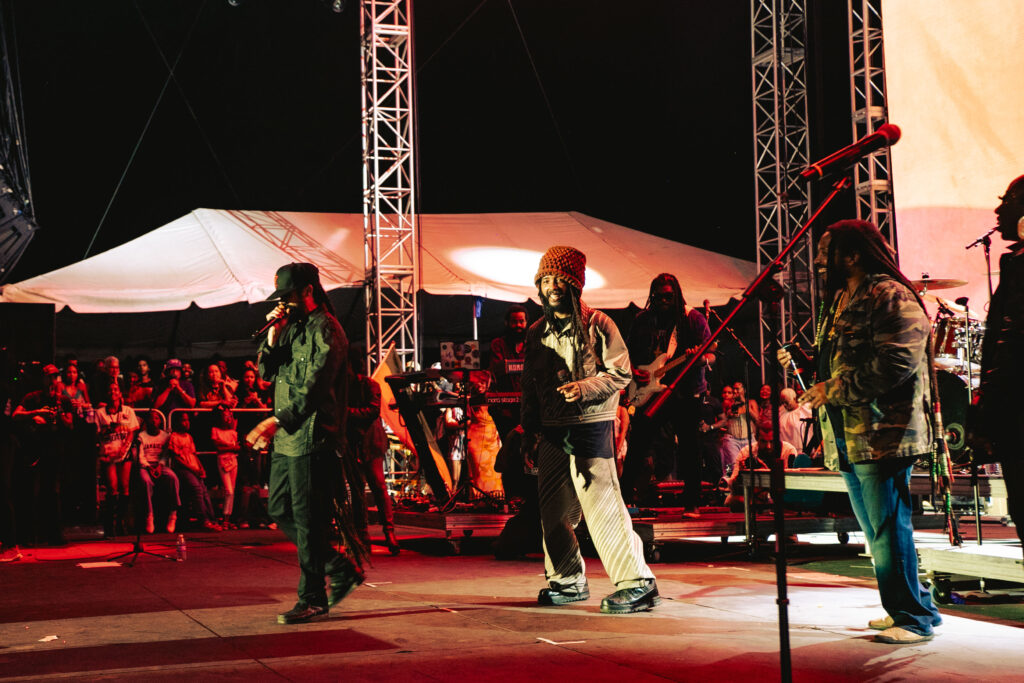
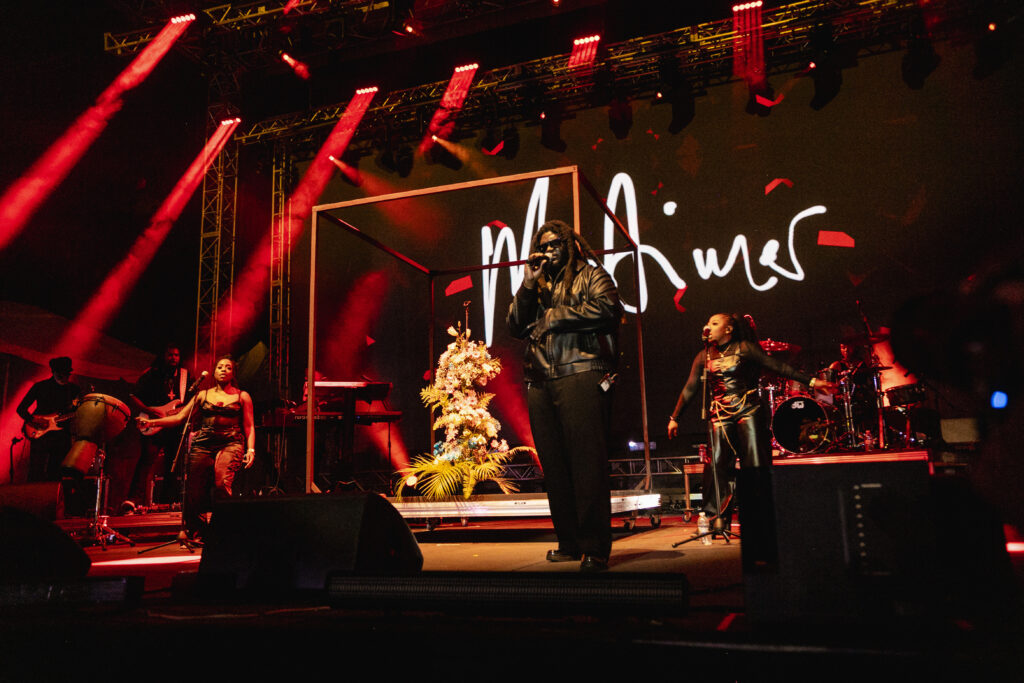
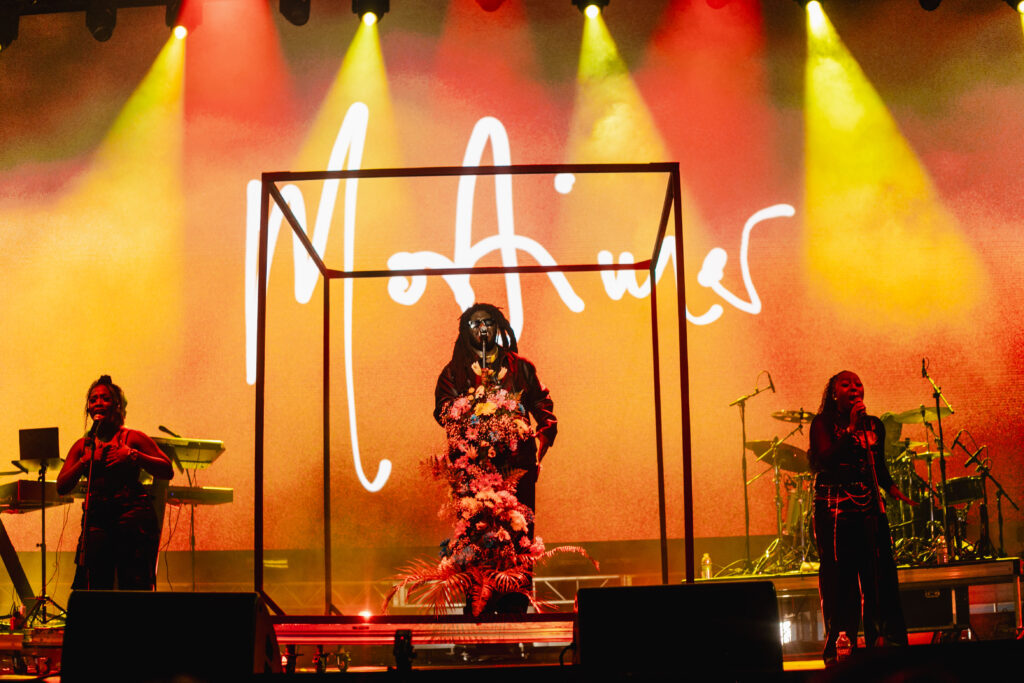
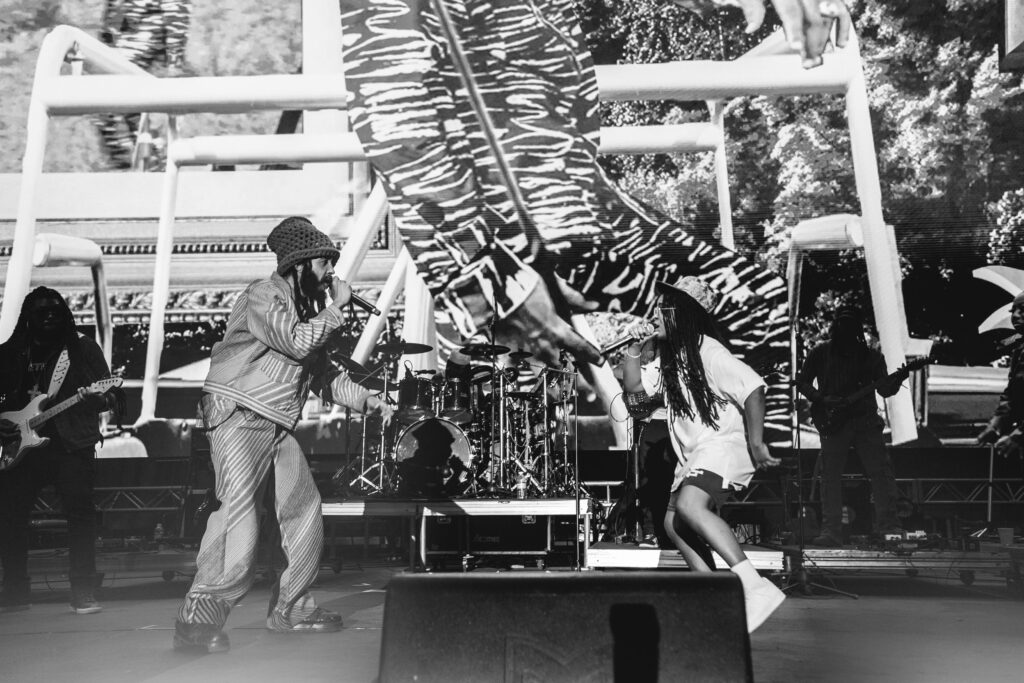
The men are in the minority that evening. Producer-turned-singer Iotosh and the reggae-and-soul crooner Mortimer both impress, but the host himself, Protoje, raises the bar even further and—much like his protégé Lila—radiates superstar energy. He gladly shares the moment with others: for the ”Feel It” riddim he brings Romain Virgo and Alaine onstage, while Koffee receives thunderous applause for the cheeky, cool ”Switch It Up.” The grand finale begins with the mighty Damian Marley combination ”At We Feet,” fulfilling a long-held wish for Protoje, before Stephen joins for ”Mission,” and Damian leading everyone into his anthem ”Welcome To Jamrock” while flagman Judah tirelessly waves his banner.
Right on the stroke of midnight, the first day ends, leaving behind a happy, satisfied, and proud audience. Because with Lost In Time, Protoje has written reggae history. He has shown that Jamaica can do festivals. Lost In Time can hold its own with any open-air event and give Kingston’s reggae economy a welcome boost. Many will travel to the island for exactly that.
How wonderful that there is still a second day. After a Sunday detour to Hellshire Beach for fried fish, we return to Hope Gardens. Today, Dahvid Slur—whose voice carries a hint of Chronixx—opens the festival. He shows why many currently have their eyes on him. For the combination ”Do Jah Works,” he brings out the equally in-demand newcomer Karbon. Royal Blu invokes the ”Spain Root,” supported by Runkus and Ras‑I. Afterward, D’Yani melts not only women’s hearts.
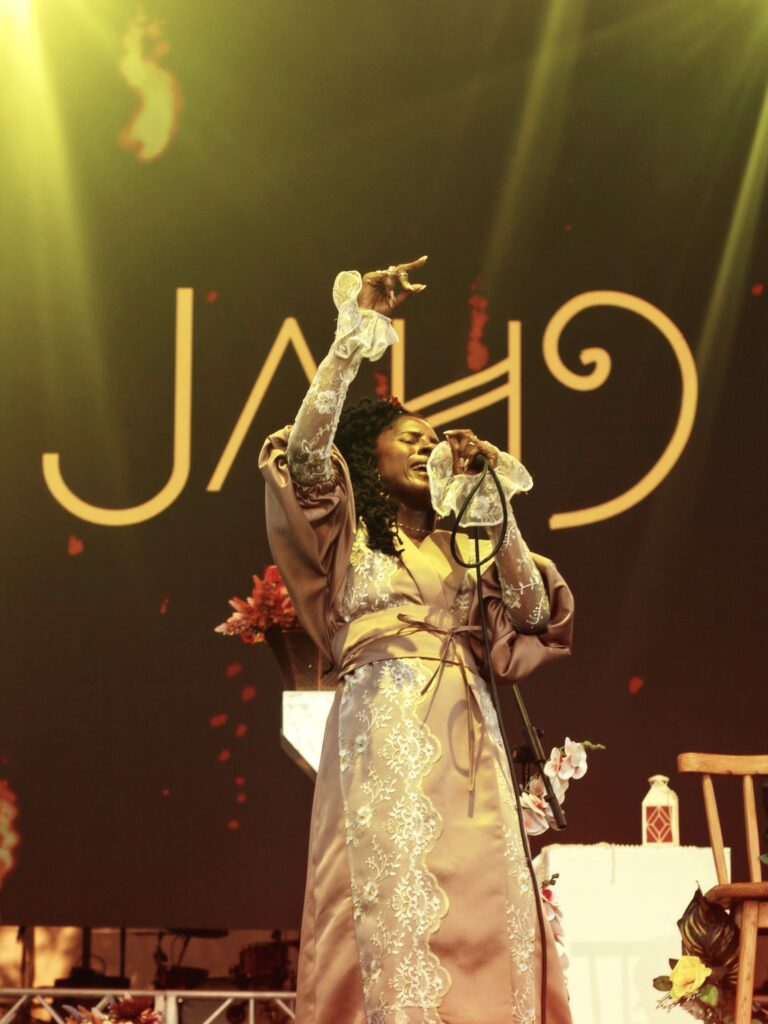
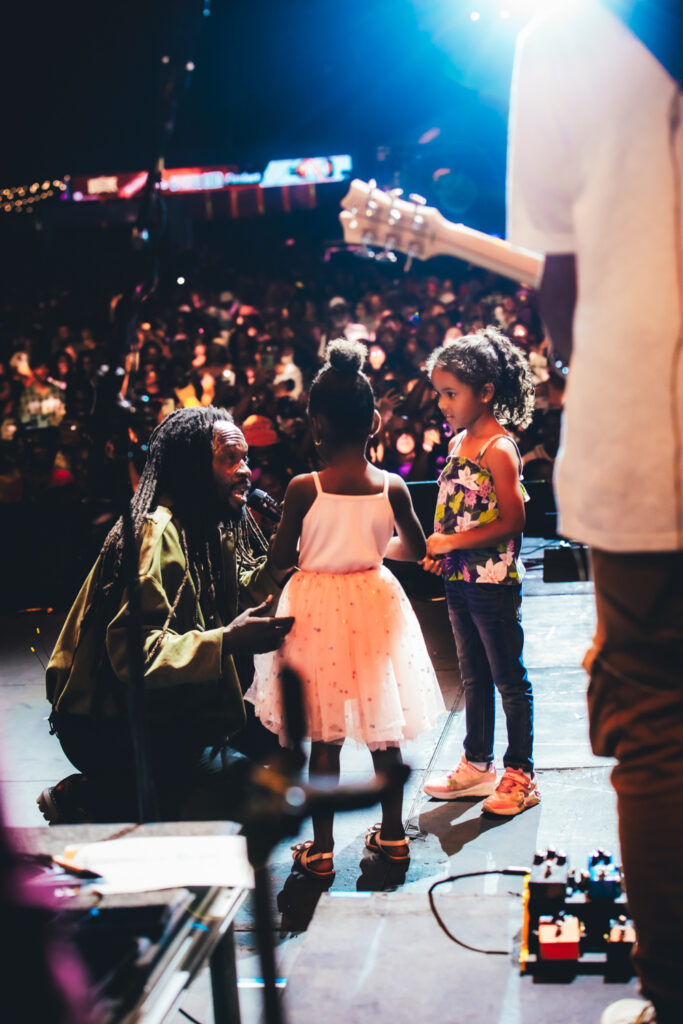
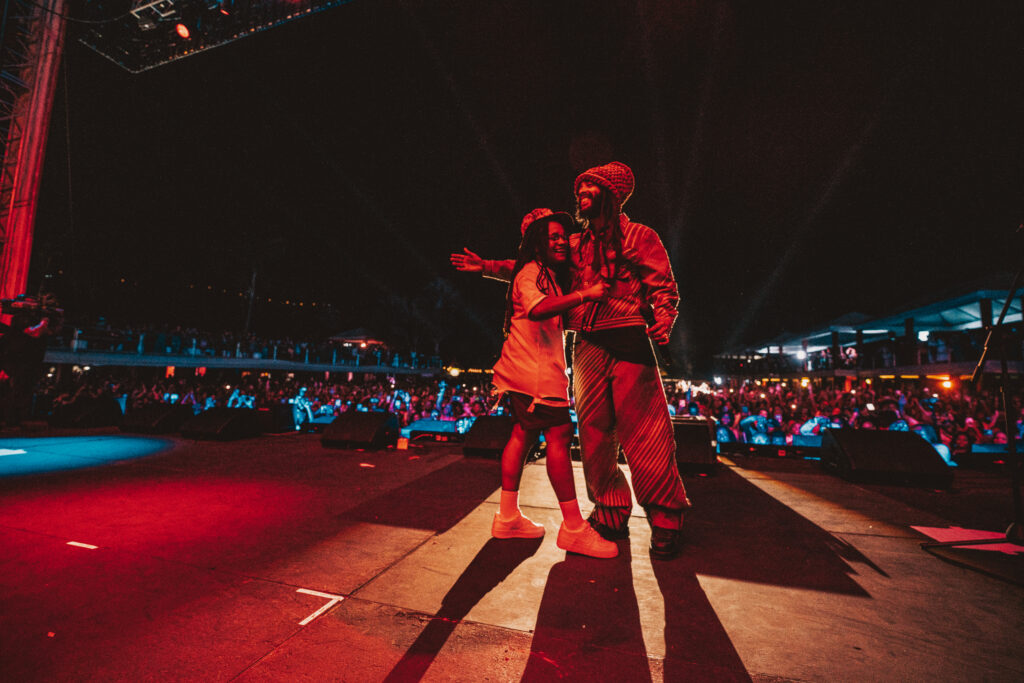
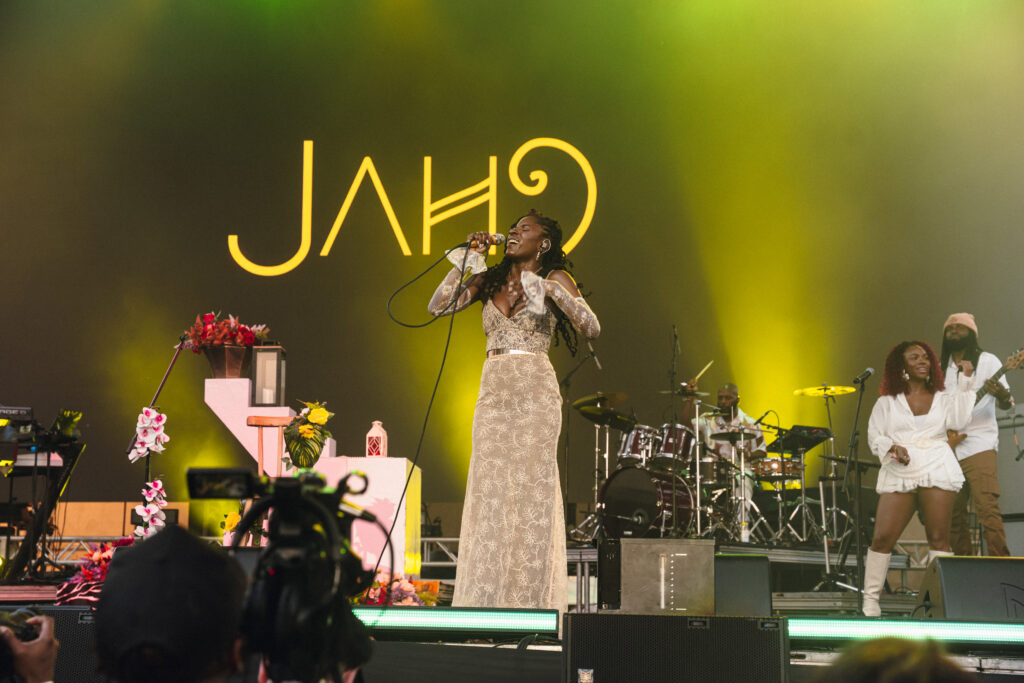
Naomi Cowan and Jah9 follow on the main stage, the latter delivering a performance steeped in mission and message. Jesse Royal, especially passionate today, exhausts himself in one of his best performances ever. During ”Light Of Mine,” he hands the microphone to his daughter and her friend. He also brings Jah Lil and Yohan Marley onstage for cameo appearances.

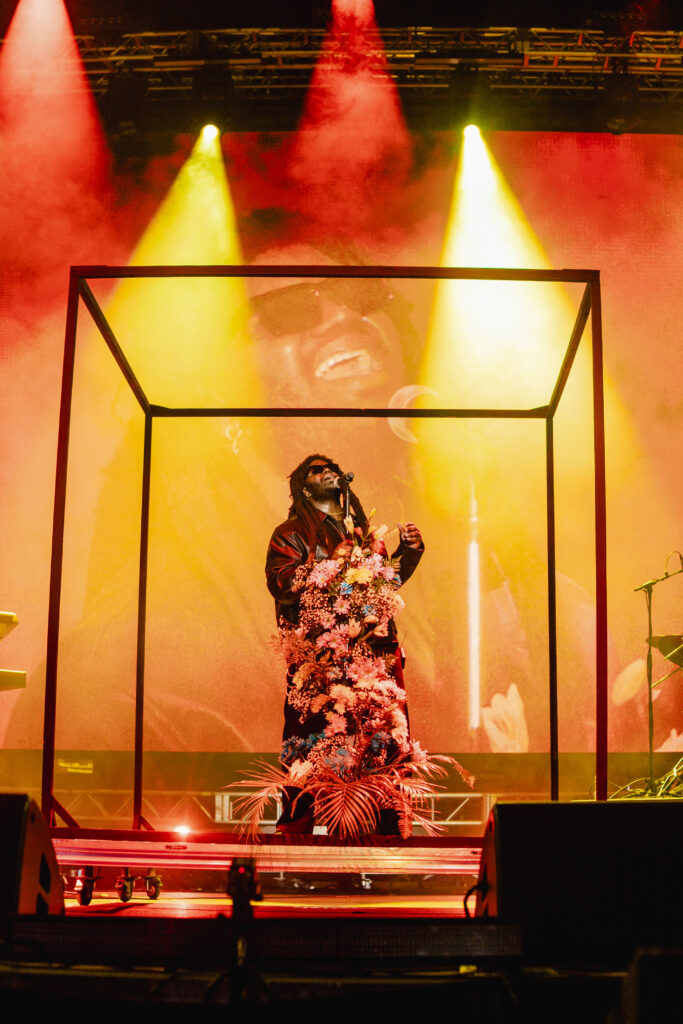
By now the backstage area onstage is reserved for only a few: family first. Chronixx’s father-in-law, Chakula, can be spotted. There is a crackle in the air, a tingling in my body. The moment most people have been waiting for is approaching. In the very front of the crowd stand Romain Virgo and singer Tori Lattore. Just before half past eight, Dutty Bookman steps out to introduce—briefly and crisply—the man who went into exile after his last performance in Jamaica in 2019. ”Here comes Jamar, here comes Chroooonixxx!” he calls out—met with piercing screams from the crowd.
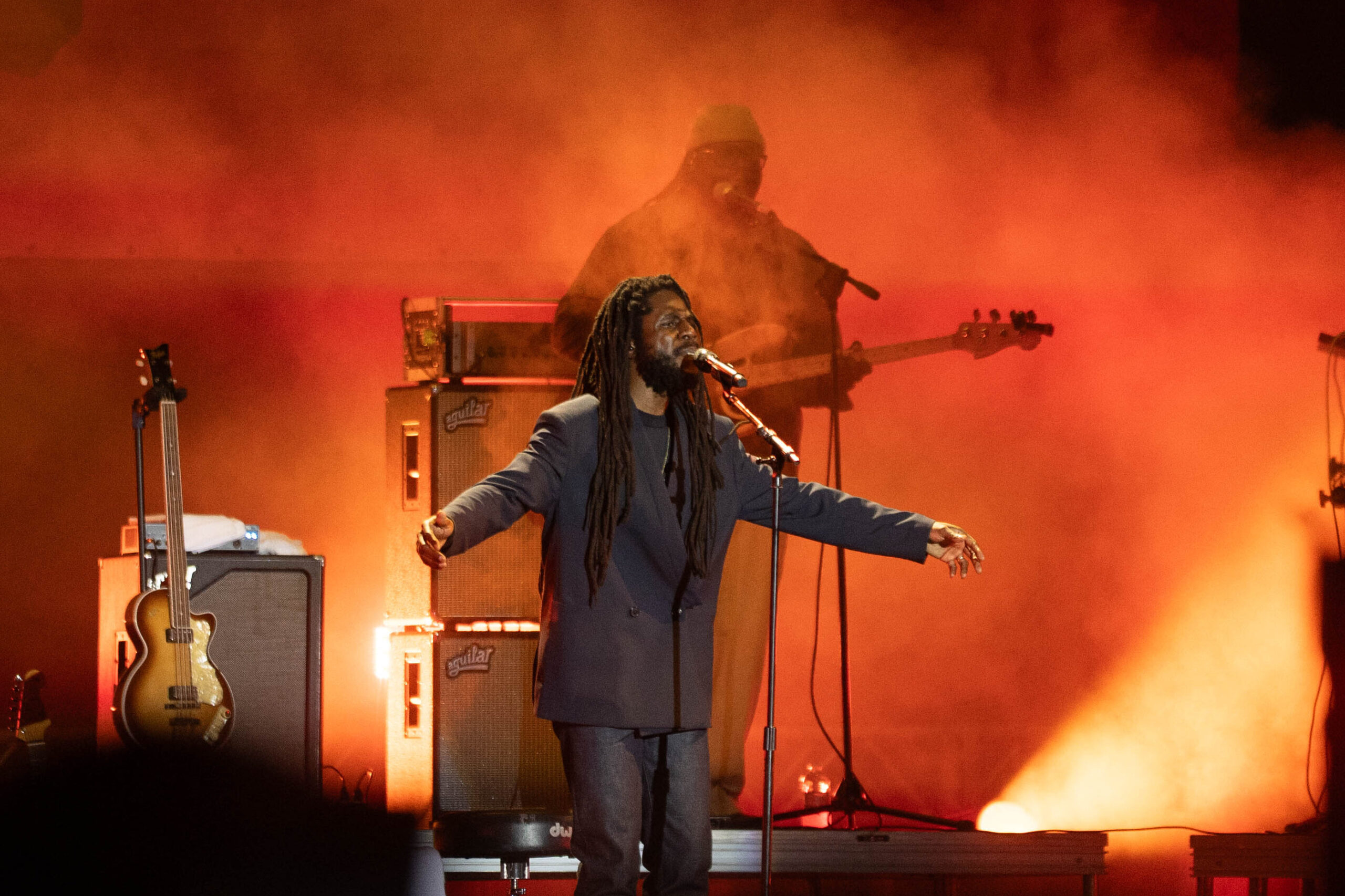
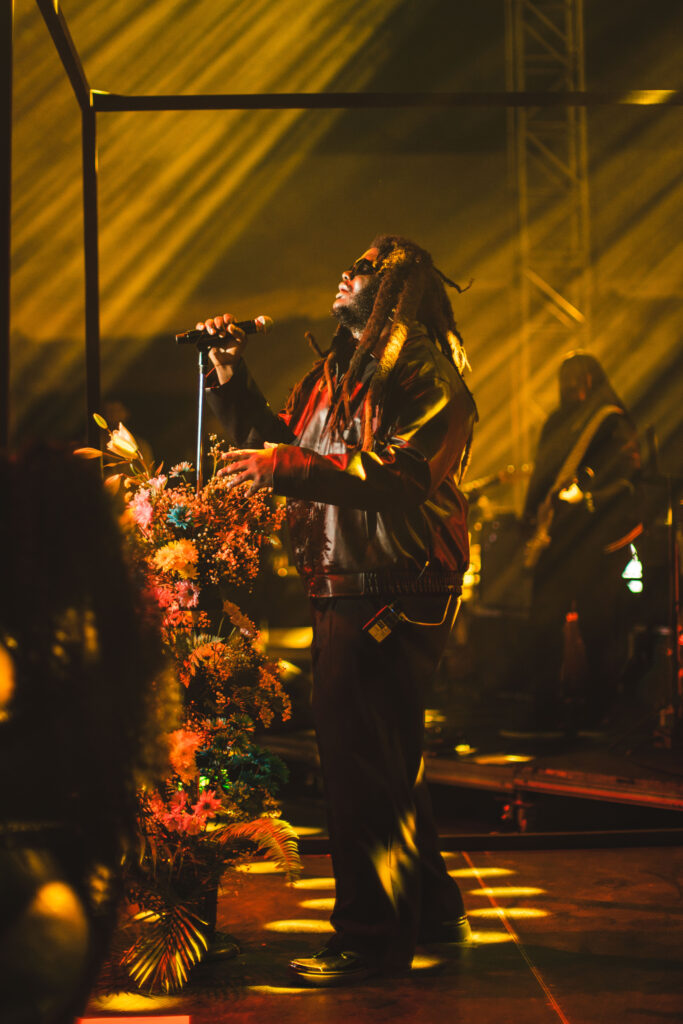
Then silence falls. Only a lone bass throbs. Unhurried, Chronixx steps onto the stage—jeans and a blue double-breasted jacket, simple yet striking in its cut. A guitar joins the bass. Instead of an LED screen, a massive Ethiopian flag serves as the backdrop. To the right, an orange-red glow flickers, as if a fire were just being kindled: ”…burning like a fire.”
The sound swells. Chronixx stands calmly at the center and prays. Now only the drums roll. Then silence again. Minutes pass. Everyone stares ahead, transfixed. In an age when we are constantly bombarded with stimuli and boredom has become a foreign word, this stillness feels almost radical. Artist and audience meet on another level. Chronixx gazes upward in concentration. Slowly he begins to move in the groove, urging the musicians forward with his hands before launching into ”Big Bad Sound.” ”Tell the people uptown / And the one dem downtown / The general come round!”At the end of the song, he lets out a heartfelt cry to his father: ”Chronicle, my Lord!” What an opening!
After ”Here Comes Trouble,” the singer addresses the crowd: ”Thank you for coming on this journey with us. This is ‘Exile.’ The experience.” The title track immediately pulls everyone in. Chronixx navigates his way through a catalogue bursting with hits. ”Freedom Fighter” flows into ”Survivor.” ”Don’t Be Afraid” he dedicates to Sly & Robbie. ”Capture Land” leads into ”Keep On Rising”—thousands sing along. Level up!
During ”Family First,” he points toward his relatives standing at the left edge of the stage. In a conciliatory gesture, Chronixx welcomes both PNP supporters and Labourites before inviting everyone to ”Spanish Town Rockin’.” When ”Skankin’ Sweet” begins, he urges the massive to join in loudly: ”Do you know how reggae music sweet?”And how sweet reggae sounds this evening. Uplifting music that needs nothing but itself—delivered with a strong, clear voice and superb musicianship.
As he addresses the ”Exile” empresses and lionesses with ”Sweet Argument,” the show suddenly falls silent. A power outage. Twenty minutes long. Yet instead of grumbling, growing impatient, booing—or, as in earlier times, throwing bottles—the audience bridges the forced pause by singing ”Skankin’ Sweet,” ”Queen Majesty,” and ”Like A Whistle” themselves. It moves not only Chronixx.
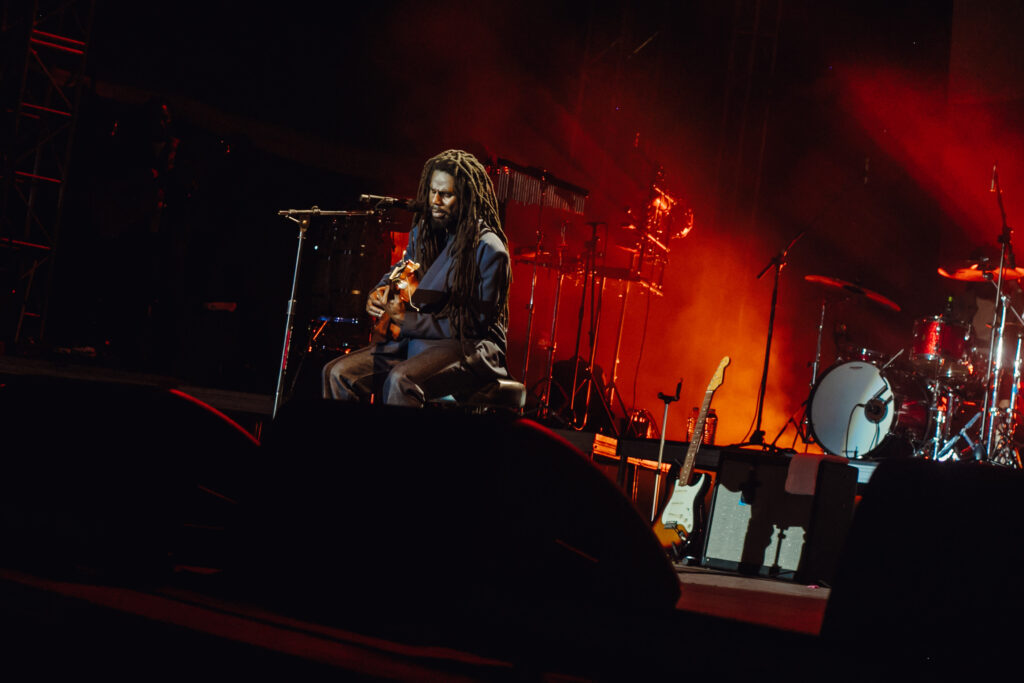
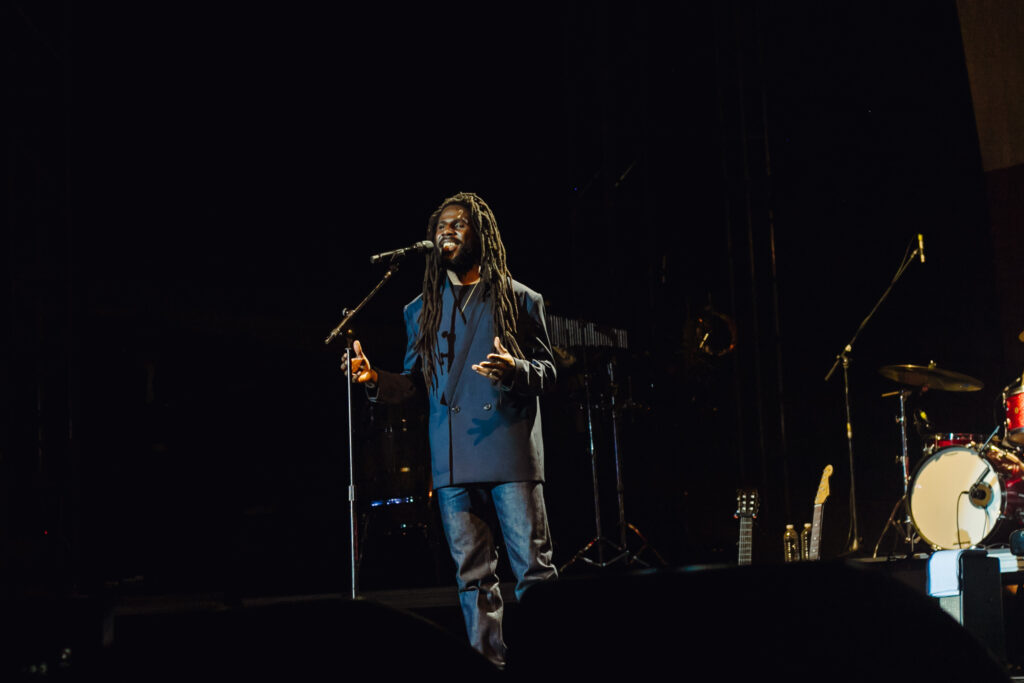
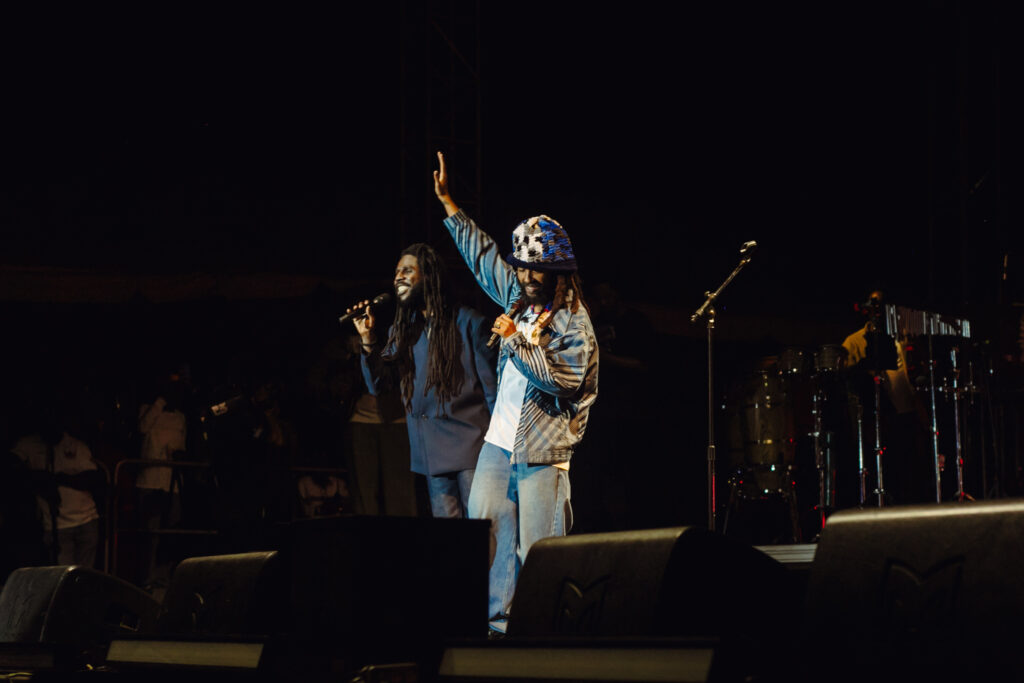
When the power returns, Protoje rushes onto the stage for the epic collaboration ”Who Knows,” before Chron Dada picks up exactly where he left off: ”Sweet Argument.” Accompanied by acoustic guitar, ”Hurricane” and ”Resilient” follow—deeply moving moments. During the line ”If I ever forget to hold your hand,” which it feels like everyone sings along to, tears come to my eyes. The power of reggae music, the power of Chronixx!
One great song follows another: ”Eternal Light,” the Bob Marley cover ”Waiting in Vain,” ”News Carrying Dread,” ”Saviour,” and ”Market.” In the middle of it he interrupts himself—”I’m only the lead singer”—to introduce the people who really matter: the drummer, the bandleader on bass, the two guitarists, the two keyboard players, the three horns, and the backing vocalist.
Although he then declares, ”Every good thing has to come to an end and I don’t do encores,” he keeps going. An acoustic version of ”I Can” follows, at the end of which he names several artists who performed earlier: ”Lila Iké, dem can’t keep you down; Mortimer, dem can’t keep you down.” With ”Love Is On The Mountain” and ”Smile Jamaica,” he crowns a triumphant return, repeatedly thanking Lost In Time before leaving the musicians to bring the concert to its close.

An appearance both honorable and unforgettable. Chronixx has grown—settled, grounded, seemingly at peace with himself and his music. He gives us something many may not even realize how urgently they need it: spiritual grounding. No distractions, no spectacle. Everything focused on the music and its message.
I cannot shake the feeling that I have witnessed something truly great—perhaps it must have felt similar back then with Bob Marley & The Wailers. History in the making.
The Reggae Revival has delivered on the promise it made when it began to take shape around 2010. It is remarkable to see what especially Protoje and Chronixx have accomplished. Hovering above this entire weekend—just as it has since the movement’s beginning—is a sense of unity: onstage, in front of it, and behind it. For the culture, for reggae music!
Protoje could easily take the simpler route—tour the world and make money. Instead, he continues to nurture young acts and invest in reggae music, strengthening the island’s creative economy and helping bring reggae back into global visibility. He is well on his way.
Postscript: Part of the festival’s proceeds will support hurricane relief efforts through the Lost In Time Foundation in partnership with American Friends of Jamaica. Protoje and LeAnn come from St. Elizabeth, one of the parishes hardest hit by Hurricane Melissa. The initiative is a personal matter for them—an effort to rebuild communities through culture and collective action.
Photos by El Puru (IG: @himagesphoto):




Photos by Destinee Condison (IG: @bydestinee):