
Text: Christian Bosoni
Beyond the Black Ark: The Transatlantic Odyssey of ”Congo Ashanti”
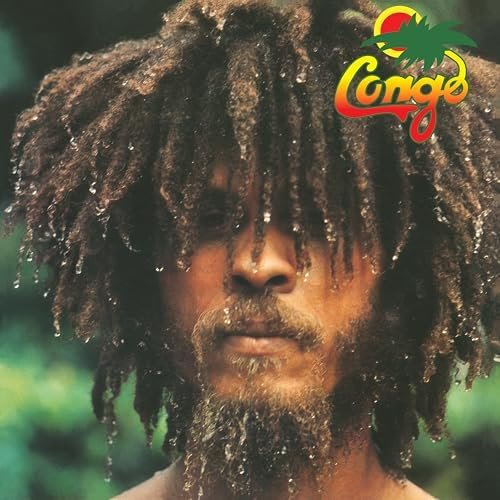
When reggae historians debate the legacy of The Congos, their minds immediately fly to 1977 and the hazy, smoke filled rooms of Lee ”Scratch” Perry’s Black Ark. The heavenly falsetto of Cedric Myton and the grounding tenor of Roy ”Ashanti” Johnson on Heart of the Congos created what many consider the ultimate pinnacle of roots reggae. Yet, the story of the legendary vocal unit took an international turn shortly after that masterpiece was pressed.
In February 1979, having severed ties with Perry and fully integrating baritone Watty Burnett into their frontline, the group set out to record their crucial follow up LP: Congo Ashanti. To bring this new chapter to life, producer Nadette Duget bridged the geographic and cultural gap between Kingston, Paris, and London. Standing at the very center of this sonic bridge was an enigmatic Corsican-born bassist who had honed his style in London’s burning punk scene: Philippe Quilichini.
From London Punk to Kingston Foundation
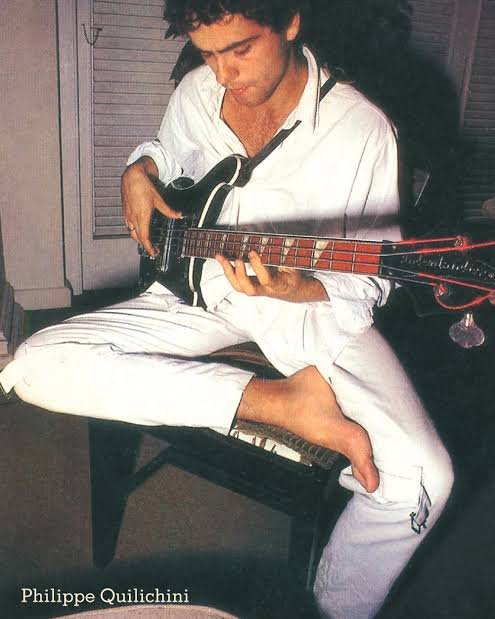
Quilichini was the antithesis of a traditional studio musician. Before entering the orbit of Jamaican roots music, the French-Corsican artist had lived a restless, avant-garde musical existence, playing in raw London punk outfits during the explosion of 1977 and even backing the iconic Nico of Velvet Underground fame.
His entry into the world of reggae music came through his partner, producer Nadette Duget, who had established close ties with Jamaican artists. When the opportunity arose to produce The Congos’ sophomore effort, Quilichini didn’t just tag along as an observer; he stepped directly into the engine room, bringing a distinct, outsider energy to the low end frequencies of Kingston.
The Dream Team at Harry J and Aquarius
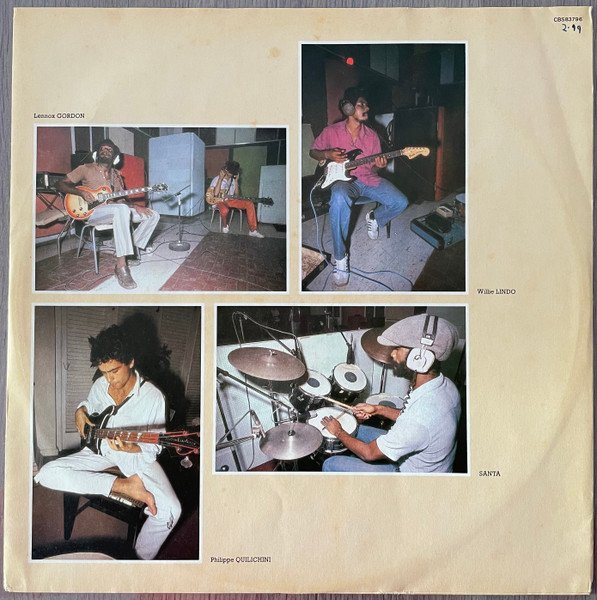
The recording sessions, split between Harry J Studio and Aquarius Recording Co. in Kingston, gathered an absolute hall of fame lineup. With legendary engineers Sylvan Morris and Mervyn Williams at the mixing desk and Geoffrey Chung overseeing the final mix at Dynamic Sounds, the instrumental backdrop was stacked with master players:
- Drums & Percussion: Carlton ”Santa” Davis and Sly Dunbar (on ”Hail The World Of Jah”), locked in alongside percussive masters Scully Simms, Uziah ”Sticky” Thompson, Congo, and Jones, with a printed nod of respect to Joseph Hill of Culture right on the album sleeve.
- Guitars: A dual rhythm and lead attack featuring Ernest Ranglin, Lennox Gordon, Willie Lindo, and Earl ”Chinna” Smith.
- Keys & Horns: Keith Sterling and Harold Butler weaving organ and piano textures beneath the soaring saxophone of Tommy McCook.
Yet, despite the presence of Kingston’s most seasoned studio veterans, the entire bass architecture of this landmark album was entrusted to Quilichini.
A Masterclass in French Low-End
Stepping into a Kingston recording booth alongside titans like Santa Davis and Chinna Smith was a bold undertaking, but Quilichini delivered a masterclass in roots bass playing. Across the album’s eight tracks, his approach proved that he deeply understood the golden rule of Jamaican foundation music: the bassline is not merely a rhythmic guide, but the spiritual anchor of the entire song.
- On the opening track, ”Days Chasing Days”, Quilichini’s bassline rolls with a heavy, hypnotic bounce, creating space for Chinna Smith’s rhythm guitar and the intricate vocal harmonies.
- On ”Hail The World Of Jah”, he locks directly into the pocket with Sly Dunbar’s crisp drum patterns and Ernest Ranglin’s jazz-infused lead guitar lines.
- On Side B anthems like ”Youth Man” and ”Thief Is In The Vineyard”, his playing is spacey, resonant, and deeply melodic, providing a solid foundation for Cedric Myton’s soaring falsetto.
The Conscious Spark: ”Education of Brainwashing”
Positioned at the close of Side A, ”Education of Brainwashing” stands out as one of the most poignant and sharpest moments on the entire album. Lyrically, the track delivers a direct, uncompromising critique of institutional indoctrination, contrasting the deceptive nature of western education with spiritual awareness and self determination.
Musically, the song is a masterclass in tension and space. Quilichini’s bassline on this track carries a distinctly meditative weight deep, unhurried, and perfectly balanced against the tight rimshot and steady pulse of the rhythm section. The interaction between the dry, skeletal guitar chops and the warmth of the bass gives the vocal trio the perfect acoustic canvas to deliver their message. It is a track that captures the pure essence of late 70s conscious roots: heavy, reflective, and completely uncompromised.
Tragically, Quilichini’s musical journey was cut short when he passed away in 1983. Yet, his pivotal work on Congo Ashanti stands as a monument to international collaboration, proving that the soul of roots reggae was never defined by a passport, but by a shared, deep reverence for the groove.
When we look below the bassline of Congo Ashanti, we discover the groove of a true musical nomad. Philippe Quilichini bridged punk, avant-garde and roots reggae, carving out a timeless classic that remains a monument to cross cultural genius.
| Below The Bassline: Giving Credit to the Architects of the Foundation When we listen to a reggae classic, our minds naturally drift to the singer. We remember the velvety vocals, the conscious lyrics, and the charisma of the frontman. But every true reggae head knows a deeper truth: in Reggae music, the voice is just the tip of the iceberg. Beneath the surface, locked in a perfect sonic pocket, lies the riddim, where the hypnotic pulse of the bass, the steady chop of the guitar, the clicking rimshot of the drum, and the warm skank of the keys blend into an unbreakable force. Behind those timeless grooves are extraordinary session musicians who far too often were left little to no recognition on the original vinyl jackets, overshadowed by the names of the vocal groups or the producers. This column was born to shed some light on these unsung heroes. It is an ongoing musical excavation into the bedrock of the foundation, where we will look back at historic recording eras to figure out who actually played on your favorite tracks. Turn up your systems – we’re diving below the bassline. |