
For many years, the artworks of Ellen G have been part of the visual language surrounding reggae, dub and sound system culture worldwide. Her posters and cover illustrations carry a raw, rhythmic energy – deeply rooted in session culture, DIY aesthetics and the tradition of classic Jamaican artwork. In this conversation with Christian Bautze-Boeke, Ellen G speaks about artistic roots, reggae culture, Wilfred Limonious, the tension between analogue craft and digital aesthetics, and the deep relationship between sound and image. ”There is much more to it than just a momentary entertainment, more to dive into, more to explore.” What emerges is not simply an artist interview, but a wider reflection on culture, creativity and authenticity within reggae and sound system tradition.
Text: Christian Bautze-Boeke /// Photos: Ellen G
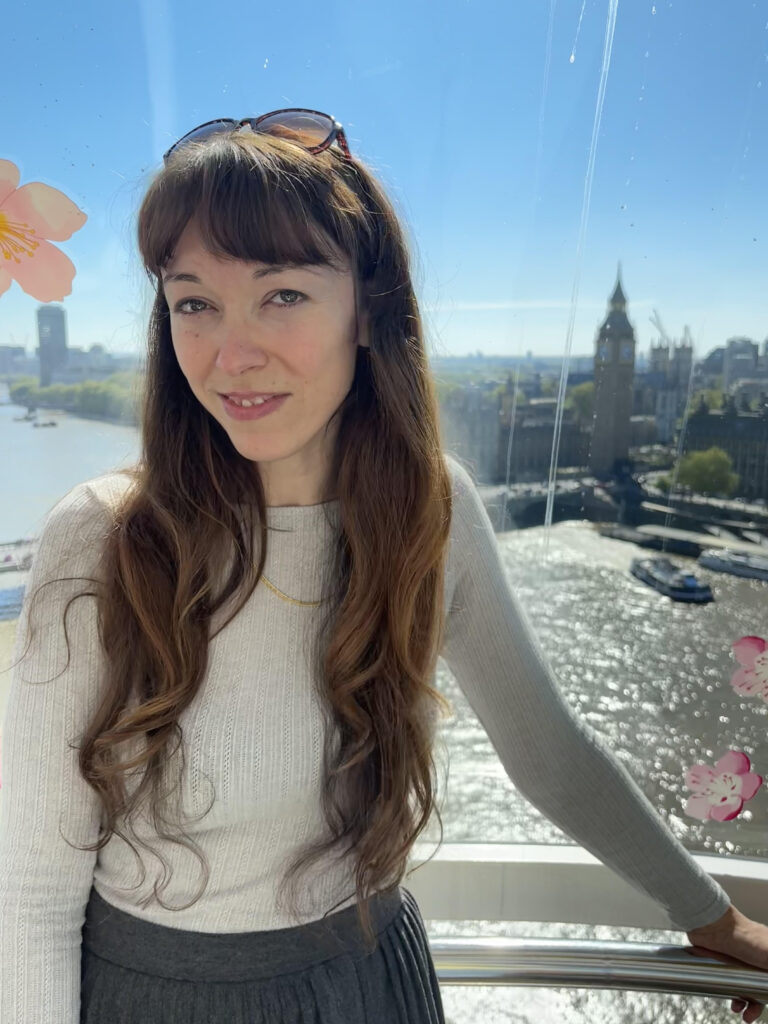
You grew up in Russia and later became deeply connected to reggae and sound system culture in Israel. Looking back – what were the earliest visual memories or influences that shaped your artistic language?
Yes I, I was born in Baku, and later moved to St. Petersburg with my parents. There, at the age of 9 I started studying in a junior Art school, getting the classical painting skills that later served me in achieving the realistic aspect of my works. My interest in art had started long before then. During my earliest childhood years, both of my parents were in the midst of finishing their degrees in architecture, so there was a lot of painting and drawing activities around me in which I loved being engaged and watch.

Lots of artbooks and lots of literature accompanied me, while amongst other visual imagery, the two art books that somehow had the most profound effect on my artistic imagination were: a book of paintings by Hieronimus Bosch and a book of drawings by Herluf Bidstrup – highly renowned in the Soviet Union, political and social commentary illustration artist whose effortless and very humane depiction of various types of characters impressed and excited me. These two books could keep me busy for hours, probably because of the rich narratives and highly detailed compositions.
Another artist that I remember enjoying from that period (the kindergarten years) was Kandinsky and I remember trying to imitate his colorful compositions. I think that all of these in that way or other, influenced my later years drawing style, and I still see their works as a source of inspiration both in the technical and the conceptual aspects.
Check out Ellen G’s extensive portfolio of artwork here.
Do you remember the moment when reggae or dancehall first stopped being ”just music” and became a whole visual and emotional universe for you?
My partner in life, Ron aka Ranking Levy, was the one to introduce me to the endless world of reggae music. Before we met, i.e. in my teens, I used to just listen to any piece of music, without putting any effort in differentiating between the different genres, more than what was needed to find the tune afterwards; just enjoying the melody, lyrics, or energy of it, being briefly aware of the particular school or tradition of the tune.
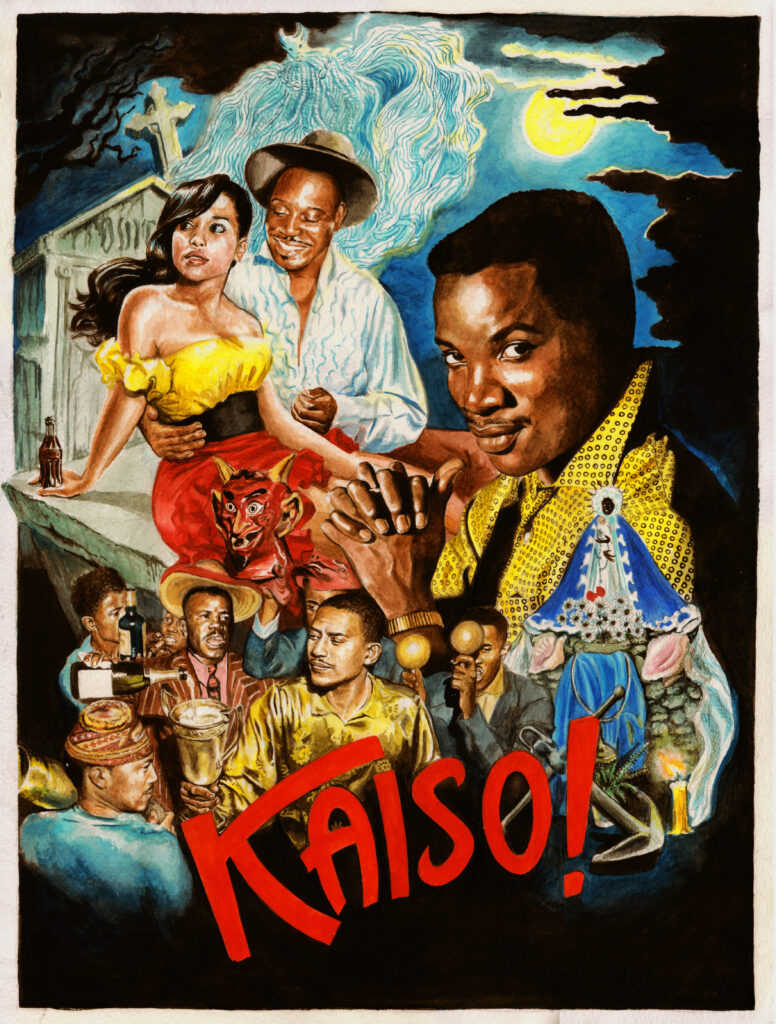
I didn’t realize then that some of the tunes I fancied belong to the ska and raggamuffin school, but I learned as soon as I met Ron. He introduced me to the various sub genres of reggae culture and to the distinguished imagery of the album covers. I guess it was then when I fell in love with rocksteady and deejay style, as these where the playlists I chose from all the vast variety Ron introduced me to.
As I mentioned, the album covers illustrations had completely blown my mind, in particular, Limonious, Jamaal Pete and Tony McDermott – the absolute icons of reggae album artistry. I had never imagined myself that one day I will have the opportunity to join that amazing craft, and was interested only in obsessively searching for more and more visuals, without any particular cause besides pure excitement. I used to buy any record I found designed by one of these titans, and was so happy realizing that the music was as epic as the covers!
Fortunately for me, I got the chance to buy some records from the original stores and studious in JA, during the several times we visited the island together. It was like making a pilgrimage to the sacred temple of this rich and mysterious culture, getting to see the holy grail – the physical printed covers, even if only just to see sometimes, because some LPs’ prices were too high for us, so all I could do is to take a photo of the cover. We even have some empty covers from these days, which the store/studio owners gave us out of curtesy, seeing our enthusiasm.
Your posters often feel rhythmic – almost like visual dub versions full of layers, tension and movement. Do you consciously translate sound into image while working?
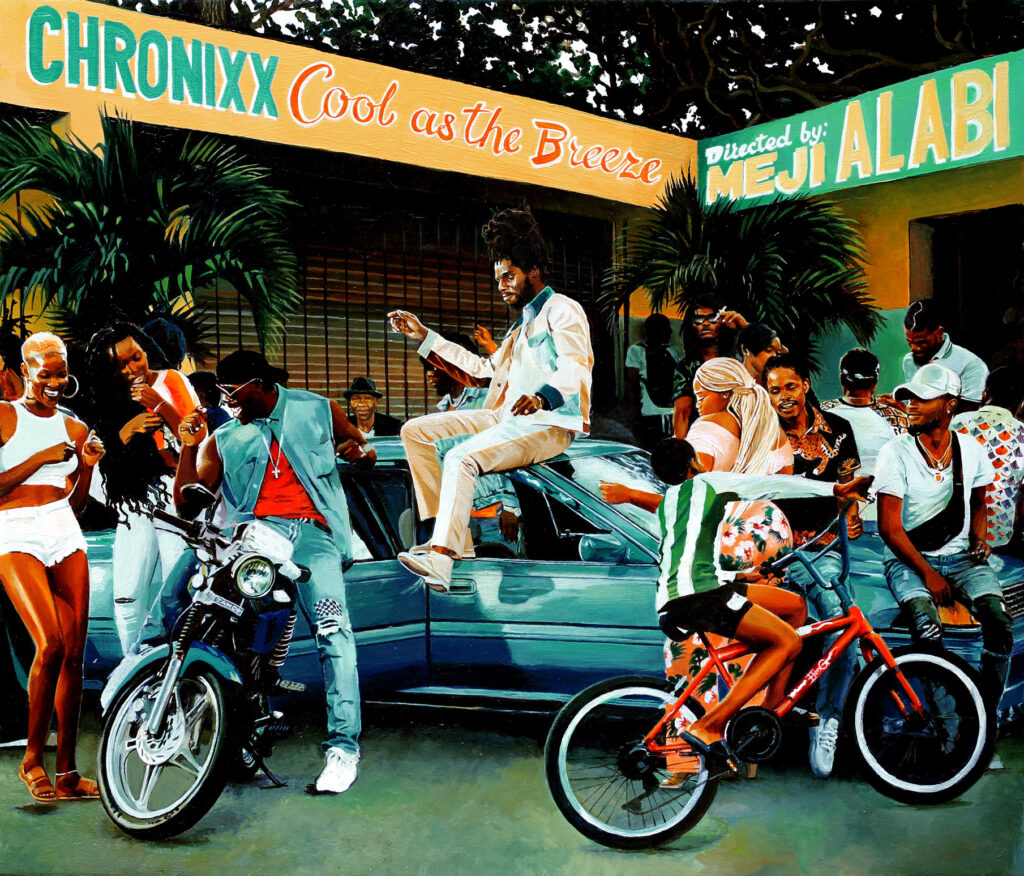
Thank you! It’s a very nice compliment! I think there’s no other way when drawing music related scenes. I often feel that it’s not enough motion, especially when I draw a dancing crowd, because it isn’t easy to create a motion and keep it realistic, so I study the different moves and perspective angles to make it work. So, when drawing a dance scene, the intention is definitely there.
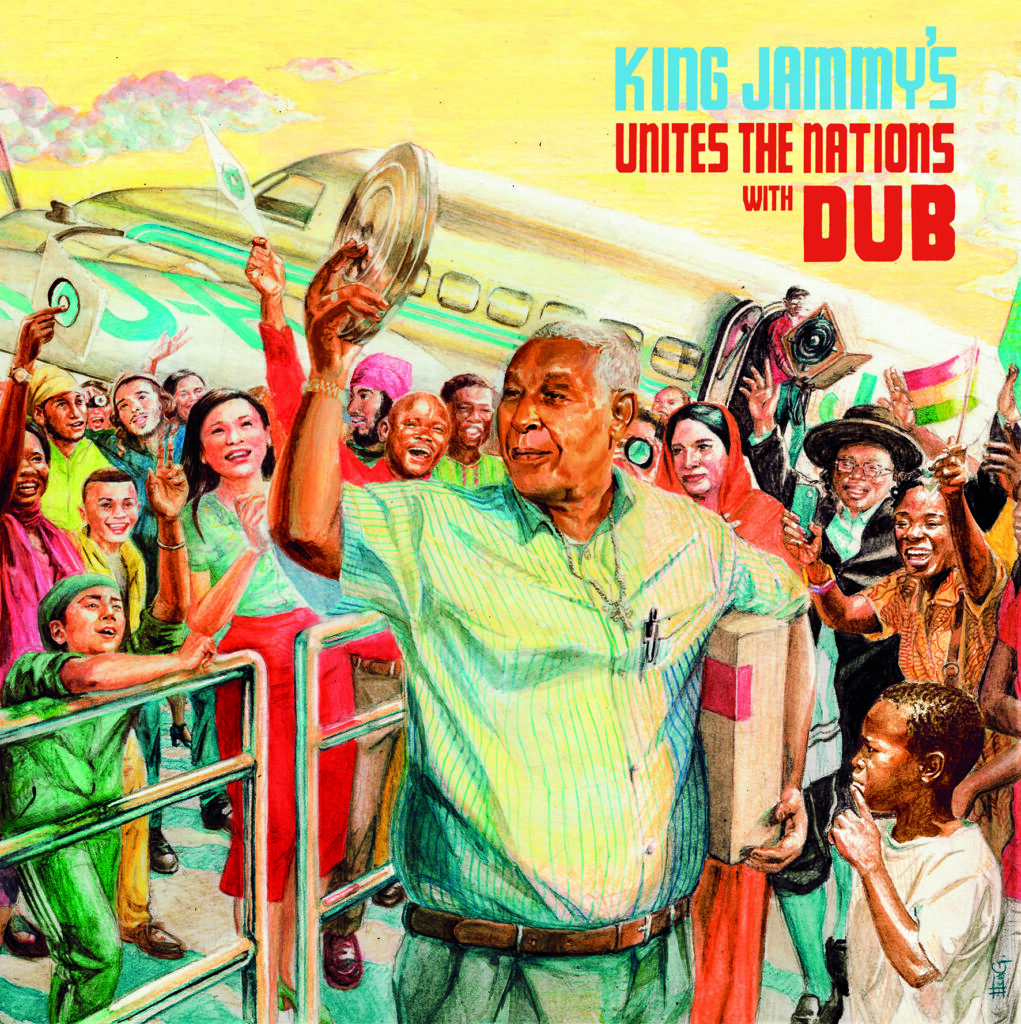
(watercolor on paper, VP collection)
Overall, I think that it is an essential feature of an illustration ”live”cated to a music theme, either if it’s a portrait of an artist – who most of the time, even when standing still, have some dynamic energy that you can’t ignore – or more of an ambient scenario, there has to be some motion in it. I am not sure that I think of it at all times, but rather the colors and the themes carry the rhythmic vibe.
There is one certain artwork where I consciously aimed to translate the dubbing tradition into the visual, which is the poster I did for a festival in Toulouse, in 2023. The concept was to create an image that would pay a tribute to the legends of the dub genre, and the main reference was the iconic Greensleeves 12″ cover. But since I had rather a short time to do it, I didn’t want to just draw a list of dub artists, in a straightforward imitation of the reference, but to include the elements of the genre musical esthetics. So I came up with incorporation repetitions that would emphasize some of the crucial elements of the illustration, like Jah Shaka’s hand holding up the 45″ record, Scientists’ hands on the console and King Tubby’s fingers turning the preamp knob. I also multiplied Lee Perry’s console knob tops, trying to recreate that spacy-unreal effect that dub music generates so often.
Many reggae lovers can see the spirit of Wilfred Limonious in your work – but your style also feels more psychedelic and contemporary. What fascinates you most about his visual language?
Thank you again! It is super flattering being compared to one of my absolute icons! Of course, as I’ve mentioned, Limonious’ art had a tremendous influence on my work, long before I could imagine that one day I will illustrate for an album cover myself. Not only his drawings, but the whole visual universe he created, had stunned me from the moment I saw his work. His color pallets and the wild characters he imagined, and his interpretations of the artists he drew (like the one of Josey Wales, or Michael Palmer) – you can’t not admire it and become a fan immediately!
When you see his illustrations, the whole atmosphere of Jamaican culture is awakened in your heart, all of its nuance and humor is just so present in his artworks, as if he had managed to distill the pure essence of that particular vibe, that distinguishes Jamaican culture from any other and that is what also communicates it to any culture lover no matter where in the world he happened to grow up. I love how honest, rough and unapologetic his imagery is, and how at the same time it is so humane and full of empathy and delicacy. It is a real honor to be considered as a kind of his protégée.
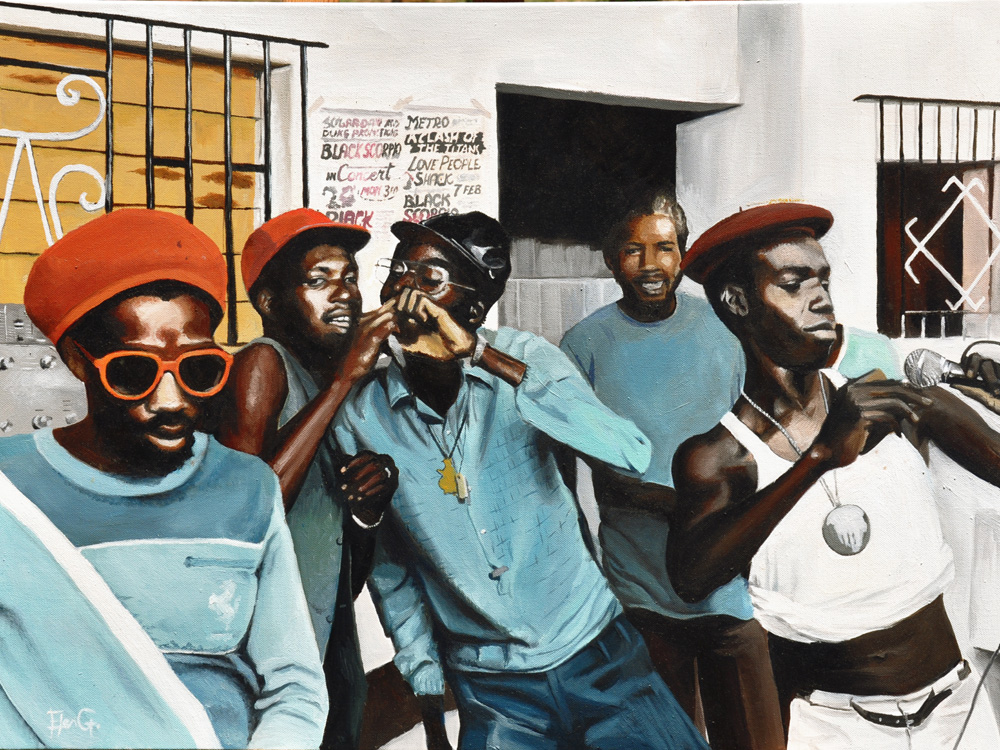
Old dancehall artwork was often raw, funny, chaotic and full of attitude. What do you think contemporary reggae artwork sometimes lost along the way?
I think that in reggae art as well as in every other field, the rawness you mention can easily be vanished by the various technological tools, either it is an AI image, or a desire to impress with a technical skill. At many cases the original character is harder to achieve, especially with the AI imagery, which being based on previously created visuals in the category prompted, loses originality. And at other times a tendency to provide as much work, as fast as possible, makes the automation behind it obvious and the repetition does not have the same spark as a singular image.
I think a same phenomenon is taking place in the music production, when musicians have so much tools to work with, and so many options to edit, that the outcome is at times a bit too perfect, and that makes it a bit overly moderate. A good example of it is the categorical difference in recording technique – while back in the days the whole band had to be recorded together, in a small room, on tape, which limited the number of takes, so everybody had to be in a perfect sync, or rather all the slight imperfections were outshined by the general vibe that the players shared with each other. Today’s technology can in some cases impact the final products in a way that the sound, although perfect by all parameters, will give a feeling of alienation. Rather than that, I think today there is an enormous amount of brilliant young artists, and given the unimaginably once easy access to the artistic treasures to be inspired by, there is a huge potential for a vast new creation to come.
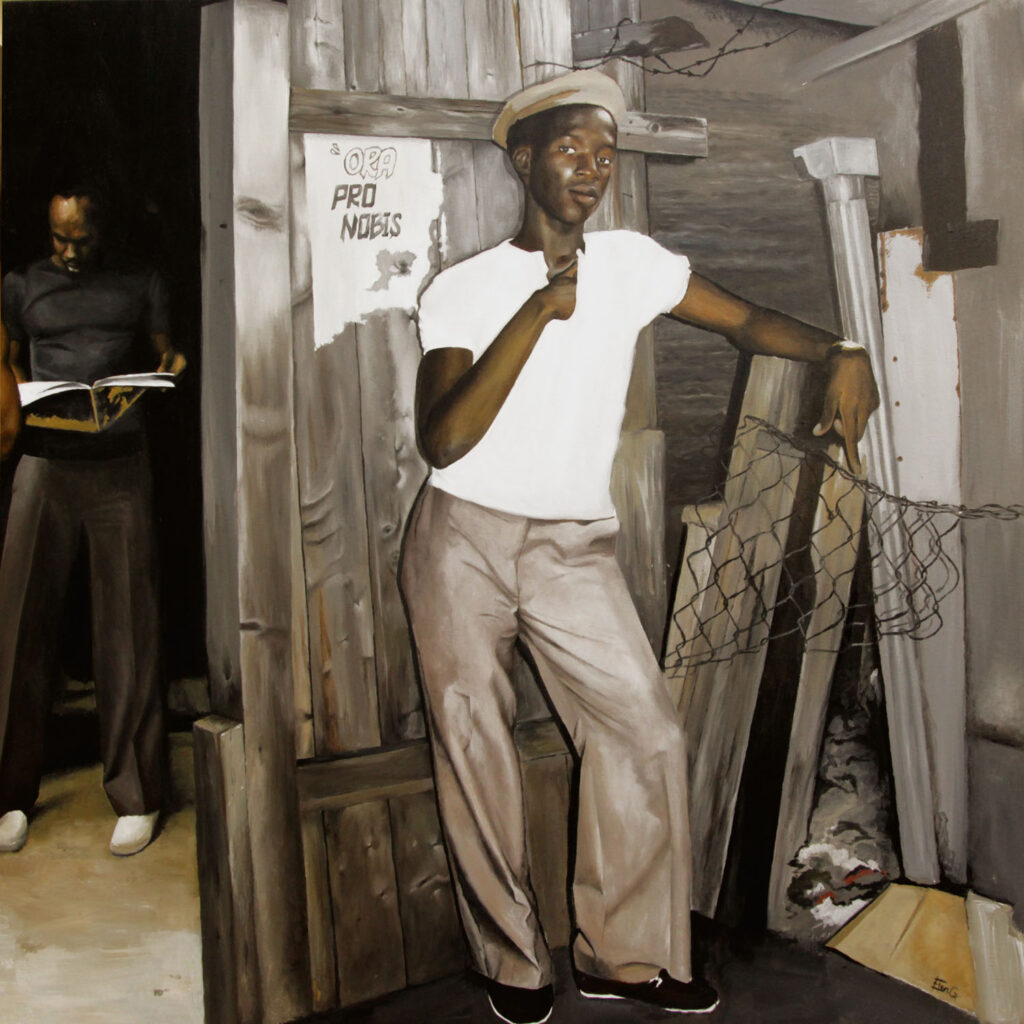
Your work never feels over-polished or corporate. How important is DIY energy and imperfection in your creative process?
Thank you again. Actually, as one of my mentors had said to me once – the artwork is never finished in the eyes of the artist, since the artist always will see more work to be done. Any finished work is a compromise, even when there’s no real due-date for the completion, you have to stop at some point, knowing that you could have done better. That’s an aspect I love, (although it can be frustrating at times when I really have to work quick) because the passion to create never ceases. So, the DIY aspect is important in the way that I really enjoy the process, but it is not in any case intentional. Did you know that Leonardo Da Vinci had been working on the Last Supper painting for three years? And I am sure he just had to finish it at some point, otherwise he could have continued for the next three years. I am not comparing myself, but I surely can understand the sentiment.
What does your actual working process look like? Are you sketching with music playing loud in the background, or is creating visual art a completely different mental space for you?
I love listening to music while working, and I also love to enjoy a lecture, or an audiobook. It depends on the mood I’m in that day and also on the type of work I’m going to do. When I’m sketching, I prefer music, because that part takes a lot of planning and analytical thinking, even though the process is comparatively short. But when all the elements are there and it’s the work on details, I can listen to a lecture, or an audiobook. Sometimes I get an inspiration, from the ideas I hear, to add some detail or other to the narrative of the composition.
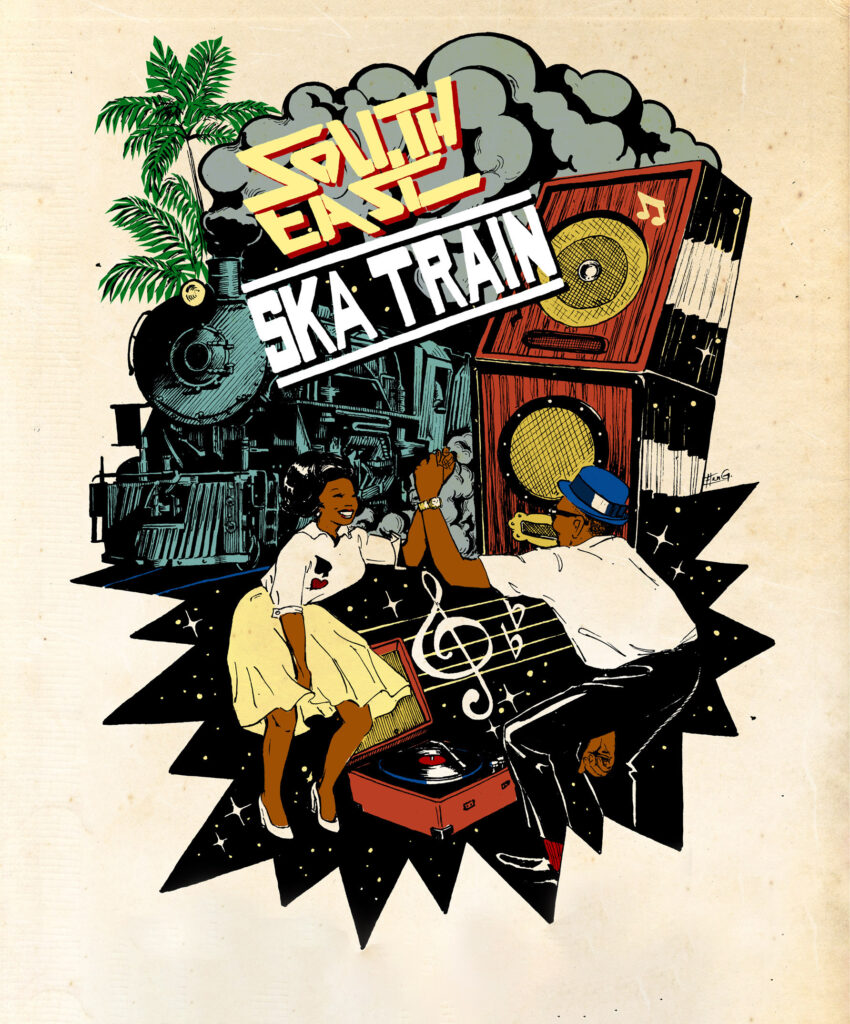
You’ve worked closely with sound system culture and reggae crews. What makes visual art essential to a session, a dance or a sound system identity?
To me, all expressions of art are intervened with each other. Reggae music, in all its different expressions, is an art form that—like any other—embraces everything the human mind and heart can perceive. Reggae culture is an ever-evolving ecosystem, where the pulse of the music gives life to many different forms of expression: linguistic innovation, visual identity, and performance styles. All of these elements are intertwined, constantly influencing one another while also drawing from and contributing to the global cultural world.
It’s like, you can’t detach the sound system culture from its origins in the traditional calypso gatherings, where every singer had something to present and defend, while carefully shaping their appearance, movements, and lyrical skill.
In the same way, it is difficult to fully understand the enthusiasm of sound system participants—DJs, selectors, sound engineers, and the crowd—without being familiar with the legendary storyline of ”Rockers.” So, as with any art form, an artist cannot ignore the traditions and developments of the field they work within if they desire to achieve a satisfactory result.
And I believe the same applies to the audience attending a dance. When all these elements are deeply rooted in the culture and present in its many layers, people experience it more fully. Even if the feeling is only intuitive, they sense – just like I did when I first encountered the genre – that there is much more to it than just a momentary entertainment, more to dive into, more to explore.
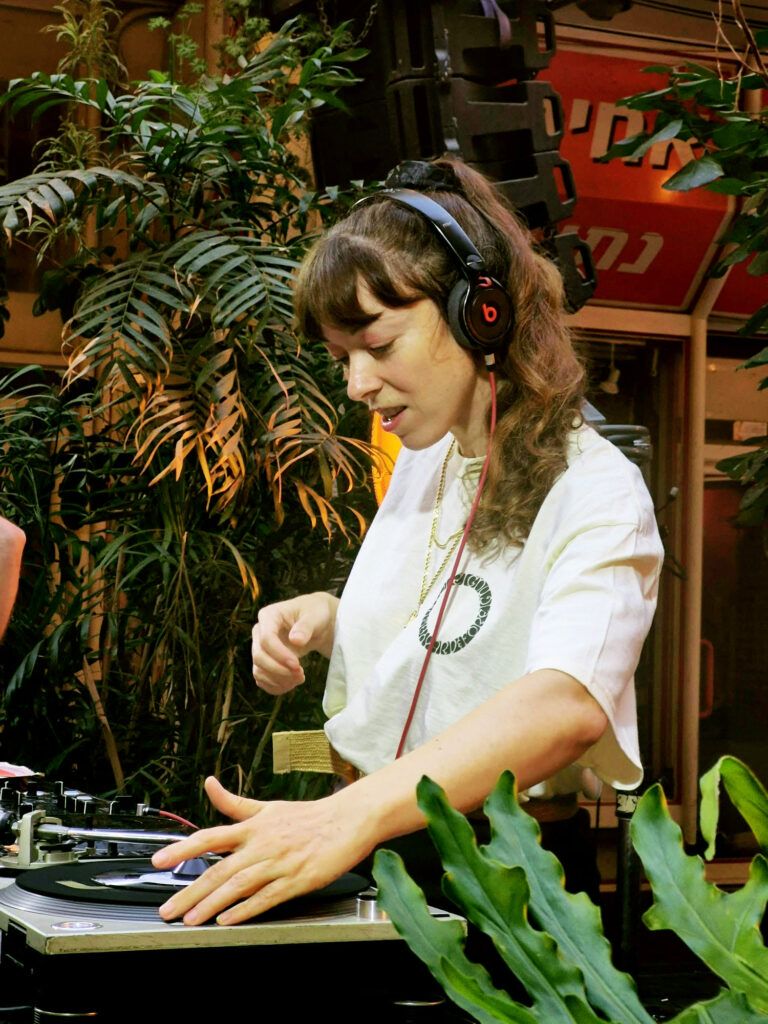
Reggae and sound system culture can still be very male-dominated spaces. How has your experience been as a female artist moving through this world?
When I started selecting at the dances, there were fewer female representatives in that field, but you can’t forget the prolific women artists who still have an immense resonance in the reggae sound system culture, like Sister Nancy, Sister Carol, Lady Ann and many more. So I wouldn’t say it was too hard to step in a field that then had been dominated by men, because there were female role models to look up to.
Maybe it’s because the women become moms at some point, and then they are more limited in all that has to do with attending the venues. I think that many social activities are dominated my man for that reason, except of course the ones that deal with topics concerning women in particular.
In times of algorithms and fast digital content, your artwork still feels deeply connected to physical culture – posters, vinyl, printed graphics, hand-made aesthetics. Why does that tactile side still matter to you?
I couldn’t enjoy an artwork unless it has some relation to its cultural surroundings. So I wouldn’t create an artwork that would be based just on a shallow imitation of the genre’s stereotypes. It is getting into the depths of the origins and tradition that moves me most when working on any type of creation, whether it’s an album cover, or a poster illustration, or an original artwork, or an essay.
As for the physical connection to the artwork, it is important mainly because it gives me more freedom to create and less technicalities to deal with. For example, if I want to draw a watercolor, oil or an acrylic painting, I’d rather spend my time mastering the physical medium, than hunting for the different digital brushes in search for the one that would give ”the real watercolor/oil/acrylic effect”. I also don’t like the LED light being up in my eyes the whole day, so I prefer the paper, or canvas. The only digital option that fascinates me really is the animation, since the tools available make it more accessible, so any chance I get to explore that – I’m in. Rather than that, all that has to do with the technical image editing and getting it print ready, is my least favorite part (although it is nice to see the finished work).
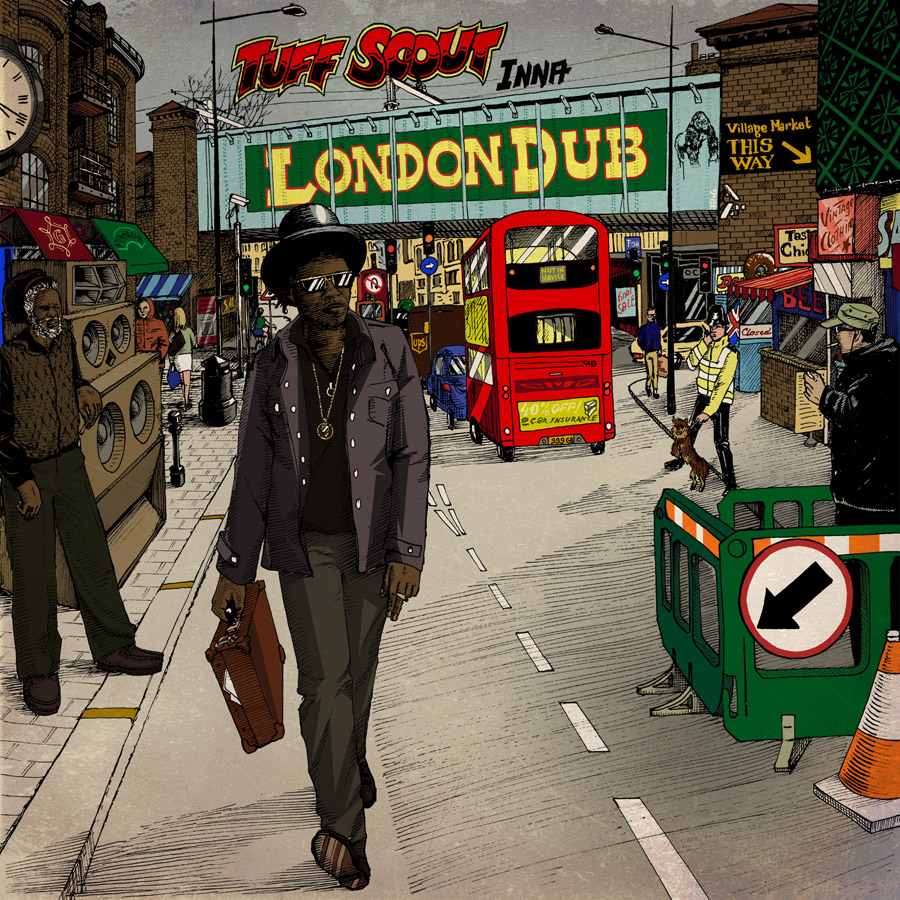
(ink pen on paper, Tuff Scout collection)
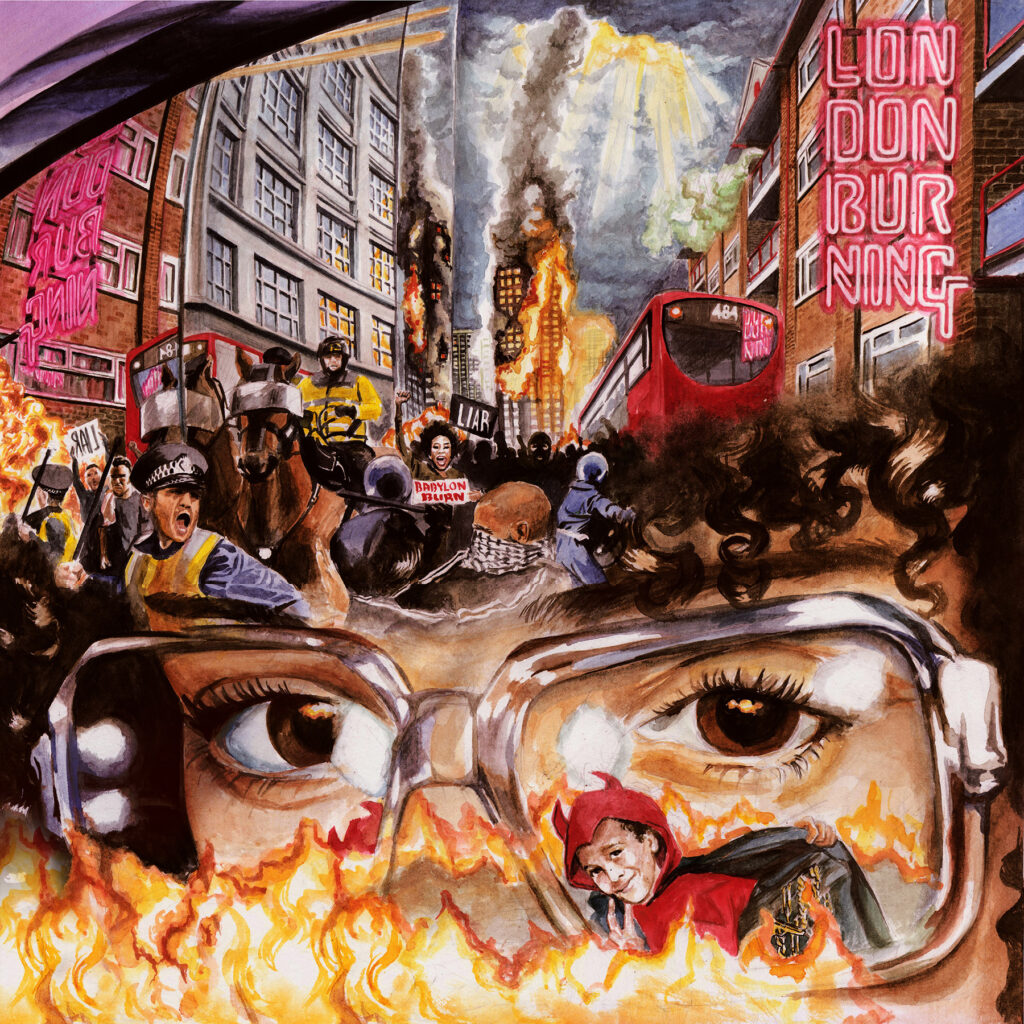
(watercolor on paper)
Where do you see reggae and sound system artwork evolving in the next years? Is there something younger artists should reconnect with?
I will give you an Hegelian – or perhaps Freudian – answer, just because I think it suits your question best. Any form of real development contains in it its own precursor, even if that precursor is no longer physically present. Development is an enveloped potential that has been realized – meaning that it was always there, existing as a spirit that drives it toward realization. So any kind of event occurring is a consequence of a subconscious drive that’s been sizzling there since the beginning of times.
Considering that reggae is a social commentary form of cultural expression, it’s constantly being affected by the spirit of humanity as a whole. That underlying current defines it, and being affected reciprocally. My hope is that the spirit of the more humane nature will prevail, and that this specific genre of content will somehow overcome the determinism of the aggressive and destructive instincts – or at least transcend the clichés that perpetually inflict its claims in various forms. So we will see some productive development in reggae and sound system artwork.
Out of all the posters, covers and projects you created so far – is there one piece that still feels especially close to your heart? And why?
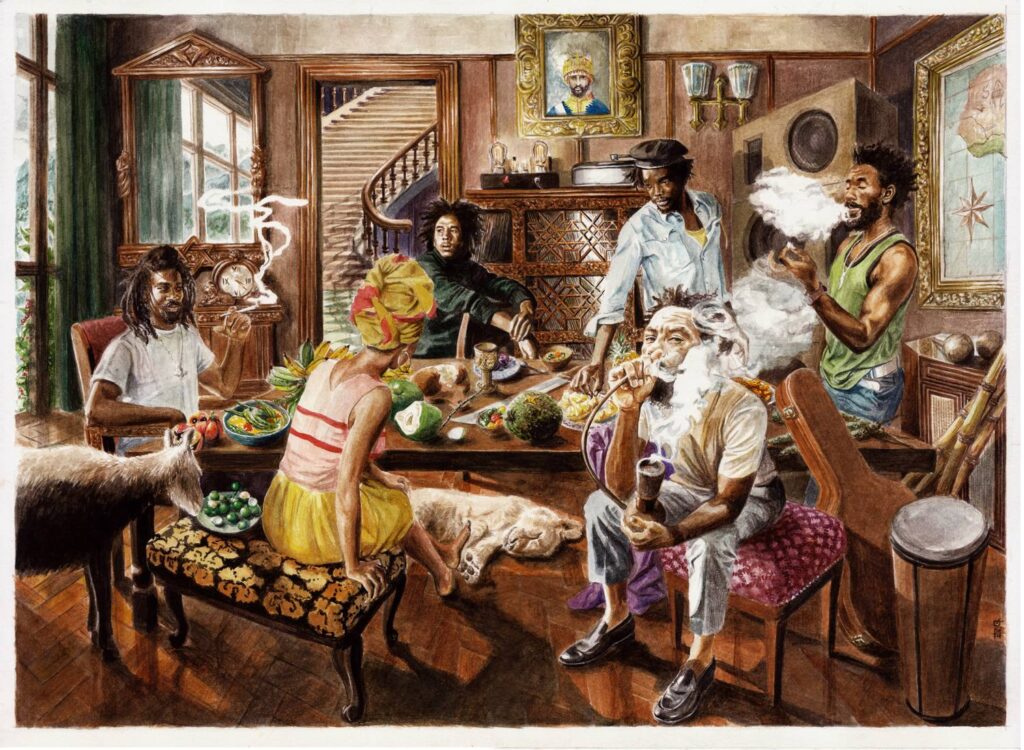
It’s hard to tell really. I like some of my earlier works and some of the later ones, but it’s hard to tell which one is my favorite. There is one that I have enjoyed in particular, that I made for RAS records’ ”My Cup Runneth Over” back cover sleeve. The reference was Doctor Dread’s vision of recreating the iconic Rolling Stones ”Beggars Banquet” inlay bonus picture, with the legendary original Wailers crew, and U Roy, who’s riding the iconic Wailers’ riddims in the album. I really had fun with reimagining the scene, while trying to follow the style of this Renaissance influenced photo. Since the original photograph is rather dark, you can’t see all of the objects in the room, and it was fun brainstorming with Dr. Dread about the various homages to reggae culture that would replace the elements of the original image.