
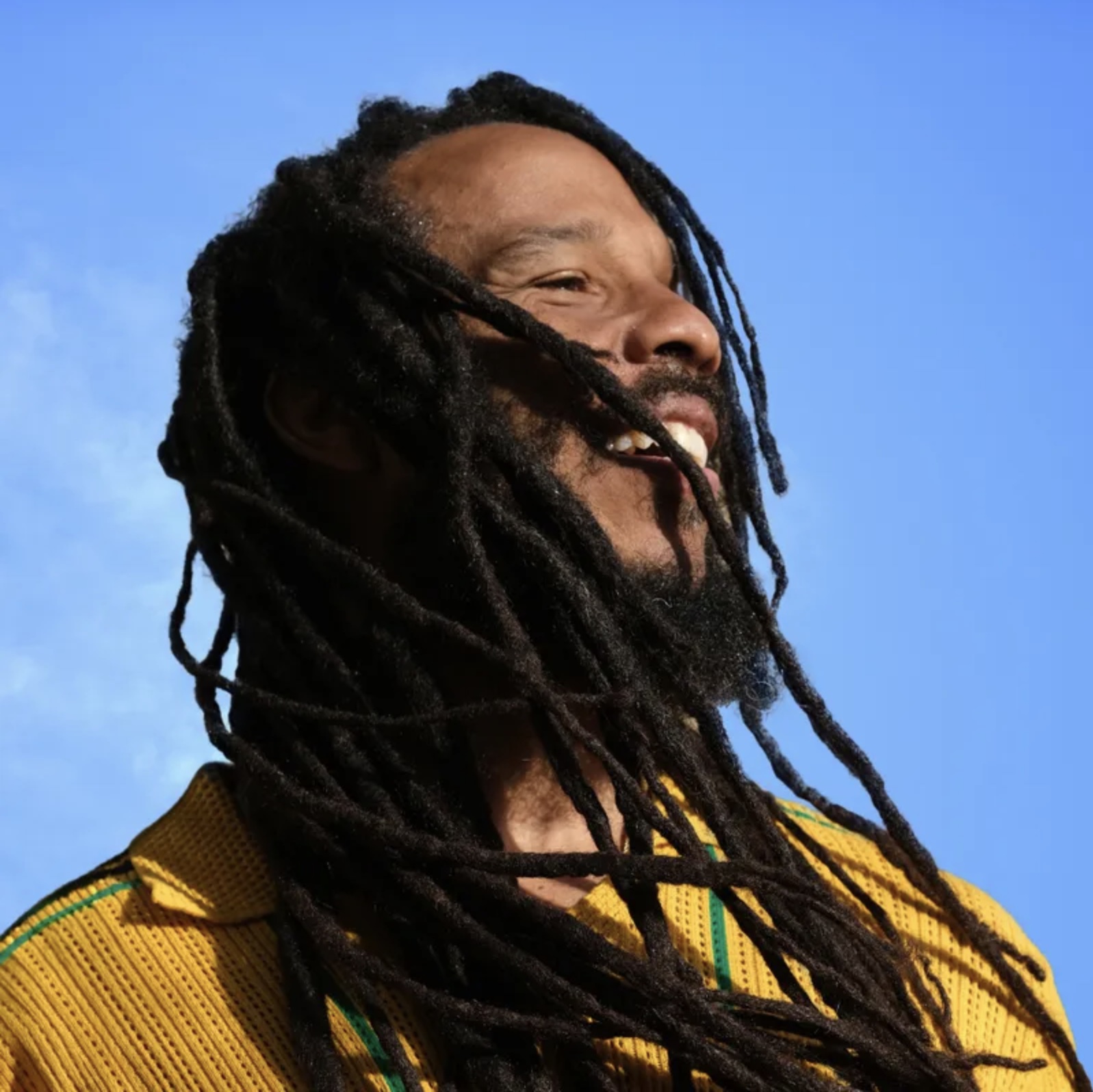

Ziggy Marley – Brightside
Tuff Gong Worldwide
Text: Elizabeth Hann
Ziggy Marley has returned from a four-year hiatus with songs to lift hearts and deepen thoughts. ”Brightside”– his ninth solo album, and his first since 2020’s ”More Family Time” – is, as the title suggests, about positivity. Some listeners – made cynical by too much bad news and too many songs that make staying positive sound easy as flipping a lightswitch – may fear that such a theme portends eight tracks worth of sap. But they don’t need to worry. Ziggy’s rough raw, smokily soulful voice – and the brilliant assembled talents of the album’s musicians and backing singers – redeem even his most simplistic lyrics. The songs on ”Brightside”are at once soothing, sustaining and strong. This is music made by someone who knows what despair is, giving his listeners ways of fighting that despair off.
Leadoff single ”Many Mourn For Bob” is the least upful, most melancholy song here. Over subtle acoustic guitar and keyboards, backed by lambent numinous vocals from Stephen Marley, Ziggy remembers Bob Marley as both a rebel hero and a young father who died before his time; the beautiful melody and Ziggy’s simple direct words are heartbreaking. This is a real blues song, a song where the singer lets his sorrow weigh heavy on his heart, and sings from underneath that heaviness.
Racism Is A Killa” is the album’s most striking song; one of the toughest songs Ziggy has recorded in years. It’s a direct confrontation with racism written after Ziggy heard about the murder of George Floyd. Over bright horns and a hard-driving bassline, he warns of the dangers of racism – ”that hateful disease” – and offers humanization as the cure. The song deserves to be a Top 40 pop hit, its vital message heard by people of all backgrounds, everywhere.
Another major standout is ”Hey People Now”, a dancey R&B tune featuring hot, Bonnie Raitt-ish guest vocals from veteran soul singer Nikka Costa. A reversioning of ”Say People” (which Ziggy first recorded in 1986 with the Melody Makers), it’s both a love song and a song about making the world a better place. ”Why Let The World”, featuring Trombone Shorty, and ”Jah We Give Glory” – where Ziggy reveals that the secret to walking on the bright side is faith – are also notable.
What’s most inspiring about ”Brightside,” is Ziggy’s willingness to disregard genre boundaries. Working with musicians and singers from outside the Reggae tradition, he has made an album that is not ”strictly roots.” ”Brightside” is a musical stew of roots reggae and roots rock, funk and folk, R&B and pop. This fusion quality – rock, jazz, and R&B musicians getting together with Reggae singers to make music of hope – is an anti-racist anti-fascist statement in itself. It makes the messages of love and unity in the album’s lyrics more than mere words. ”Brightside” is an album not just for fans of roots Reggae and the Marleys, but for anyone who needs some reasons to look on the bright side.


I just want to thank everyone at Riddim for publishing the review I wrote. And I want to tell everyone who reads this review: thank you so much for reading my words. I apprecialove all my readers more than I can say; writers always do. I hope you found this review both thought-provoking and informative.