
Text: Christian Bosoni
The Soulful Weight of ”Lots of Love and I”: Bob Andy’s Uncompromising Masterpiec
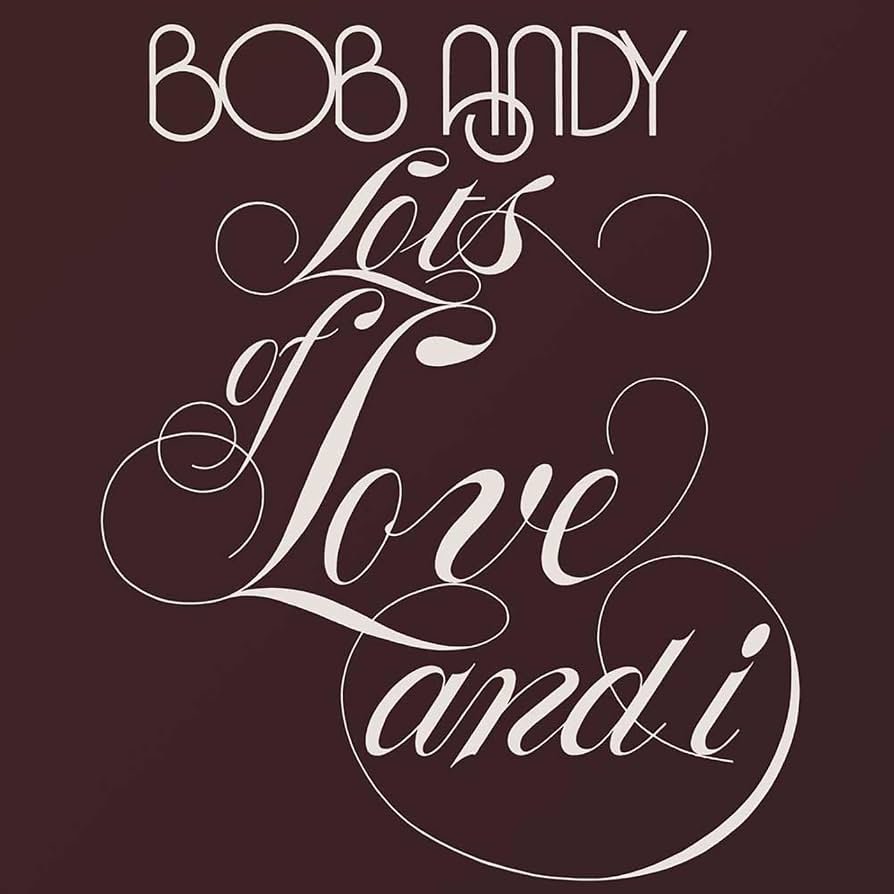
Few songwriters in the history of Jamaican music possessed the poetic gravity of Keith ”Bob Andy” Anderson. Having cut his teeth at Studio One crafting foundational anthems, Bob Andy was never merely a reggae singer; he was a soul chronicler, a philosopher with an extraordinary ear for melodic tension and human vulnerability.
In late 1977, when Lots of Love and I emerged through Sonia Pottinger’s high-caliber production setup, it captured an artist operating at the absolute zenith of his creative power. Bridging cinematic soul, delicate lovers’ nuances, and unflinching, heavyweight roots, the record stands as a masterclass in rhythm engineering and emotional truth.
The Revolutionaries at 33 Bond Street
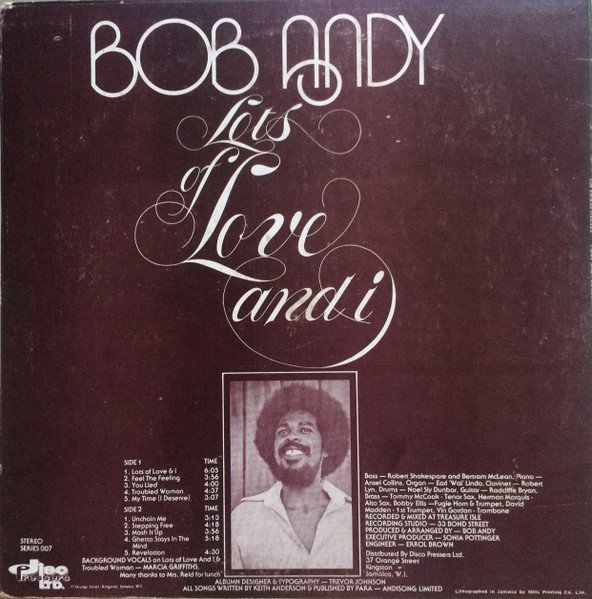
While the outer sleeve lists the players individually without a collective banner, any seasoned record digger scanning the credits will recognize the lineup immediately: this was the beating heart of The Revolutionaries.
At the time, Sly Dunbar and Robbie Shakespeare were transforming reggae across town at Channel One with their hard-edged, militant rockers style. But inside the hallowed rooms of Duke Reid’s (33 Treasure IsleBond Street), under the watchful ears of engineer Errol Brown and producer Bob Andy, the Revolutionaries revealed a completely different dimension of their artistry.
- The Low-End & Drum Pocket: Anchored by the dual bass power of Robert ”Robbie” Shakespeare and Bertram ”Ranchie” McLean, the twin pillars of the Revolutionaries’ rhythm vault, locked tight to Noel ”Sly” Dunbar’s crisp drumming.
- Keys & Strings: The razor-sharp rhythm chops of Radcliffe ”Dougie” Bryan on guitar, interwoven with Ansel Collins on piano, Earl ”Wire” Lindo on organ, and Robbie Lyn handling the clavinet.
- The Royal Brass Section: The defining horn lineup of the late ’70s, featuring Tommy McCook (tenor sax), Herman Marquis (alto sax), Bobby Ellis (trumpet & flugelhorn), David Madden (1st trumpet), and Vin Gordon on trombone.
- Vocal Splendor: Essential backing vocals by none other than Marcia Griffiths, rounded out with an endearing touch printed right on the jacket: ”Many thanks to Mrs. Reid for lunch”.
Here, the sheer kinetic power of The Revolutionaries was channeled into warmth, soul, and elegant restraint
Side One: Between Soul and Heartache
The album opens with its stunning title track, ”Lots of Love & I”. It starts sparse and lean, riding a minimal, funk-tinted soul groove that breathes in the verses before blooming into the chorus. That is where Marcia Griffiths enters, her voice bathing the room in light as the rhythm asserts its full reggae power.
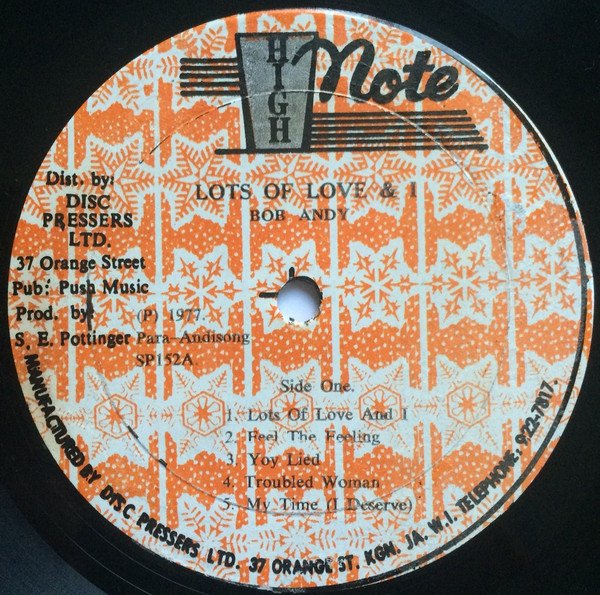
From there, the mood pivots with total grace. ”Feel The Feeling” leans into pure, buoyant lovers rock, only to plunge headfirst into the stark vulnerability of ”You Lied”. In this heart wrenching ballad, Andy chronicles betrayal and emotional exhaustion; the band holds back, letting delicate, weeping chord textures mirror every drop of grief in his voice. On ”Troubled Woman”, Marcia returns to provide a velvet harmonic cushion, before Side One closes with the unstoppable drive of ”My Time [I Deserve]”.
Long-time connoisseurs will instantly recognize the tune: Andy had first cut ”My Time” for his seminal 1970/1972 Studio One album Songbook. But while the original Brentford Road take carried the raw, buoyant swing of early rocksteady/reggae, here The Revolutionaries rebuild it into a triumphant, muscular roots statement, elevated by an imperious brass line and an unstoppable forward drive.
Side Two: Heavyweight Consciousness and the Ghetto Mind
Flipping to Side Two, the roots engine shifts into overdrive. This sonic metamorphosis is clearest on ”Unchain Me” (originally recorded as ”Unchained” on that very same Songbook LP). Where the Studio One cut was intimate and melodic, the 1977 rendition at Treasure Isle is an absolute juggernaut: Sly Dunbar rides the razor sharp edge of the snare rimshot from the first bar, all swallowed by a subterranean, rolling bassline that wraps around the mix like molten lead.
Then comes ”Stepping Free”, a masterclass in groove dynamics. Sly drops a signature one drop where he hesitates for a fraction of a second at the top of the verse, a breathtaking micro pause that sends the rhythm airborne. Underneath, a minimal bassline sculpted out of deliberate silences makes every note reverberate, locked against an unforgettable brass refrain that reminds you exactly what it means to step free.
After the dancefloor energy of ”Mash It Up”, the record drops into its darkest and most profound psychological territory: ”Ghetto Stays In The Mind”.
Driven by a brooding, minor key bassline of monumental weight courtesy of Robbie Shakespeare, the track physically places the heavy realities and psychological toll of inner city life directly on the listener’s shoulders. There is no cheap escapism here; the groove is meditative, heavy, and inescapable.
Closing the journey is ”Revelation”, the prophetic payoff of the LP. Anchored by another earthquake grade bassline and celebratory, soaring horns, it pulls the record back up into the light and cements the album’s status as a timeless masterpiece.
When we look below the bassline of Lots of Love and I, we hear far more than a set of well crafted songs. We witness the versatile genius of The Revolutionaries, revisiting Bob Andy’s earlier masterpieces and proving that at 33 Bond Street, Robbie, Ranchie, Sly, and Errol Brown understood that in great reggae, the pauses between the notes carry just as much soul as the notes themselves.
Unverzichtbare Fundstücke
- Bob Andy – Songbook (1972, Studio One) — The Raw Genesis of ”My Time” and ”Unchained”
- Bob Andy – Lots of Love & I (1977) — The Soulful Title Track with Marcia Griffiths
- Bob Andy – Stepping Free (1977) — Sly Dunbar’s Micro-Stop Masterclass
- Bob Andy – Ghetto Stays In The Mind (1977) — Robbie Shakespeare’s Dark Minor-Key Bass Heavyweight
- Bob Andy – Revelation (1977) — The Prophetic Closer.
| BELOW THE BASSLINE: Giving Credit to the Architects of the Foundation When we listen to a reggae classic, our minds naturally drift to the singer. We remember the velvety vocals, the conscious lyrics, and the charisma of the frontman. But every true reggae head knows a deeper truth: in Reggae music, the voice is just the tip of the iceberg. Beneath the surface, locked in a perfect sonic pocket, lies the riddim, where the hypnotic pulse of the bass, the steady chop of the guitar, the clicking rimshot of the drum, and the warm skank of the keys blend into an unbreakable force. Behind those timeless grooves are extraordinary session musicians who far too often were left little to no recognition on the original vinyl jackets, overshadowed by the names of the vocal groups or the producers. This column was born to shed some light on these unsung heroes. It is an ongoing musical excavation into the bedrock of the foundation, where we will look back at historic recording eras to figure out who actually played on your favorite tracks. Turn up your systems – we’re diving below the bassline. |