
When we first interviewed her in 2019, she had only released three tracks, a few remixes, and some freestyles. But those who knew her already considered her the Lauryn Hill of the Caribbean. Whether sensual, serious, or humorous – her sultry, seductively rich voice, her laid-back melodies, and her nonchalant delivery inspires great admiration even with such a small catalog. Even back then she turned her inner world outward, makes the personal political, and encouraged sisters and brothers alike to believe in themselves and do their own thing. Just ask her biggest supporter, the woman-understander Protoje.
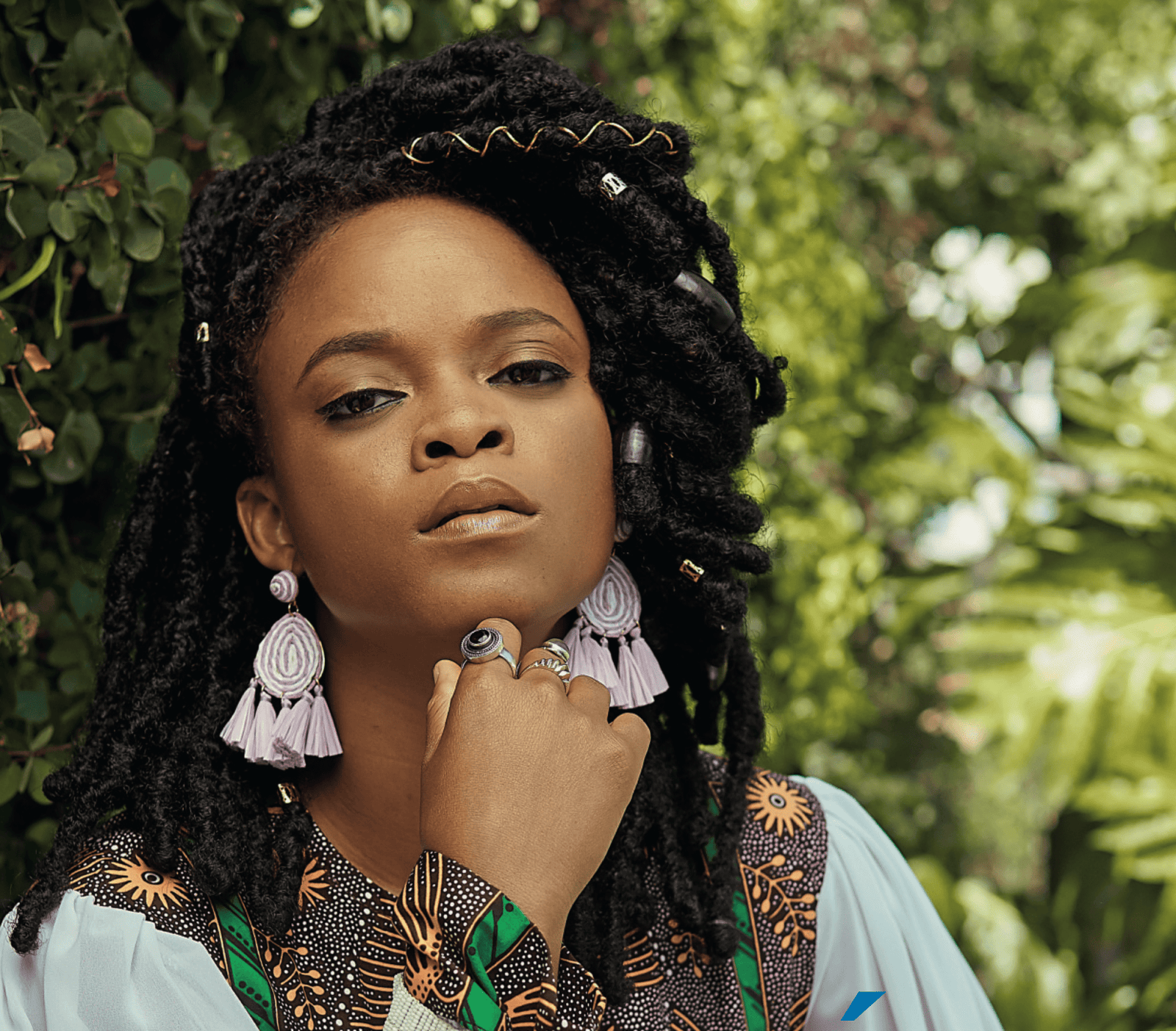
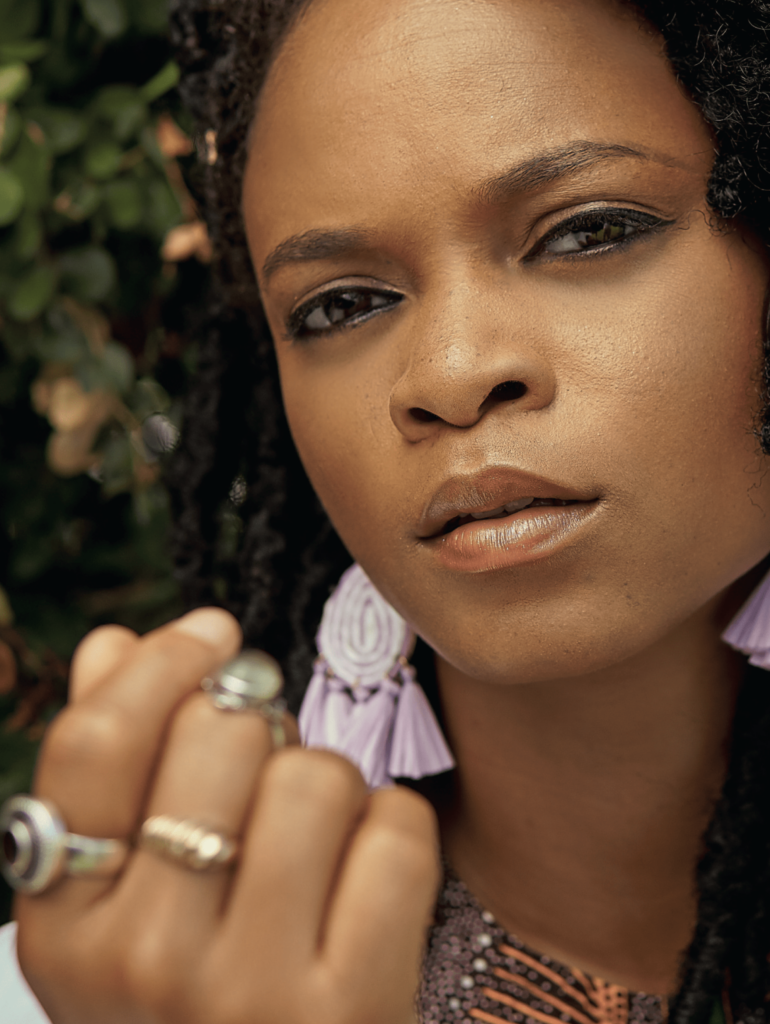
Text: Ellen Köhlings & Pete Lilly /// Photos: Nickii Kane / Make-Up: @tiffanylamour / Dress & jewelry: @etalstore
This article was first published in March 2019 (RIDDIM 02/2019)
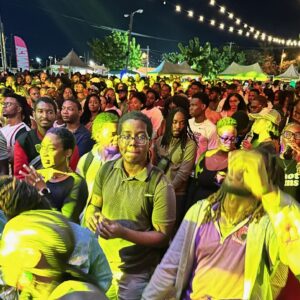
She’s barely visible in the dense crowd at the Control Tower. The Dub Club is bursting at the seams. Host Gabre Selassie is celebrating his birthday. Chronixx was supposed to be the guest of honor. Word of his cancellation hasn’t spread yet. Expectations are high. Artists are stepping on each other’s toes, waiting for their chance.
Dozens of phones are pointed at her. Lila Iké seizes a moment of confusion, grabs the mic, and begins: ”My baby tell me that he’s leaving today, say him cyaan take the stress…” The bass of the ”Promised Land” riddim starts pumping. She pleads with her ex. Theatrically, she throws her arms in the air, carves out space for herself amid the throng of artists, drops to her knees, and sways her slender body to the heartbreak she’s singing about.
”I don’t need a producer To tell me, maybe you should shorten your skirt or make it a little tighter.”
”Brap Brap Brap!” The crowd cheers on the singer with the cheeky freckles. They hoot, clap, and stomp. As the petite woman in a sassy striped top with pink nickel-rimmed glasses and an Angela Davis-style Afro transitions from ”Second Chance” into a freestyle in honor of the host, her voice is barely audible over the noise. Gabre’s siren wails incessantly. Then she turns serious again, with vehemence, jumping on the spot, crouching down, writhing, rearing up, screaming her heart out.
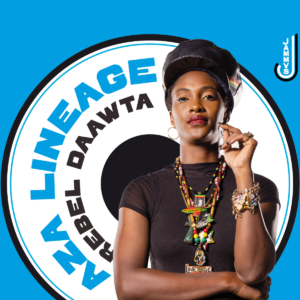
She concludes her spontaneous lament about the hopelessness, misery, and despair of young people in true sound system style with a punchline: Anyone who can’t afford college, she sends to Dub School – or, as she puts it, the Dub Club. Before she demands space for other women amidst a crowd of seasoned men and invites Aza Lineage to the mic. But she stands just as little a chance of holding her own against Lutan Fyah, Chezidek, Mikey General, Mark Wonder, and Micah Shemaiah as Koffee does later on.
Yet Lila’s intense yet nonchalant style, her lively yet laid-back flow, and above all the reactions to it show that gender balance is long overdue in this scene as well. None of her male colleagues manage, on that November night, to whip the audience into a frenzy of enthusiasm quite like Lila Iké does. And there are plenty of other young women who adopt different perspectives, give voice to different voices, find different melodies – women who are ready to turn things upside down.
Like Lila, they’re introducing new images of women into music – ones not designed by men. Lila is self-confident and self-determined. Her understanding of sexiness is a counterpoint to the vulgar physicality of dancehall. Lila can be whatever she wants: a tomboy in hip-hop gear with a hood pulled low over her face, a harmless schoolgirl in a uniform and pigtails, a capable businesswoman in a blazer and pearl necklace, a sophisticated lady in a flowing evening gown and high heels – always playful, depending on the vibe, and often broken up by a bare belly button, oversized glasses, or sleekly combed hair.
Recently, more and more women have been making their mark in the music industry. These are women who don’t just carry out a producer’s ideas. They are strong personalities with their own artistic identities, their own styles, and compelling lyrics.
Yeah, I am very proud of that myself. Because when I just moved to Kingston and I was pursuing my music career, I used to hang around a lot of guys at the time, male artists that were launching out.
And naturally like the artists that I got introduced to on the newer reggae, like they call it the Revival, the first person that I came across I think was actually – well, after Protoje – Kabaka Pyramid and that let me on to Chronixx, to Jesse Royal and Dre Island and then I buck up on Jah9. And I was like, yo, here is a really amazing woman doing music. We need more of these! This is the vibe, this is the energy that we need to bring as women back into the music. She was like a drive for me.
And then now I met Sevana, who sings like an angel and then Koffee, weh can gi’ you lyrics for days. Naomi Cowan, Aza Lineage… There are so many of us. And the world needs that balance right now. Because it is no longer like in high school carrying this feminism or woman banner to proof that females can do it, too. I mean, we have Queen Ifrica and Marcia Griffiths and all of those women that we can look up to.
I think initially in the music industry women weren’t getting as much support as the men. And it also has to do with the content of music. If I am a guy and I come out with a gun song, immediately is like boom, boom, boom! Gunshot ah fire inna the dancehall, everybody is just super excited. Versus if a woman comes with the same thing, you are looking at her like, what you know about badness?
So it’s almost like for me personally, when I saw Jah9 launch out with that content, that type ah music that she is coming with, bringing you back to the real facts that is what personally inspired me. You’re learning about energies and breathing and it just goes deeper. Because I grew up listening to a lot of Whitney Houston and Celine Dion – it is every girls dream to be able to sing like these women. But you know, when I saw Jah9 doing it, it really inspired me and I am also inspiring a lot of people. It’s good like when I check my DMs, it’s like a lot of young people saying, yo, you make me feel like I can. I am like, wha you mean? Of course you can! If this is what you want to do, just focus your energies and get it done. So that’s it, man.
So for me I am like, yo, this is exactly what the world, like we women need to hear about. And she is also a artist weh encourages women more than anything. So it’s like showing that feminine side of doing things and still being able to be so stern with it, for me that was like, wow, this is inspiring. I am doing music how I want to do it. I’m never gonna go into a studio and later a producer tell me, maybe you should shorten your skirt or make it a little tighter, you know, and then that would work. And then you have to give thanks for a man like Protoje now, that gives us that freedom as women to really stay militant, stay true to ourselves and doing what we are doing without adding anything, without subtracting anything, you know. So definitely it’s way much easier and acceptable now for us to just come forward and do what we have to do, you know.
”Protoje generally plays an important role in my life. He’s simply a wonderful person.”
Speaking of Protoje: You’re part of his crew and signed with In.Digg.Nation. How did you meet him?
Protoje generally plays an important role in my life. I can talk to him about anything at any time, even if it’s got nothing to do with music. He’s simply a wonderful person.
My friend Jamila, who is Protoje’s right hand, we started high school the same time. And I remember she began listening to a lot of the new revival type of music. And she is like, yo, I found this artist, his name is Protoje, you need to listen to him. But for me, I just think she had a crush (lacht). At that time I was just into old school stuff, me ah listen some Burning Spear, some Garnett Silk… I wasn’t really impressed with the new type of reggae that was coming.
When I moved on to university now I met another friend who was twice as obsessed and I was like, okay, seriously? He went ahead and put on Protoje’s first two albums on my drive, that is ”7 Year Affair” and ”8 Year Itch”. It was my new computer and that was all I head to listen to. I remember I was laying down and listening and I was like, wow! What I was impressed with more than anything is his writing. It blew my mind. When I finished listening I was like, I need to find out what’s happening.
It’s not like the regular one drop, where these guys are gonna give you like eight lines in a song and that’s it (laughs). They go way deeper and it just opened up my creativity skills, like, if I am gonna write about something I want to be able to use that cheer to describe my emotions. I remember I called Jamila and told her, I finally listened to Protoje and I really need to meet him. But I was still living in Manchester and there was no way that my mother is gonna allow me to just go to Kingston to meet some artist. So it’s like, two years later I had to stop school, because things got difficult. It’s just my mom. So I moved to Kingston and naturally the first thing I want to do is just to find this artist.
And Jamila is like, yo, luckily he has a pre-album listening this weekend. And that was for ”Ancient Future” and that’s where I met him first. I was just there being star-stroke, sitting, listening and just how the man organized his thing, it was just beautiful. Him tell you all about the samples that he used, he shared his knowledgeable about music history. And I was like, this man really takes pride in his work, he is really on a mission. And then my phone rung and it was one of my little ring tones that I saved, where I recorded myself. And one of the guys in the studio who knew from facebook that I was doing my thing, is like, ah you dat Lila? And Protoje is like, wait ah so you are an artist? And Jamila was like, yeah ah she what I am telling you about.
I just remember he reach out to me on twitter one day. Cause I was like, let things happen how it supposed to happen naturally. And he reach out to me, yo, we should link up, cause I hear something that you are doing and me really like it and that’s how ”Biggest Fan” and ”Gotti Gotti” come about, I literally came up with those songs when we were hanging out one evening.
”It’s an uplifting feeling when my music fulfills its purpose and moves others.”
”Biggest Fan” is about your mother, who initially had a problem with you becoming an artist.
Yet she herself is a huge music fan and the majority in my family they are music fanatics. We always had music playing. It was just a very vibrant space. People love fashion and they are always dressing up. I grow up in Christiana, Manchester. Black Kat sound is from Christiana. It is a community where sound systems are popular. Especially where I grow up, every weekend there is a session. I live right in the central area. My mum and my aunt would go out to the sessions and me and my sister would just sit by the window and you know, listen. It was really fun, especially as it relates to the sound system vibe. They start of with the roots and then they bring it up and, just hearing how people respond to the music. You hear pots knocking, you hear all sorts of noise making. They have no control over how they behave, just because of a particular song, which embodies exactly how they are feeling. So it’s a beautiful thing to experience.
My stepdad who I grow up with for a period of my life, he was a DJ. So every Sunday evening, he would be playing music in my mum’s bar. And sometimes he’d pass me the mic, cause I am always just interested in it. And so from that tender age I was always interested in sounds, producing sounds myself vocally. I love it. Sound systems to me is where you really see the culture and the vibe of the people. That’s where it’s at.
Another big influence was Garnett Silk. Interestingly he was my mother’s favorite artist. She was always playing his music and I remember she had a poster of him in the house. And she told me the story of how he died and that he literally just lived a couple of minutes, like half an hour away from us. Just the fact that this is an artist that is from my area brought me closer to him. I am not too interested in going to church (laughs), but for some reason this guy makes me feel like, when I listen to him I am still hearing everything what the pastor is saying but it sounds so much realer and feels so much realer. Compared to all other artists, especially within his time, there was something very compelling about him, like I’d hear it and I just get goosebumps. Not only can this man sing, but it’s almost like I can feel whatever he is talking about.
So I started to listen to Garnett Silk a lot, I started to sing along to his stuff and trust me, he is my favorite artist of all times. He really got me into studying more about Rastafari. Cause I was like this man really makes me want to know who is this, what is this? What is this he is talking about? He sounds like he is really passionate about it. And then he just sounds as a very genuine person. And just how he died prematurely was very sad for somebody with so much talent and so much good to offer the world. So I almost felt like, I need to carry on his work, you know, from I was younger I was like, I need to make music that is going to make people feel this way.
But what was your mother’s problem with you making music, then?
She simply wanted the best for me. Cause I grew up with a single mum, my dad was not in the picture. It was her decision to take care of four of us. You know, she had to be making the moves to ensure that we got a good education, to ensure that we ate, that we were healthy. And she wanted to know, that all ah dat investment that she was making, that when it is time for you to go off on your own, you’re gonna be fine. I was telling Protoje the story of how my mum is not really into me being an artist. She knows that I can sing, if I have an event or whatever she’s gonna support me, but I don’t know how to tell her that, yo, this is really what I wanna do (laughs). And he is like, well, the only way to do it is to just do it, you know.
And so he started to play a riddim and I started freestyling. And I didn’t know he was recording at the time. I just was there freestyling for probably six minutes. That was ”Biggest Fan”. Him look pon me and is like, you inspire me right now, I am telling you, like the level of talent weh you have, trust me, we need this inna Jamaican music right now. You have it written already? And I was like, no, this is actually naturally, just a vibe. And he is like, wow. I think that should be your first single. I liked the idea, because it would also be the first official song that my mum hears and it is dedicated to her.
I remember when it got released I still didn’t play it to her, cause I wanted her to hear it on the radio, you know. And I was in the UK with Protoje and she called me on Whatsapp, listen yah, and she is like putting the phone to the radio, like, ah you dis? And I am like, yeah. And she is like, Jesus Christ, me know! And she was crying and it was exactly like how I wanted it to be. Plus she met Protoje. So it’s like, she is saying alright, it seems that you have the things in control, just take God pon the journey. You know, that’s always her talk fi just put God in everything and get it done. Some people later told me that ”Biggest Fan” had encouraged them to do their own thing, even against their parents’ wishes. It’s an uplifting feeling when my music fulfills its purpose and moves others.
You mentioned earlier that you were already deejaying back in school. You usually hear stories like that from men when they talk about how they got started.
I was the only girl for miles around who took part in deejay battles during school breaks. I’ll always knocking the desk and I used to actually keep sessions. During our free time in school, I’d like mimic the sound system session. But I was considered the class clown anyway. I always want to make people feel good. I love when people are happy and laughing. And I did have that sound system background.
While others mostly sang along to hits, I would imitate the sound system MCs between my own lyrics and throw in little stand-up comedy bits. I used to watch a lot of stand up comedy. I would use the classroom as practice. And I was also very shy when it comes to performing. So doing it in front of my friends and getting that vibe just boost my confidence. Yeah, I am definitely the vibes master, as they like to call it.
And I also wrote the graduation song, when I was graduating from high school. That’s definitely not the norm. The norm is probably something pathetic from Brian McKnight or R Kelly. I didn’t like that. So I went home and wrote a song. That said, I never would have thought I could get anyone excited about it. But in the end, everyone actually sang my song at the graduation ceremony.
”If I am around people that squeeze that creative juices out of Me, it’s literally effortlessly for me to make a song.”
So it seems you took music seriously from an early age. Could the fact that there are still so few women in Jamaican studios today have something to do with a fear of taking the plunge? Whether as an artist, musician, or producer.
It probably had to do with the opportunities that were there. And right now for females and producers it is a little weird relationship there, because if you go into a studio and you gonna meet a producer for the first time he is already the head of the room. Like you can’t tell me how to do my job, I’ve been doing this for years. Even if them just start the other day. It’s almost like immediately as a female you’re just expected to sing what they want you to sing and do what they want you to do.
Personally though I have not encountered anybody with that vibe and I think it has to do with as a female how you approach the situation too. If I am gonna go to a studio you’re just going to know what this girl is about. With ”Second Chance” I met the producer the day I recorded that song. A friend of mine was like my uncle would love to have you in studio. He played the ”Promised Land” riddim. It was just an audition that I was supposed to do for him to see my vibe (kisses her teeth). When he played the riddim I went into the booth and I did not stop singing till the song was done.
”I Feel honored, When I’m placed in the category Reggae REvival. But personally I don’t give myself any titles.”
But the lyrics were written already, right?
Freestyle! I did not write that song. Personally for me my creative process is just vibe! If I am just around people that squeezes that creative juices out of you, it’s literally effortlessly for me to make a song. Unfortunately, I couldn’t use the first freestyle version of ”Second Chance” because the producer wanted to release the song himself without including me. Protoje had to spend a long time convincing him so that we could record it again.
We first came across your name when Blvk H3ro mentioned it in an interview in 2016. At the time, he had vehemently refused to be counted among the Reggae Revival. You’ve now mentioned the term – as well as the artists it encompasses – positively on several occasions…
Every single time I have an interview, that’s the category that I am placed in. I personally, I am honored, because these are musicians that I used to sit at home and listen on my laptop and was like, yo, these people are so good. So now to be categorized within that, you know, that space, then of course I am in awe of that. But personally I don’t give myself any titles. I am just like, your energy speak for itself.
So with Blvk H3ro and Grey Show now, I know from I met them, they were just always about creating a newer generation and that’s exactly what we are doing. But you see their flavor of music, they have a different twist on reggae for sure. So I can definitely give that to them, that they have their own sound that they’re generating. And I am very proud of them, too. Because to see that we all started in one likkle, you know, dorm room doing our thing and now we are out in the world doing it.
What’s next for you? An album, an EP, more singles…?
I have a lot of unfinished songs. But I’m not ready for a big project yet, because I have very high standards for an album – each song has to surpass the next. Just like on my favorite record, Peter Tosh’s ”Legalize It”, where everything is interconnected and flows seamlessly into one another. And then there are also phases when I don’t want to create anything at all. Sometimes I’m bursting with ideas, and then I need a break from music again.
It’s like being in a relationship: there are days when you can’t get enough of the other person, and on others, you just want to be alone. Music also has a lot to do with patience. And you have to be willing to make sacrifices. I used to make music just for fun. Today, I still enjoy it, but that’s no longer what drives me. Today, my goal is to make a difference in other people’s lives. I want to inspire people to love themselves, believe in themselves, and not set limits for themselves. When I’m six feet under one day, I want people to talk about me the way they talk about Bob Marley or Garnett Silk.