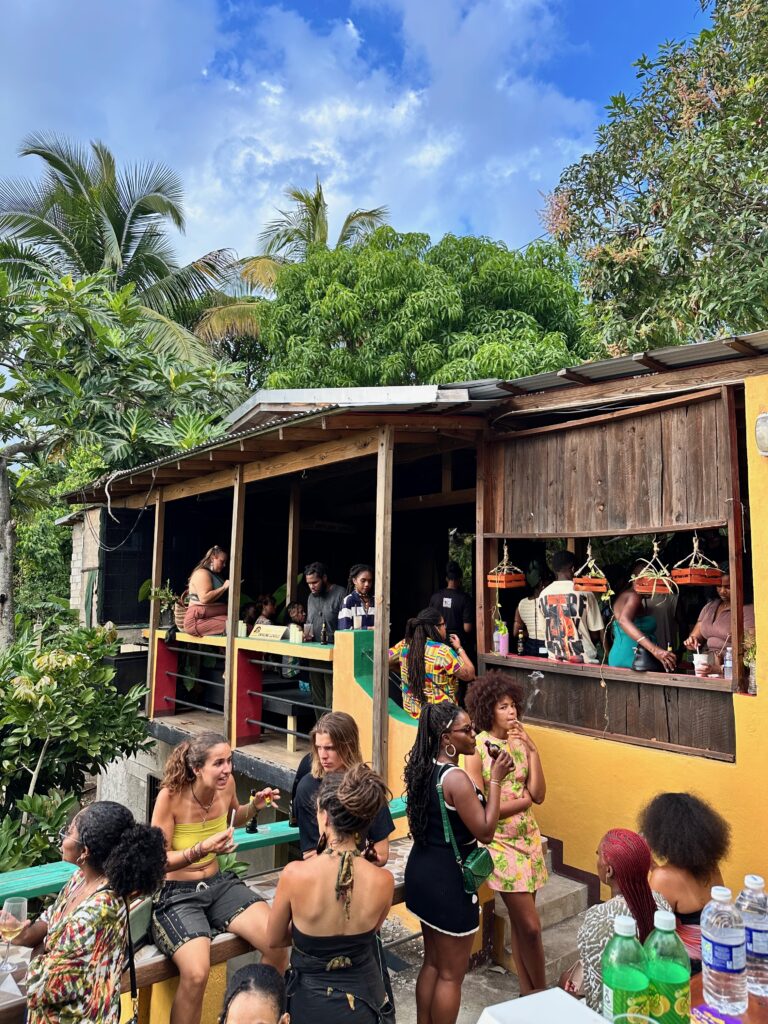

After two years deprived of Jamaica and a full decade without Reggae Month, I find myself anticipating the flight to Montego Bay with an intensity I haven’t felt in ages. As the saying goes, anticipation is the greatest joy – but the joy on the ground surpassed even that. Ellen Köhlings invites you to share in her personal Reggae Month.
Text & Fotos: Ellen Köhlings
Reggae Month has officially been celebrated in Jamaica since 2008. Why February? Because it marks the birthdays of the Crown Prince and the King. Ever since, the question has lingered: does Jamaica really need a dedicated month for its heartbeat? Doesn’t it pulse constantly, everywhere anyway?
There have also been recurring complaints about the sheer number of overlapping events. Be that as it may – I’m still drawing energy from finally having spent Reggae Month on the island again. The only downside: two and a half weeks are nowhere near enough for Jamaica.
On a Saturday, I head straight from Montego Bay to Kingston aboard the Knutsford Express, collapsing into bed late at night. A strategic move – jet lag outplayed – leaving me free to fully savor Sunday evening at the Kingston Dub Club.
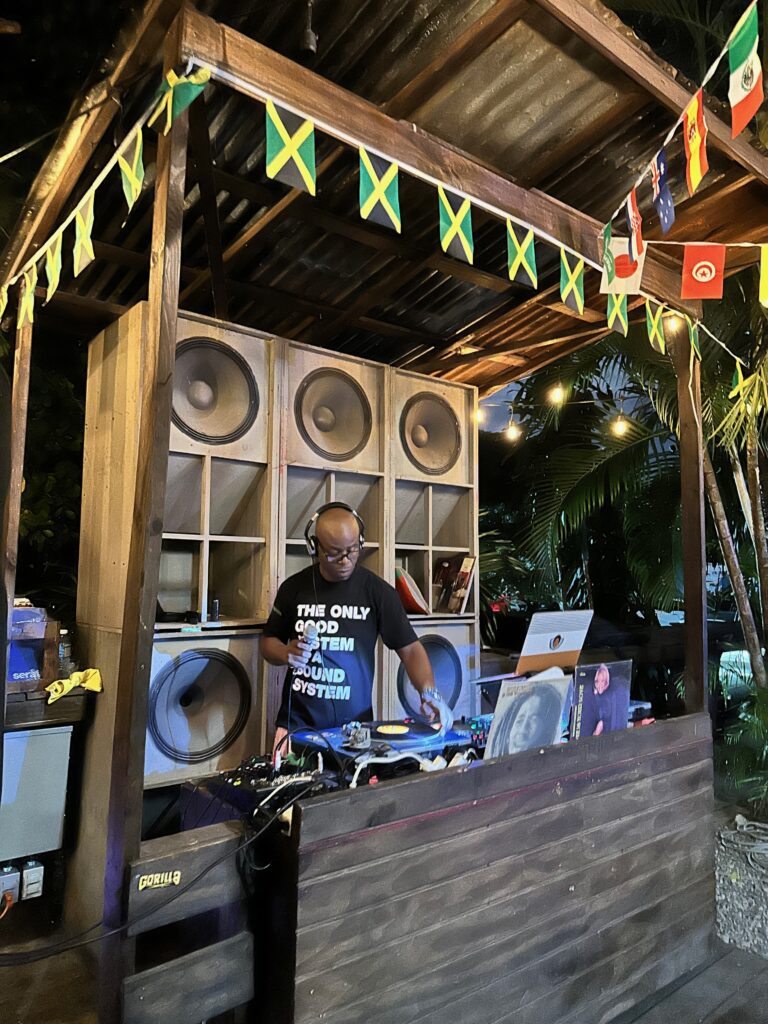
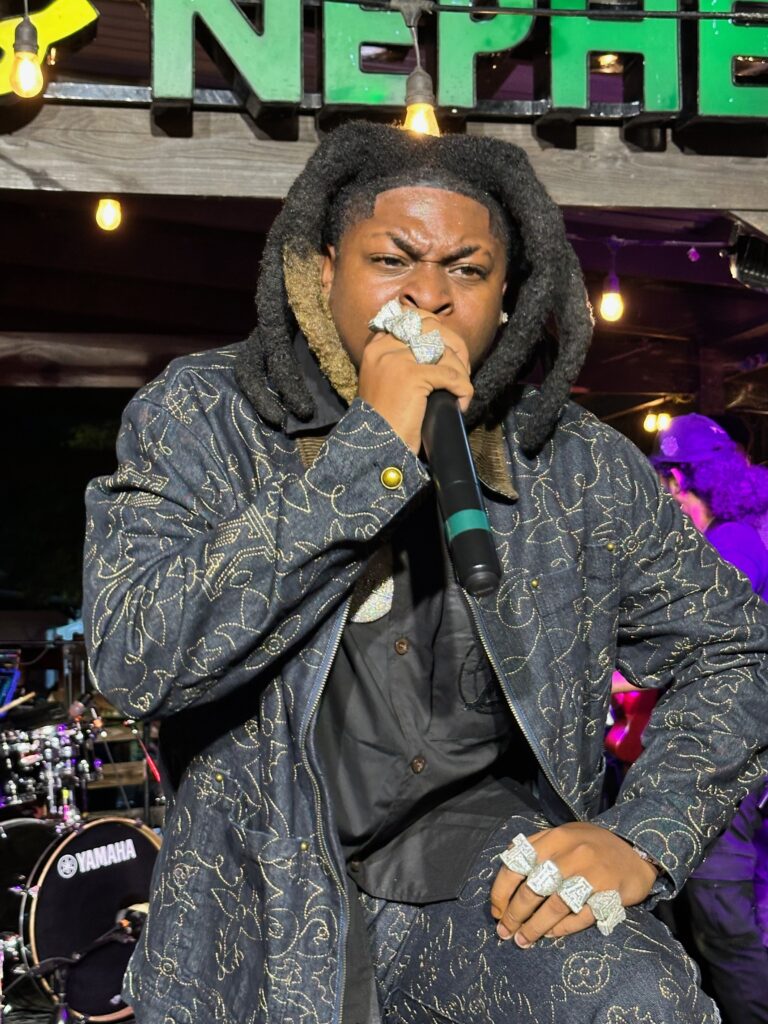
The venue ranks among the island’s most stunning – whole heap ah vibes guaranteed. Tonight, Runkus takes the mic, an artist whose talent never fails to astonish me. This particular night is dedicated to his father, who passed away a year ago: ”Ilebrating the Life and Works of Determine.” Bearing an uncanny resemblance to his dad, Runkus arrives with family in tow, performing Determine’s classics while weaving in his own material from the forthcoming album ”Supernova” – including ”Life Over Death,” a tribute to his father.

Artists such as his bro Royal Blu, Imeru Tafari, and Karbon also step up to the mic. That old-school sound system atmosphere hits me every single time. Host Gabre Selassie, in top form as always, delivers an impeccable selection. During our brief stay, not a single Sunday at Kingston Dub Club is missed.
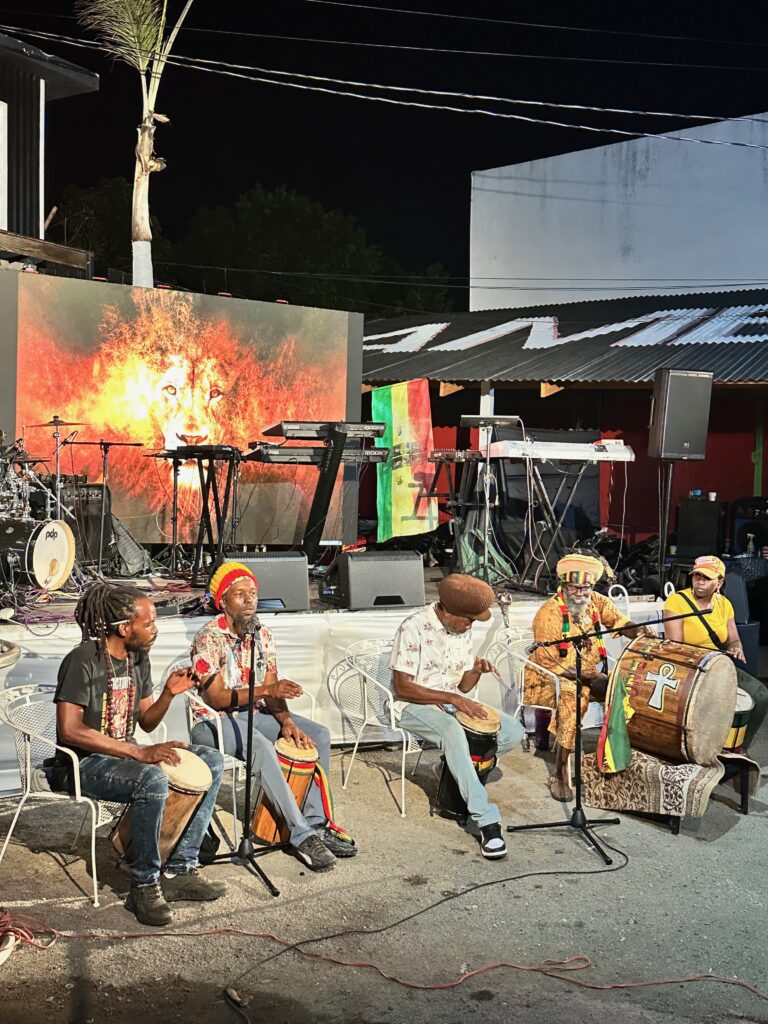
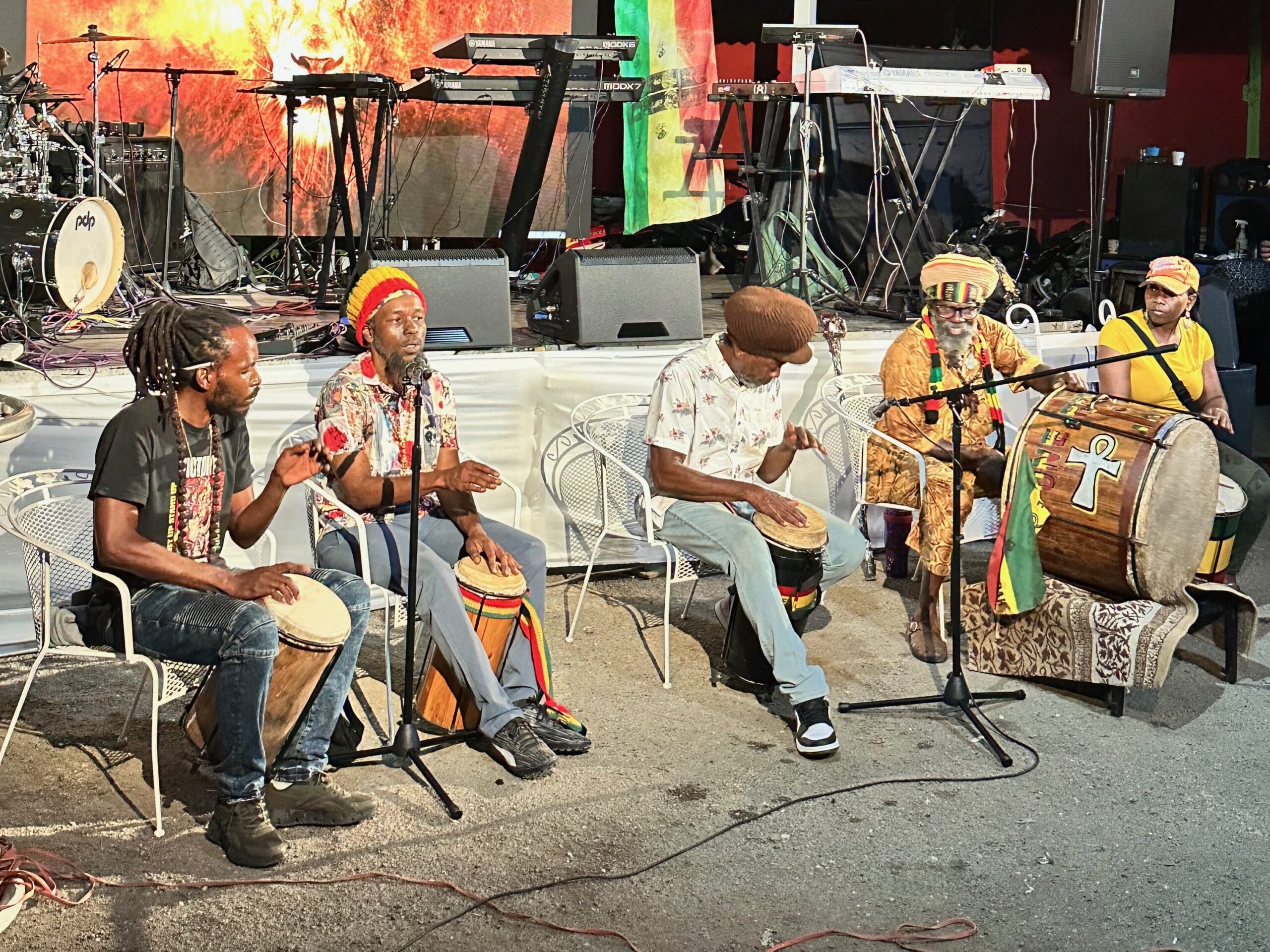
Some may remember Inner City Dub, a regular session that ran from 2014 to 2018 in Denham Town. On Monday evening, it returns in long-awaited fashion with a Nyahbinghi soft launch – to bless the place, as they say. I still vividly recall nights on Spanish Town Road, where veterans like Horace Andy and younger acts such as Samory I shared the stage. Back then, improvisation was key. Today, the venue is inviting and purpose-built.
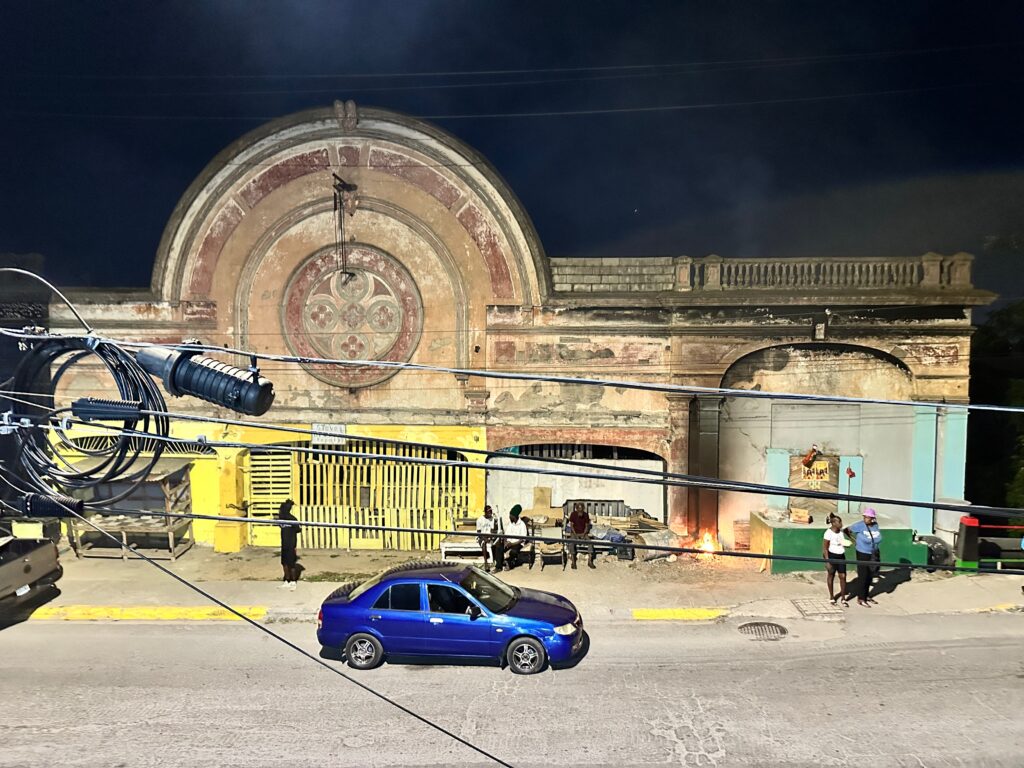
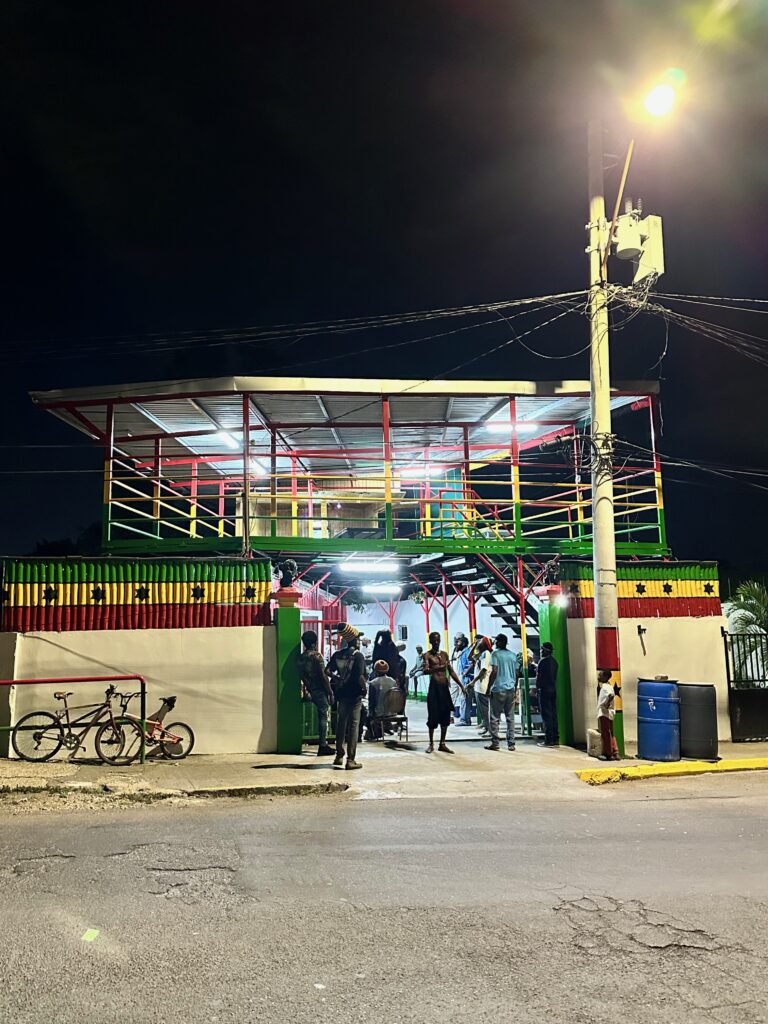
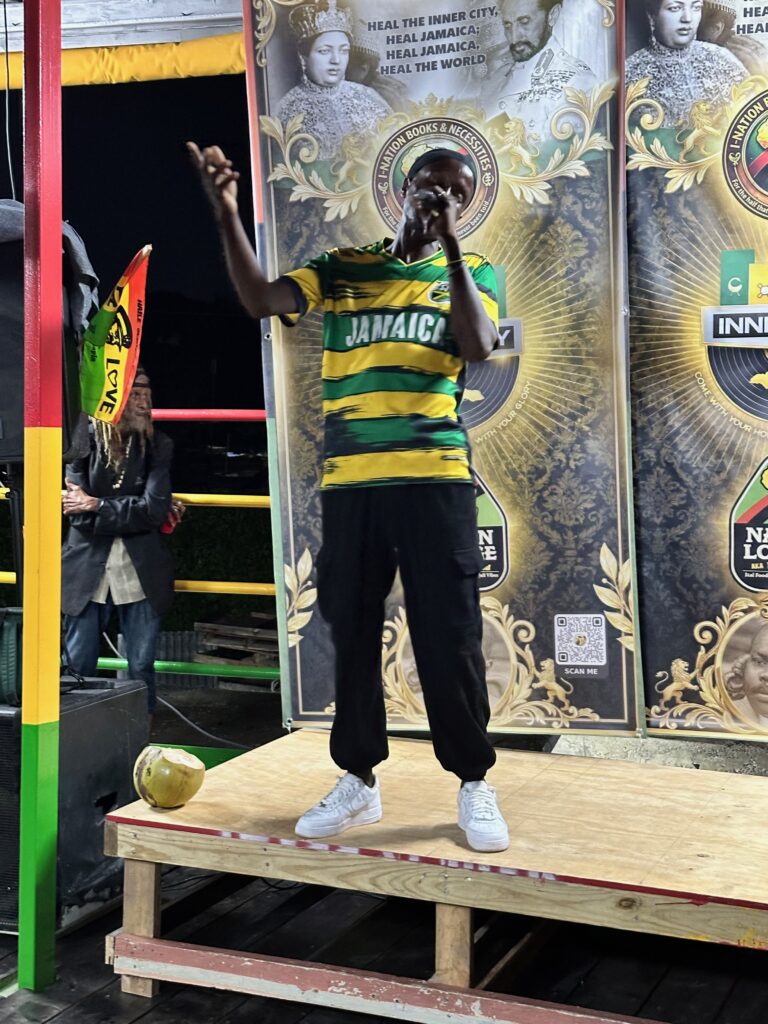
What Tivoli Gardens native I‑Nation has created commands deep respect. Adjacent to the welding workshop of his late father, Finger Dread – whose likeness gazes from the walls – he has installed a container opposite the Queen Theatre, transforming it into a library and restaurant.
Surrounding it: an open space, small stalls offering herbs and jewelry, and a staircase leading upward to a bar, a spacious audience area, and a stage. Everything is crafted with care, painted in pan-African and reggae colours – a beacon in an otherwise austere environment.
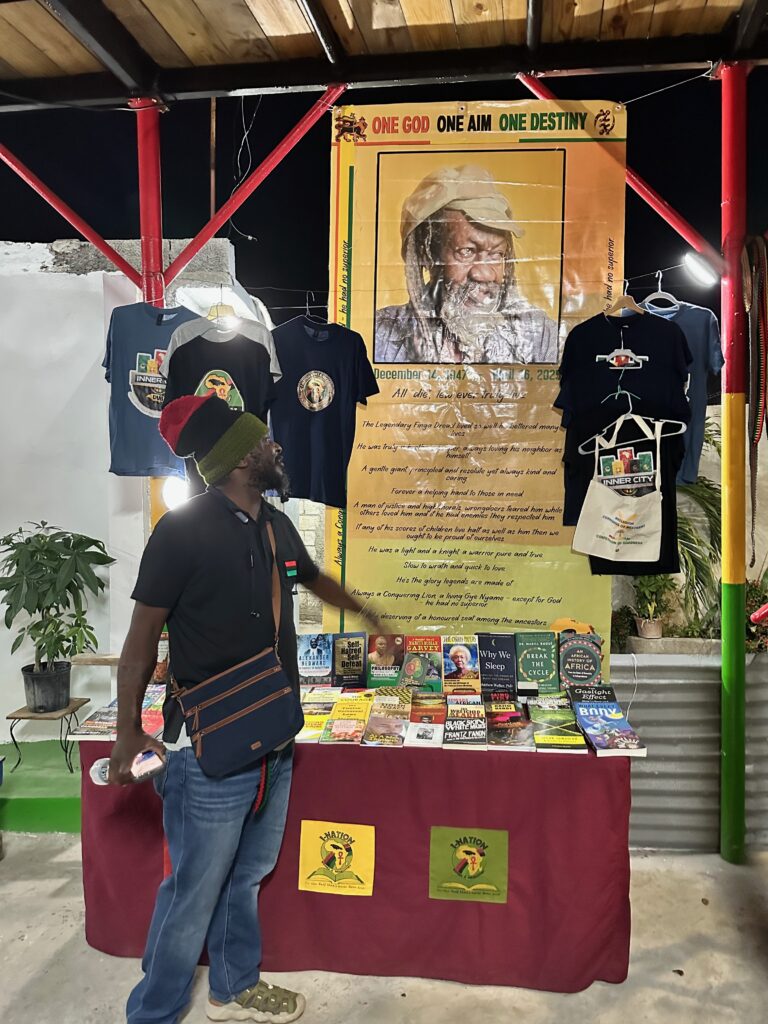
I‑Nation Books & Necessities continues to travel between events with a curated selection of books, many of which are exclusively available through him. Now, with a permanent base and a recurring event, it offers youths from inner-city communities access to Black literature and a roots-oriented alternative – or complement – to dancehall events. It won’t be our only Monday there. Over the next two weeks, artists like Karbon, Medisun, and Yaadcore take the stage. Supporting emerging talent has always been central to I‑Nation’s vision.
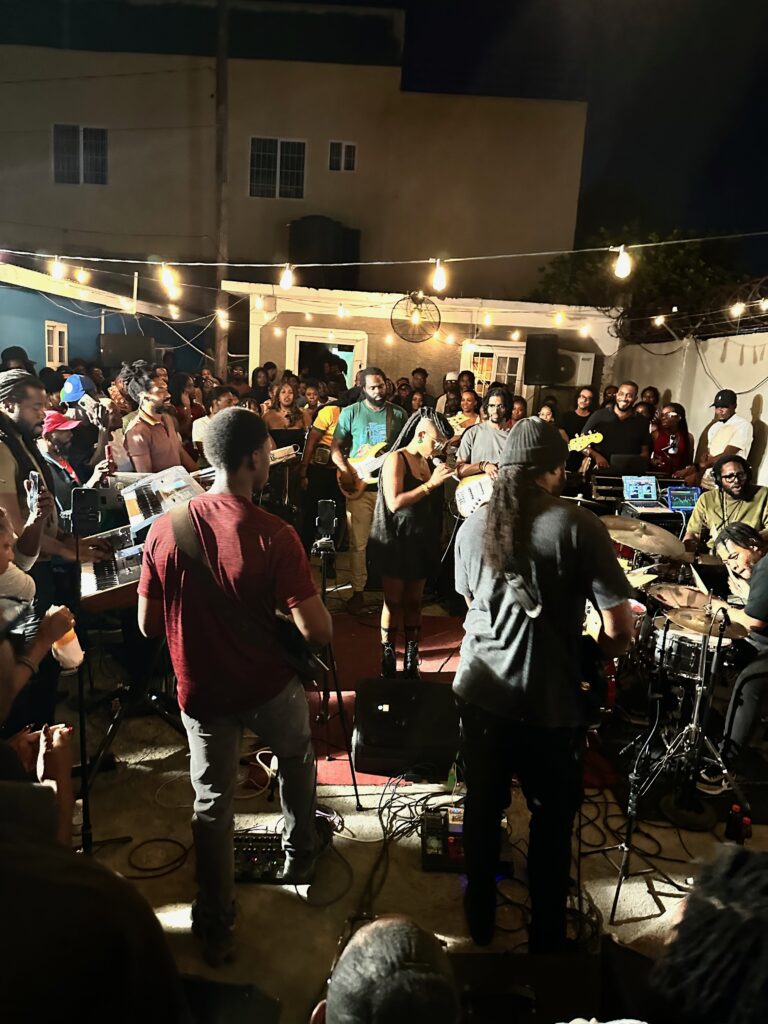
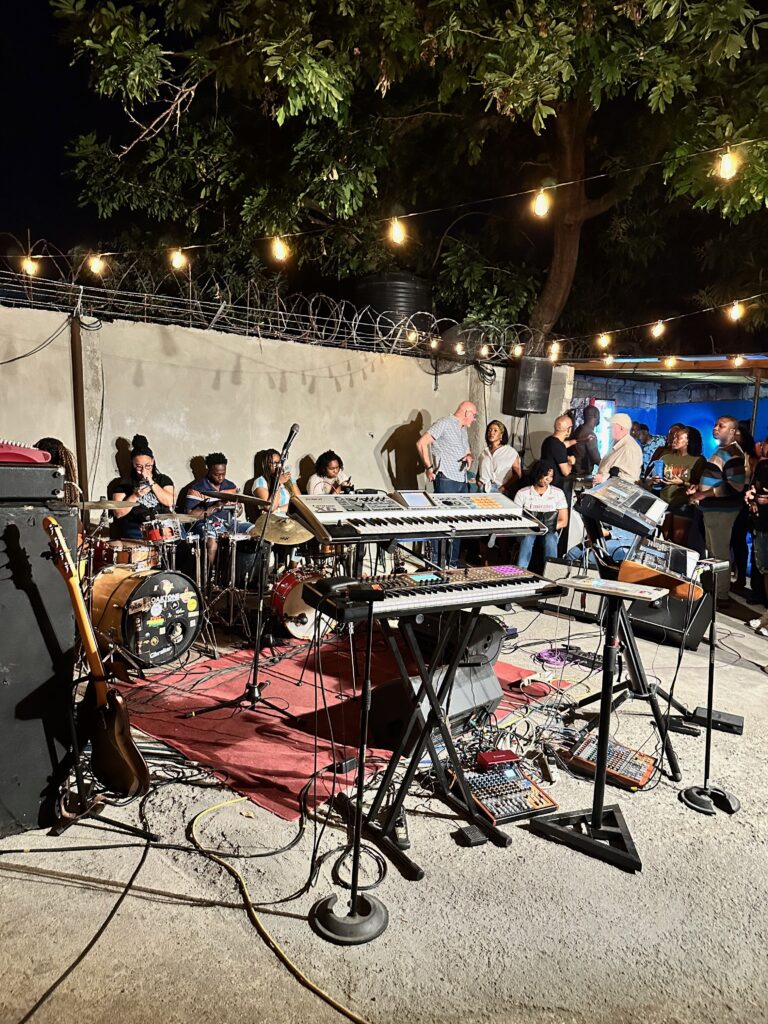
Tuesday Service has evolved into a well-attended weekly fixture. Every Tuesday evening, music enthusiasts gather in a backyard, Compound, on Lancelot Avenue. Once merely a rehearsal space, it is now open to the public. Proceedings begin with a set by the house band, Dub Squad, often featuring cover versions of foundation tunes and dancehall classics. Afterward, artists from the audience take the mic.
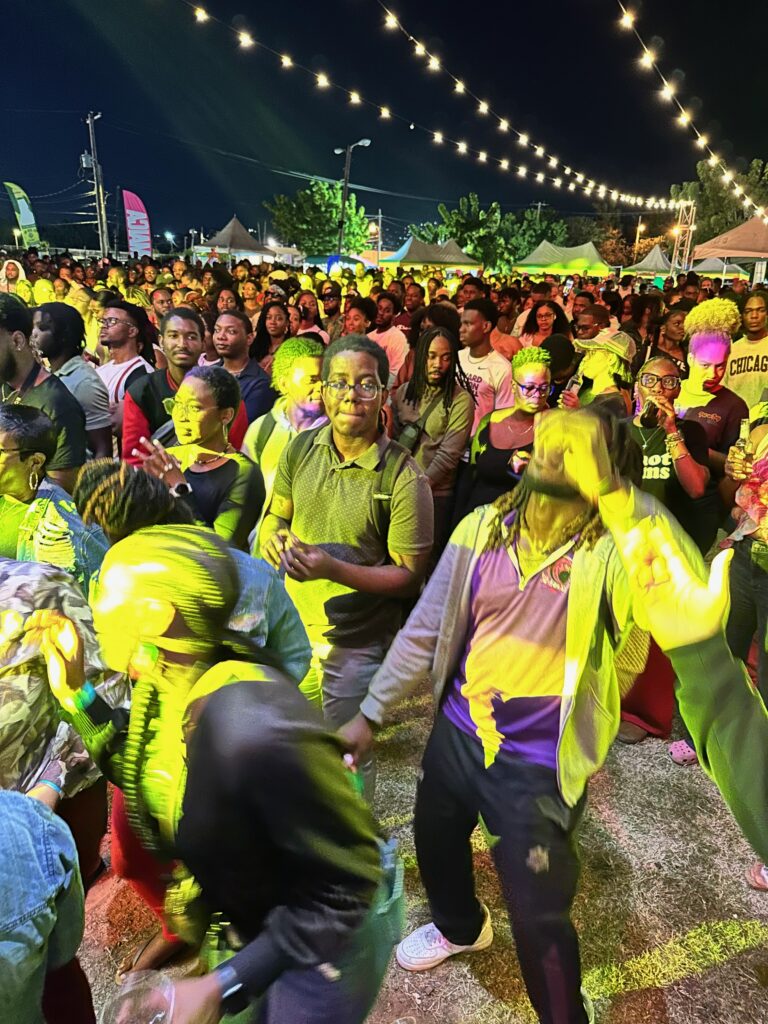
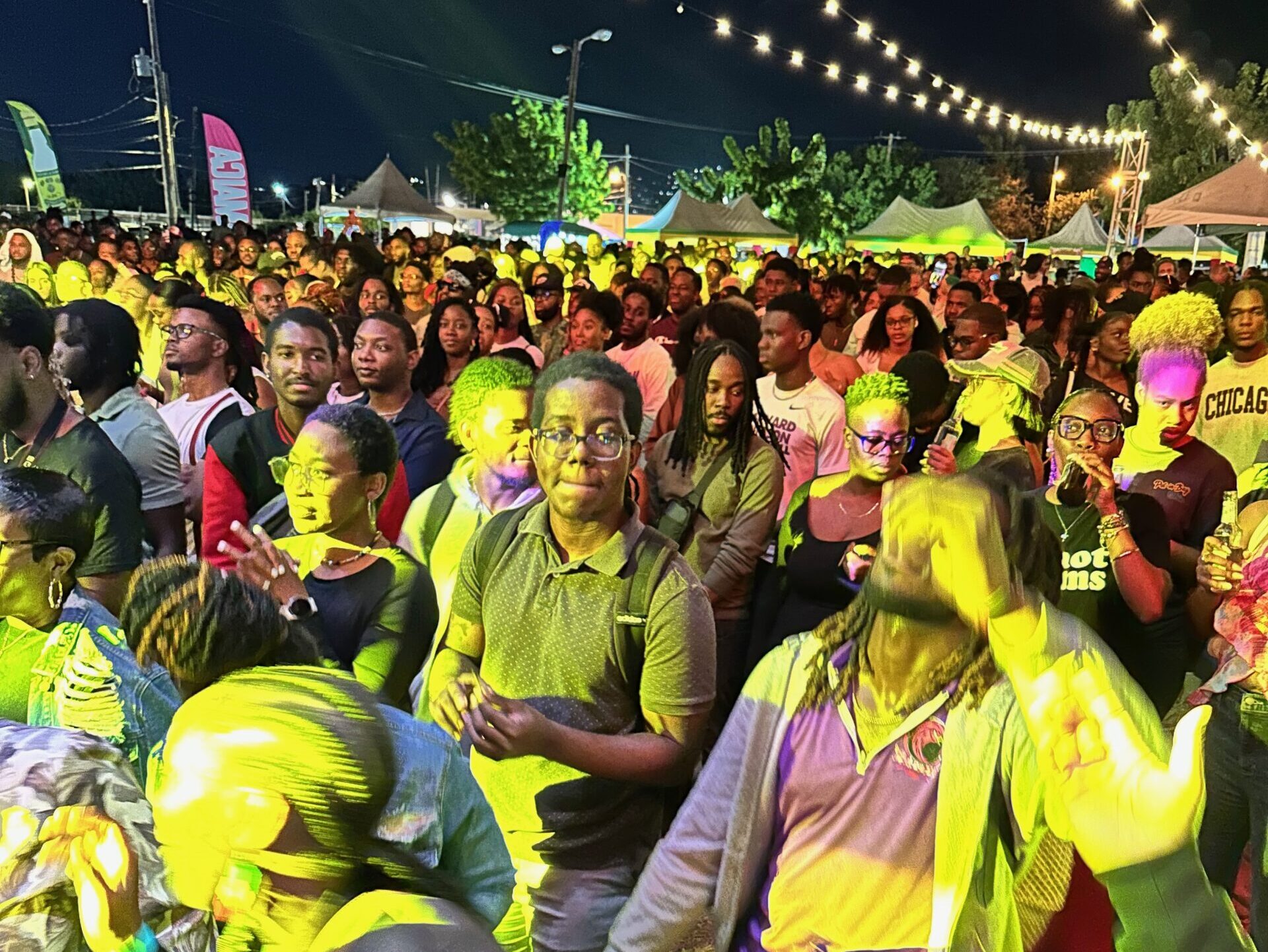
Its second anniversary is celebrated at the Ranny Williams Centre, filled to capacity for Reggae Month. Following Dub Squad’s segment, a series of lesser-known performers take the stage before names like Joby Jay, Imeru Tafari, Rik Jam, Jah Lil, Chris Malachi, and Agent Sasco appear. Time, unfortunately, is too short for artists like Valiant or Damian Marley, glimpsed backstage. In the end, it’s the more intimate venue that resonates most deeply with me.
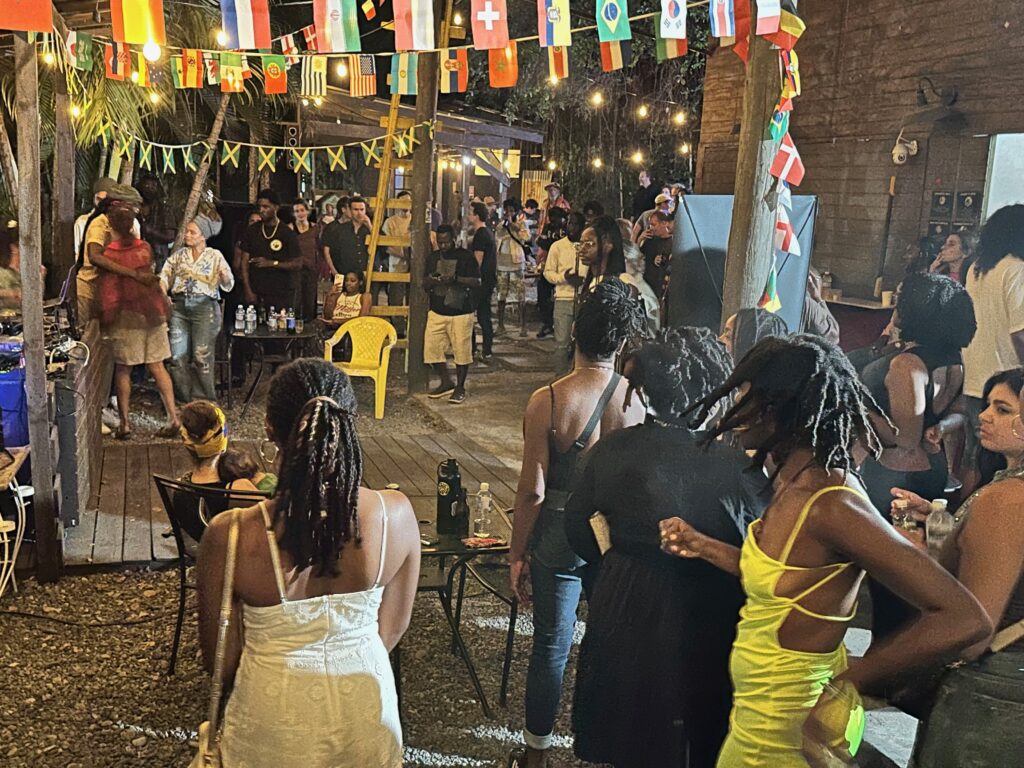
The Dubwise Cafe behind the Kaya Herb House on Lady Musgrave Road is always worth a visit – a kind of cultural food court inviting visitors to relax, listen to music, and browse records and merchandise.
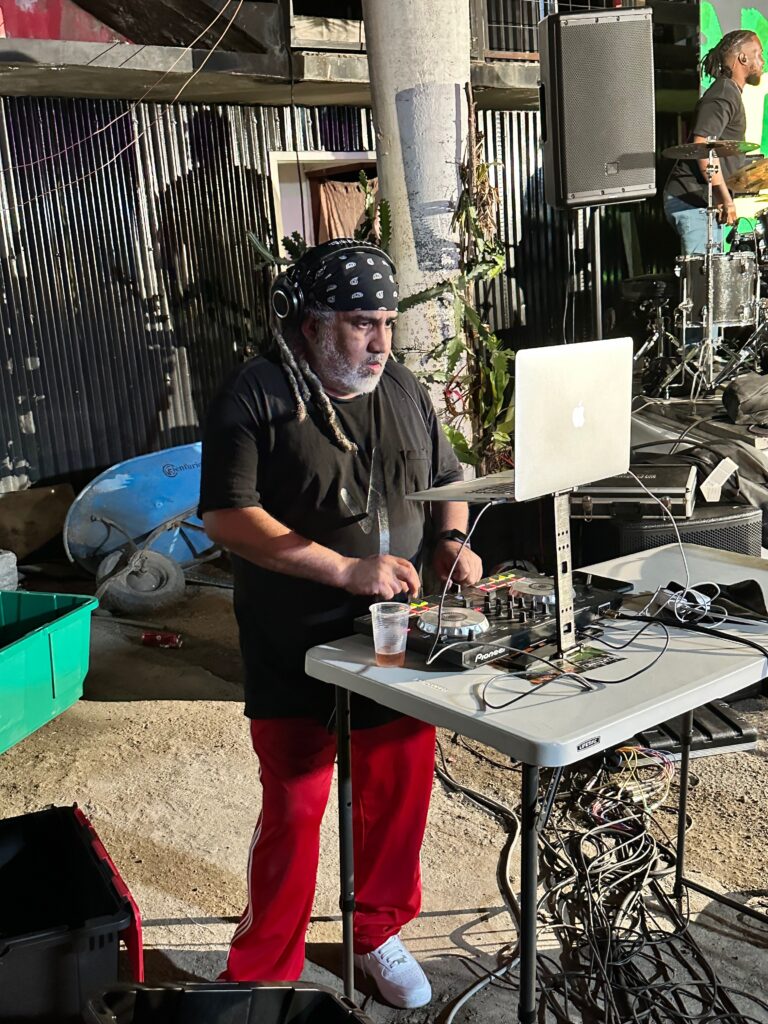
Dutty Bookman is a near-daily presence there – one of the intellectual driving forces behind the Reggae Revival. He runs a bar and hosts Satta on Saturday evenings, a popular roots session where artists regularly take the mic. In between, he spins records himself or hands over the decks to selectors like Uncle Ronnie from 8 Mile Sound.
Dubwise Cafe maintains an open, inclusive atmosphere and, through Soundcheck – an initiative by cultural activist Carleene Samuels – builds bridges to dancehall. Twenty-one-year-old Ayetian delivers a short but explosive, high-energy performance backed by the Dub Squad Band, infused with a distinct punk attitude.
Every first and third Thursday of the month, the bar and car wash Bamboo Splash at Barbican Square hosts the holistic, conscious gathering I‑Frequency, curated by another cultural activist, Kareece Lawrence. The event integrates wellness, food, literature, spirituality, intellectual exchange, art – and, of course, music.
On this evening, Dr. Kadamawe Knife, a key figure in the Reggae Revival movement, speaks about Rastafari and ganja. Emerging artists are then given the opportunity to present themselves before a broader audience, followed by Rik Jam & Friends – featuring Dalwayne, Eesah, and Yeza. Selector Rory Stonelove provides the soundtrack and, alongside Pete and myself, is unexpectedly honored with a Legend Award for ”Outstanding Service in Roots Reggae Music & Community” – a moment both surprising and deeply moving.
The concept behind I‑Frequency is to create a soft space within the city – a place where authentic Jamaican culture can be experienced in innovative ways, bringing together people from all walks of life. That is precisely how I experienced it in Reggae Month. The event is currently on a short hiatus but is set to return before summer.
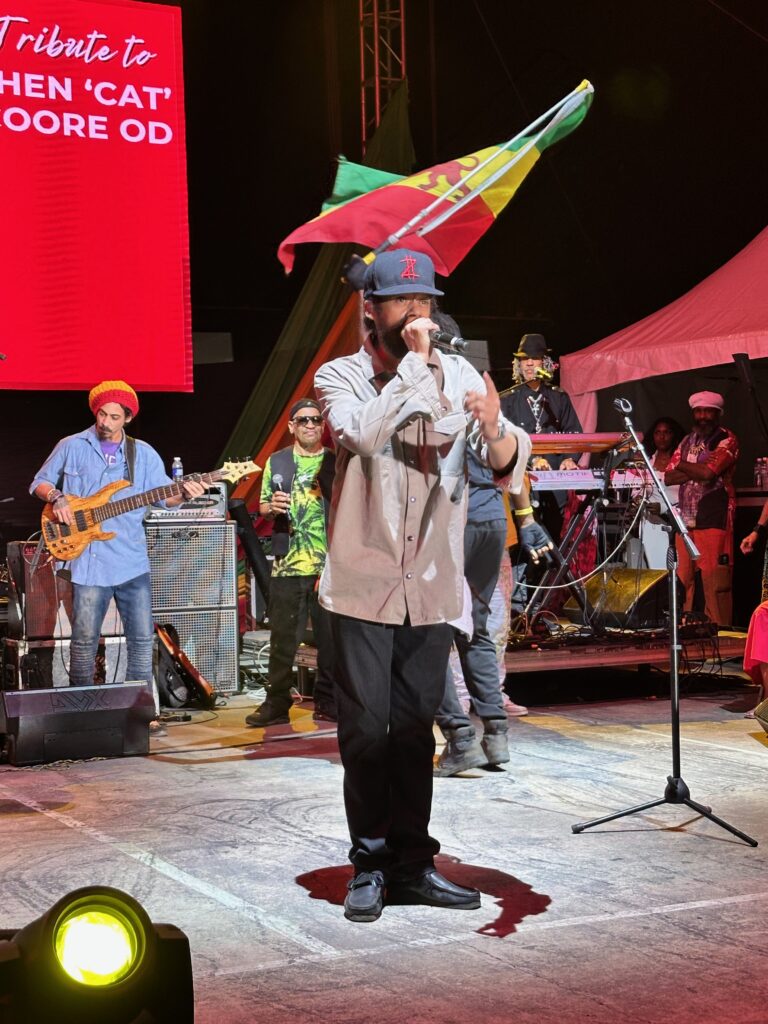
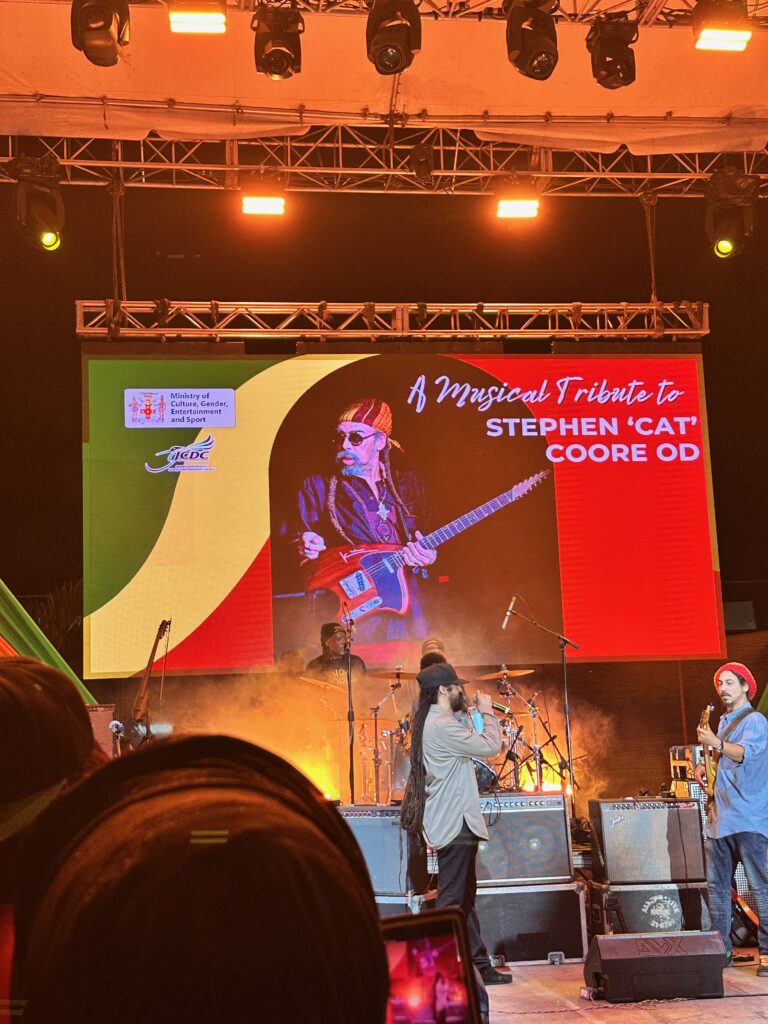
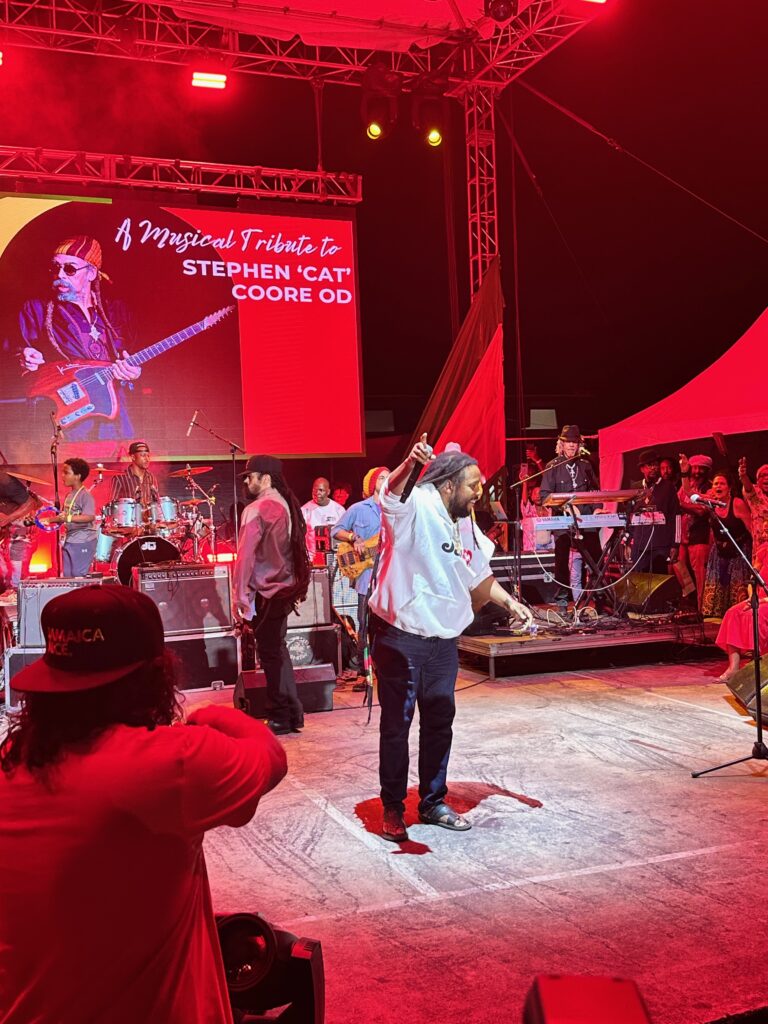
Reggae’s long history inevitably means that its protagonists age and, eventually, pass on. Such was the case with the beloved Third World guitarist and cellist Stephen ”Cat” Coore, whose Musical Tribute at the Ranny Williams Centre unfolds before a full house.
What begins with a drum tribute to the ancestors and performances by representatives of the Alpha School of Music continues with acts such as Wayne Marshall, Maxi Priest, Gramps Morgan, Tarrus Riley, and the Skatalites. The evening culminates with Culture Minister Olivia ”Babsy” Grange presenting the Jamaica Music Icon Award to Cat Coore’s widow, Lisa Coore.
The New Third World then takes the stage to honor their former member while looking toward the future, including appearances by Cat’s son Shiah. Kumar Fyah, who has frequently toured with Third World in recent times, performs the Raging Fyah classic ”Judgement Day,” wearing a tiger sweater in homage to Cat – also known as Johnny Tiger. Damian Marley follows, performing the Third World collaboration ”You’re Not The Only One,” which he produced. Finally, his brother Stephen joins him. Cat is present throughout – spiritually and visually – projected across a large screen in a tapestry of memories.
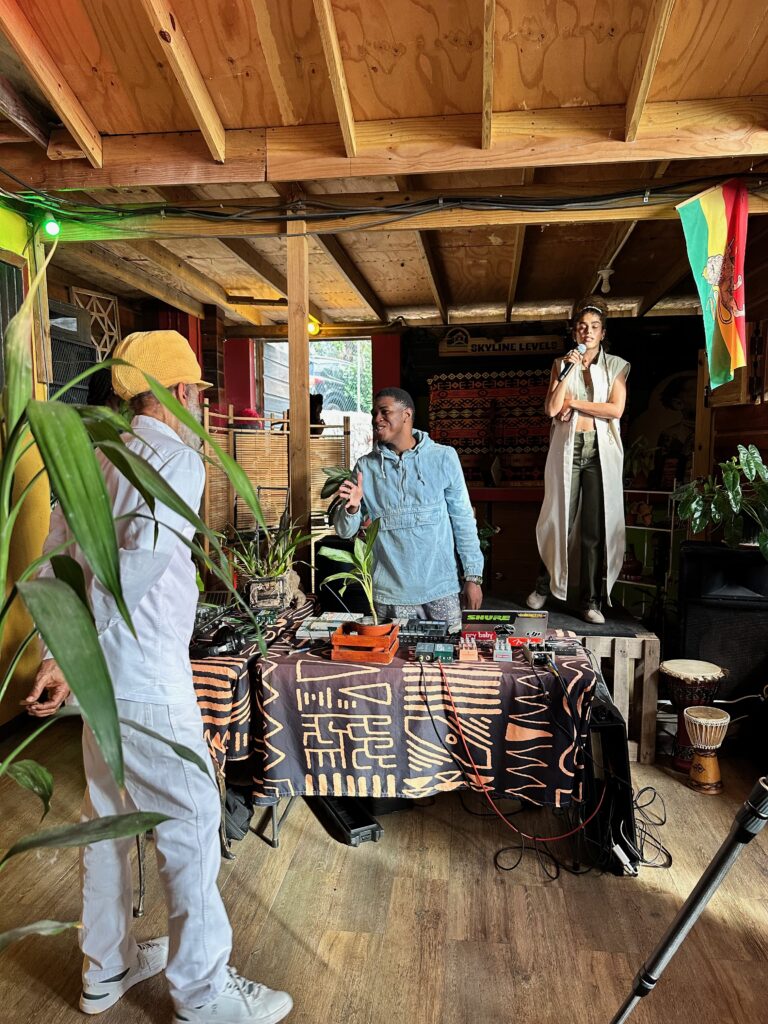
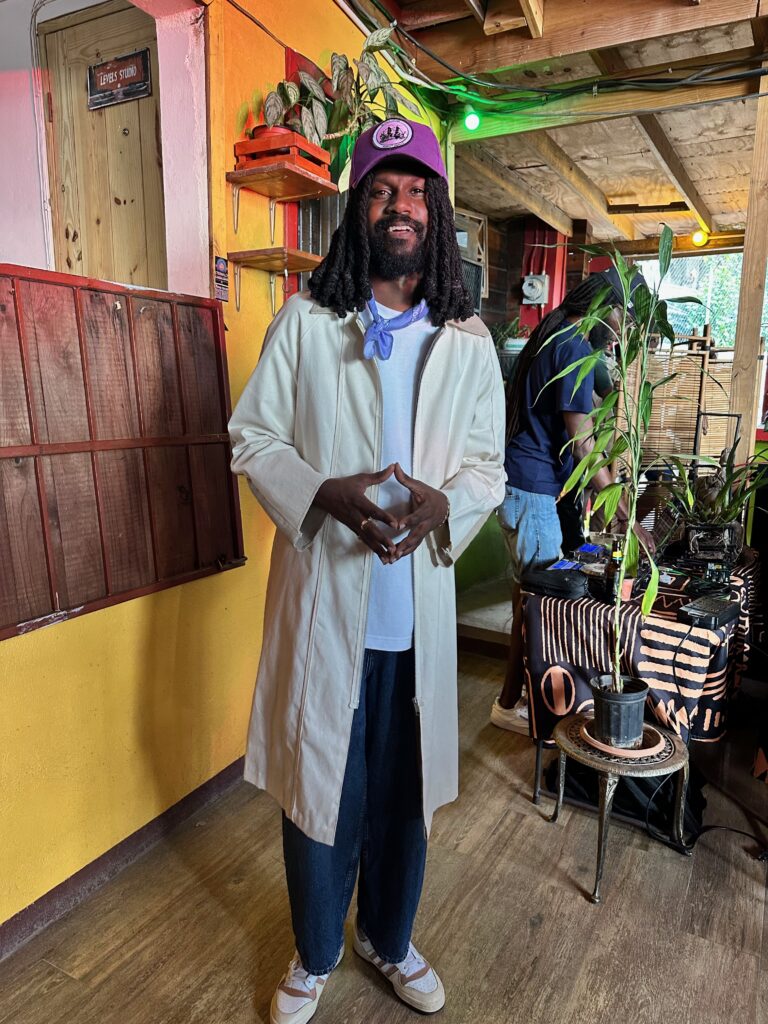
From past to future, always mindful of history. This is what we experience at Skyline Levels, a dynamic hub run by the McDonald family, where Kamila operates a vegan restaurant, next to a family run studio, rehearsal space, and a venue for concerts and special events. The latter hosts the second edition of Riddim Runway, curated by the youngest McDonald daughter, Kadiya – an ambitious, fresh concept where fashion, culture, and performance converge.
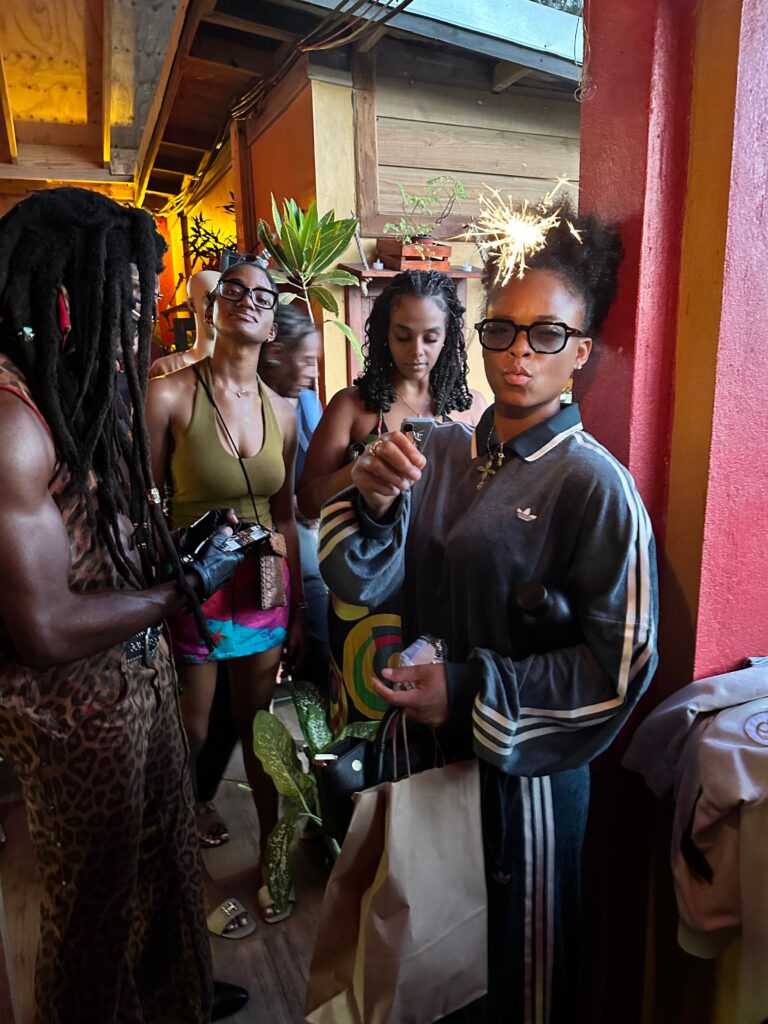
At its core are three iconic riddims: ”Rootsman” (Winta James), ”Joyride” (Dave Kelly), and ”Diwali” (Lenky Marsden). What sets it apart: Universal, Chronixx’s brother, constructs the instrumentals live before the audience, accompanied vocally by Iba Mahr. The show is interwoven with fashion performances, inline skaters, skateboarders, and a fire breather against the backdrop of a setting sun, while sparklers are distributed among the crowd – an allusion to Diwali, the multi-day Hindu festival of lights.
Everything is fluid, dynamic – each element building upon the next. The second edition of Riddim Runway concludes with a freestyle session, hosted by Runkus as MC and featuring young acts such as Kxng Izem, Medisun, Dahvid Slur, Haile Celestial, Imeru Tafari, and his younger sister Tanzie.
Naturally, there were countless other events I would have loved to attend.
Next time!